Loading today’s stories
Product2 distinct publishers3 min readUpdated
Camera AirPods code shows the capture model: 0.1MP background frames, and an indicator light
A hidden framework in the macOS Tahoe 26.7 release candidate spells out how camera-equipped AirPods would sample the world. It also appears to describe a product Apple has shelved.
The Product Desk · Product desk
What happened
- MacRumors found a demo video of camera-equipped AirPods hidden in the macOS Tahoe 26.7 release candidate.
- MacRumors forum member mactracker discovered a hidden macOS framework called "AccessorySensorManager" that manages sensor data from the AirPods when they are connected to a Mac.
- Code indicates the left and right earbuds have individual camera sensors that return synchronised RGB still images of up to 1 megapixel with matching frame IDs, giving Visual Intelligence the same scene from two angles.
- The code does not rule out other sensors such as infrared cameras, but they are not mentioned in it.
- The cameras take internal still frames for Visual Intelligence to process, rather than taking pictures or recording video.
Compiled by The Product DeskSomething wrong?How this is made
Why it matters
MacRumors forum member mactracker found a hidden macOS framework called AccessorySensorManager in the Tahoe 26.7 release candidate, the same build that accidentally shipped a demo video of camera-equipped AirPods [2][1]. The framework handles sensor data from AirPods connected to a Mac, which means the always-on capture model that privacy reviewers and accessory developers have been speculating about is now partly written down [2].
The design is stereo. According to the code as read by mactracker, the left and right buds each carry a camera sensor and return synchronised RGB stills of up to 1 megapixel with matching frame IDs, giving Visual Intelligence the same scene from two angles [3]. No infrared sensor is mentioned, though the code does not rule one out [4]. There is no video path: the cameras produce internal still frames for Visual Intelligence to process rather than photos or recordings [5]. In active mode the framework either requests one synced pair or supplies a capture rate and receives pairs continuously [6].
The two resolution tiers matter more than the headline megapixel figure. Active mode, which mactracker expects to be user-triggered via Siri, captures 640x640 and returns a processed 1024x1024 frame, which mactracker describes as "about 0.4 megapixels of sampled image data, and a little over 1 megapixel for the output frame" [7][8]. Passive mode captures 320x320, with a 320x320 or 512x512 output [9]. That passive frame is 102,400 pixels, about a quarter of the sampled area in active mode [24]. mactracker adds that these are capture-specific resolutions and the physical sensor may be larger [10].
Passive mode is the part worth reading closely. The framework references contextual conditions including nearby speech, changes in the surrounding audio, posture changes, head rotation, and movement outside a defined area, and the code does not make clear whether every condition triggers a capture [11]. The engineering around a camera strapped to a moving head is also visible: lens distortion correction, dual-camera calibration, camera-to-motion-sensor calibration, and rejection of frames ruined by excessive movement or an occluded view [12]. Some work happens on the buds, described in the code as "peripheral inference," including detecting whether a person is in view [13]. The framework can also remotely control a hardware indicator and its brightness, which points to a capture light intended for the people around the wearer rather than the wearer [14].
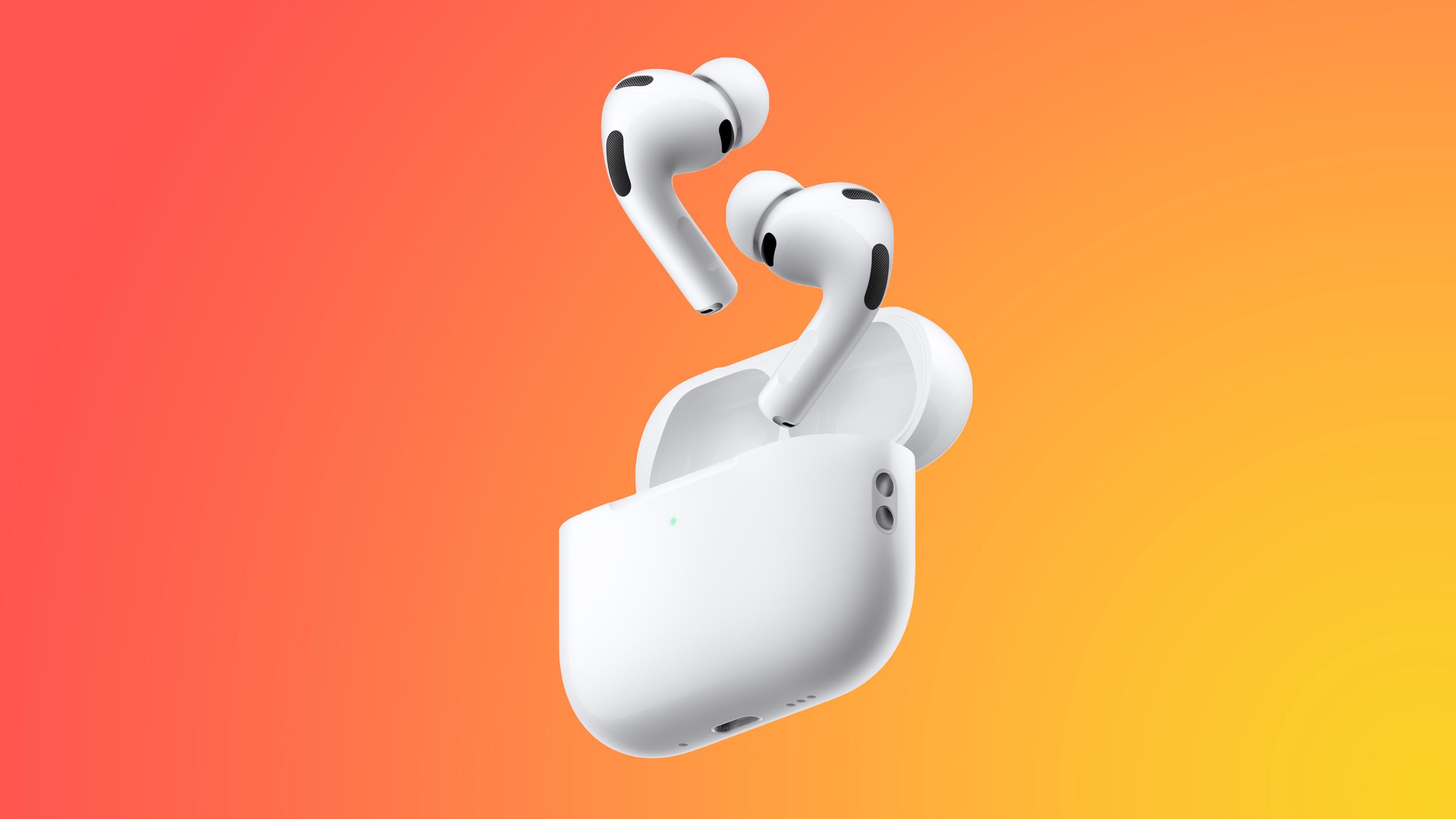
The caveat is large. The buds in the video are a camera-equipped version of AirPods Pro 3, codenamed B790, shown reading a book title held up to them so Siri could save it for later [15][23]. Bloomberg's Mark Gurman reports Apple no longer plans to release that model and is working on a new generation codenamed B798, which makes it likely the framework documents the cancelled device [16][17]. Gurman says the camera AirPods effort remains on track for 2027 [19], is off the 2026 schedule while Apple resolves supply chain and software problems [20], and could arrive alongside the 20th-anniversary iPhone [18]. His own timeline has moved repeatedly: advanced testing in May, a delay to late 2027 in June, then a possible September launch in early August [21]. Gurman also notes privacy pushback, including critics calling the device "pervertpods," and says the cameras are low-resolution and meant to scan the environment for Siri context rather than shoot photos or video [22].
Watch whether B798 inherits the indicator light, the on-device person detection, and the passive tier at all, and whether Apple documents the passive trigger conditions publicly rather than leaving them to be reverse-engineered from a shipped framework [11][13][14].
Loading topic controls
Loading related stories