Invest2 publishers3 min readPublished Updated
Stablecoins' $62 trillion shrinks to $4.2 trillion when you ask what it paid for
Pablo Hernandez de Cos told Jackson Hole that tokenized deposits look more promising than stablecoins. The number underneath that judgement is a $307bn float turning over roughly 202 times a year, mostly not for goods.
The Investor · Invest desk
What happened
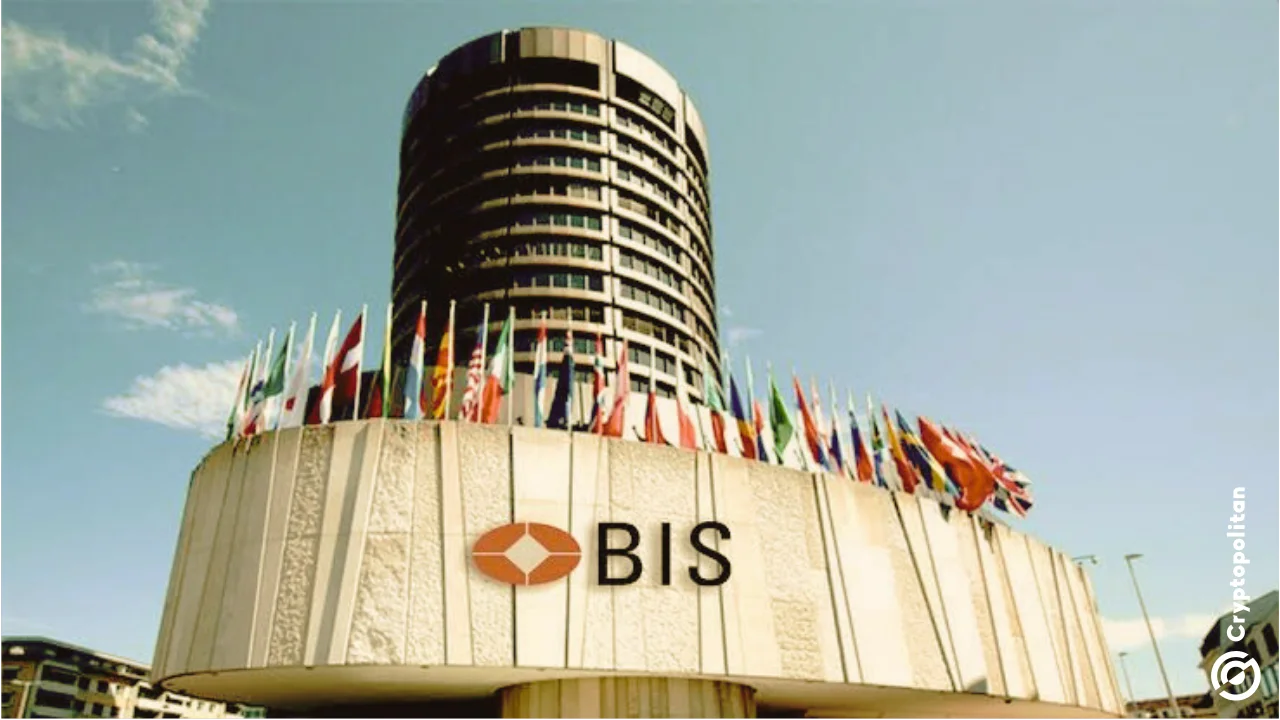
- BIS general manager Pablo Hernandez de Cos told the Jackson Hole symposium on August 28 that a framework built on tokenized deposits looks more promising than stablecoins for payments at scale.
- He rested the case on three properties he says money must have, singleness, interoperability and financial integrity, and argued stablecoins fail each of them in practice.
- Forkast reported that more than 12 global banks, Bank of America, Wells Fargo, Santander, Citi, Goldman Sachs and UBS among them, are preparing a shared stablecoin on public blockchains.
Compiled by The InvestorSomething wrong?How this is made
Why it matters
- constraint A treasury team that budgets from the $62 trillion figure is sizing something two orders of magnitude larger than the goods-and-services payments BCG can actually observe, which caps what any internal business case can honestly claim.
- decision Banks now have to pick a rail before the standards exist: public chains today under GENIUS Act subsidiary access, or tokenized deposit settlement that needs central bank accounts and a longer queue.
- contradiction The BIS says current designs fall short on the foundational properties of money while six of the world's largest banks build one anyway, and whichever side is right, the other is spending capital on infrastructure it will have to write off.
- exposure If most stablecoins now sit in self-custodied wallets and transfers increasingly move wallet-to-wallet with no platform running KYC, the firm accepting the payment inherits a counterparty nobody screened.
Divide the flow by the float and the shape of the thing appears. The $62 trillion of stablecoin transfers that BCG and Allium counted across public blockchains in a year [10], set against a market capitalisation of $307 billion in December 2025 [13], is about 202 turns of the stock [16], which is not how money behaves when it sits in a working-capital account waiting for a supplier invoice. Use instead the $4.2 trillion the same paper classes as real-economy payments [11] and the float turns roughly fourteen times [17]. Use the number BCG itself calls a minimum, $350bn to $550bn of observable bilateral payments for goods and services in 2025 [12], and you get about one and a half turns [18]. (The float is a December snapshot and the volume is a full year, so read the turn counts as magnitude, not bookkeeping.)
That floor is 8 to 13 percent of the real-economy bucket [19] and between 0.56 and 0.89 percent of the headline [20]. So the $62 trillion is a price, in the sense that it is what this market has agreed to quote about itself, and the value a treasurer can actually route sits somewhere between the floor and whatever share of the $4.2 trillion survives a definition audit. The other $57.8 trillion [21] is trading and collateral movement, which is a real business, just not the one a procurement committee is being asked to sign.
The mechanism de Cos leans on is narrower than the usual complaint. A payer holding USDT and a payee who accepts only USDC has to sell one and buy the other at a moving price, so the dollar that leaves need not be the dollar that lands [4], which is an FX spread hidden inside a single nominal currency, and moving one issuer's coin between chains carries its own complicated and sometimes costly steps [5]. Tokenized deposits, on his account, settle through central bank accounts and keep par redemption and finality [6].
The counter-thesis lives in the same reporting. More than twelve banks, Bank of America, Wells Fargo, Santander, Citi, Goldman Sachs and UBS among them, are preparing a shared stablecoin on public chains rather than cede the rail to Tether and Circle [14], and one instrument redeemable at par at each of those banks answers the singleness objection by construction, or rather answers the version of it created by competing issuers with competing reserves. The GENIUS Act, implemented on July 18, 2025, gave banks federal access through subsidiaries [15]. The BIS route needs central bank accounts [6], which is a shorter list of eligible participants and a longer wait, and every engineering quarter the consortium spends on permissionless rails is a quarter not spent on the tokenized deposit backbone the BIS says it wants [2]. A third path is simply political: the BIS warning on stablecoin dollarization in emerging economies [9] means some jurisdictions will restrict this regardless of how well it is designed.
This is probably wrong, but I would size a corporate stablecoin programme off the floor rather than the headline and treat the ratio as the thing to negotiate with. What would break the view: a BCG update showing real-economy payments rising as a share of volume rather than only in dollars, or a consortium coin that clears at par against USDC on-chain, either of which would make the singleness problem [4] a description of 2025 instead of of stablecoins.
What to watch
- Whether the bank consortium names a legal issuer and which charter it uses, which decides if the coin is redeemable at par at every member.
- Whether the BIS follows its June 23 report with actual standards for tokenized deposit settlement rather than speeches about them.
- Whether emerging-market regulators act on the dollarization warning with capital-flow restrictions that bound the addressable market by law.