Science1 publisher3 min readPublished
India counts its exotic-pet trade almost entirely by what enforcement intercepts
A seizure count rises when smuggling rises and also when inspection does. In India it is the main published measure of the exotic-pet trade that delivered five orangutan infants to a zoo in Odisha.
The Scientist · Science desk
What happened
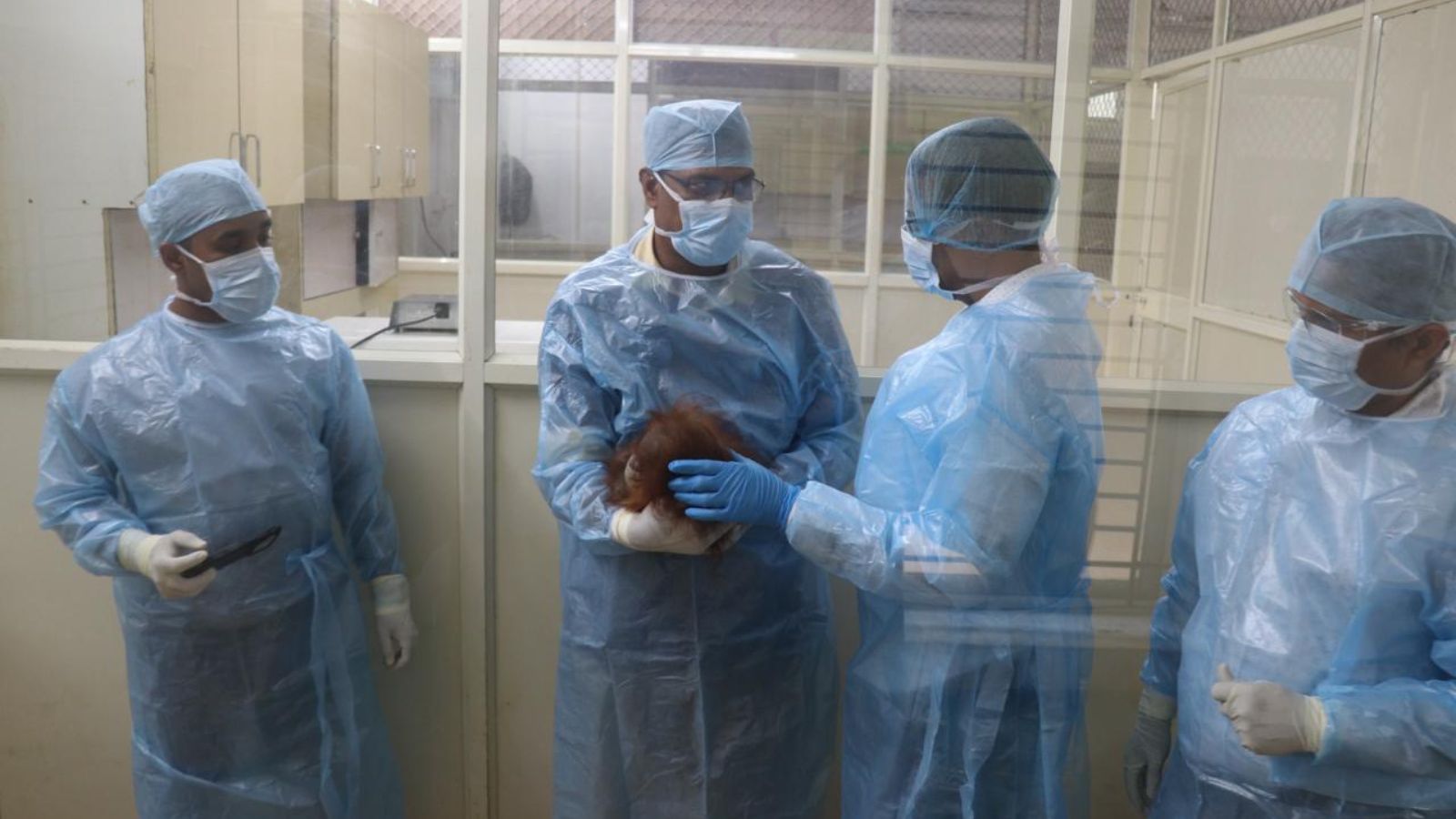
- Rangers found five abandoned baby orangutans in a forest in Balasore, in Odisha, thousands of kilometres from the only islands where the species lives in the wild.
- The infants, about 18 months old, are being kept at a zoo, and Indonesia has asked for them back.
- A June 2026 report by Humane World for Animals India estimated India's exotic-pet market at $42.6 million in 2024 and said orangutans and gibbons are increasingly trafficked in from Southeast Asia.
- Government data show more than 40,000 people had registered exotic animals by February 2021 under a voluntary disclosure scheme.
- Police have opened a criminal investigation, and how the animals covered more than 2,000 kilometres by sea or 7,000 by land has not been established.
Compiled by The ScientistSomething wrong?How this is made
Why it matters
- contradiction The same seizure series is used as evidence that trafficking is growing and conceded to capture only a fraction of it. Without a detection rate for each year, it cannot support both readings at once.
- exposure A voluntary amnesty describes owners who chose to be counted. Any rule calibrated to that population binds the people already willing to declare, and leaves the undeclared holdings unmeasured.
- constraint Airports, formal cargo and the Myanmar land border all appear in the record as live channels. Enforcement effort has to be divided across all three.
- decision Indonesia's repatriation request puts origin on Indian investigators: sending the animals home and charging anyone both require the shipment traced.
WWF-India documented 56 seizures involving about 4,000 exotic animals in 2022 [14]. Divide one by the other and the average case holds roughly 71 animals [25]. Bulk consignments carry that average: the Mumbai seizures last year included lizards, tree-climbing possums and dozens of venomous vipers [17]. Apes turn up in ones and twos. Customs officers in Mumbai arrested a passenger in October 2025 with two endangered gibbons stuffed inside a checked bag [15], and in 2024 forest officials recovered a single trafficked orangutan from a flat in Maharashtra state [16]. Five infants of about the same age is a larger ape group than anything else in that record [2].
The June 2026 report from Humane World for Animals India describes a "steep increase in seizures" that it says reflects a "surge in illegal trade" [5]. A seizure series moves with how much is being smuggled and with how hard officials are looking, so comparing one year against another works only if inspection intensity held steady between them. "The scale of it is much, much bigger than what we see actually based on the seizure data," said Jimmy Borah of the environmental advocacy group Aaranyak [18]. An undercount of unknown size cannot tell you whether interception is gaining on the traffic or falling behind it.
The other published number is a registration count, and it was gathered from people who volunteered. "This is a figure from only those who registered themselves, so the true volume of it is potentially much larger and remains unknown," said Sumanth Bindumadhav of Humane World for Animals India [9]. He also called the scale "massive" [8].
On the demand side the record is testimony. A senior official at India's Wildlife Crime Control Bureau, who requested anonymity because they were not authorized to speak to the media, said "thousands of social media influencers" were promoting exotic species as pets online [10]. "It is a huge market," the official said. "Rich people keep them in their homes" [11]. Indian federal authorities did not respond to AFP's requests for comment [22].
Private collections sit in the same file. Shekhar Kumar Niraj, former India head of the anti-trafficking group TRAFFIC, said "Private zoos have violated laws at a very alarming scale across the country" [13]. Vantara, the wildlife rescue and conservation centre in Gujarat founded by Anant Ambani, has consistently denied any wrongdoing [23]. In August it said it was taking "bold steps to reset its operations," had withdrawn all applications to import live animals, and named John Scanlon, a former head of the wildlife watchdog CITES, to chair its governing council [24].
Airports and formal cargo routes appear in the record alongside the land border between Myanmar and India's northeast [20]. "The northeast is important for seizures of live exotic animals, linked to cross-border movement from Southeast Asia," said Dipankar Ghose of WWF-India [19]. Other exotic primates have been seized in that region in recent years, moved along jungle routes across the frontier [21]. Orangutans live nowhere near it: the species is native only to Sumatra and Borneo [3].
What to watch
- Whether Indian investigators publish an origin finding for the five infants, and whether Indonesia's repatriation request is granted.
- Whether any group publishes inspection or search effort alongside its seizure counts, which is what would make the year-on-year comparison readable.
- Whether Vantara's withdrawal of live-animal import applications holds once the council chaired by John Scanlon is operating.