Science1 distinct publisher3 min readPublished
An Edith Cowan University run establishes that iron formation rock makes hydrogen at depth-like heat and pressure, and leaves the generation rate unreported, which is the number any export ambition would eventually be priced on.
The Scientist · Science desk

Compiled by The ScientistSomething wrong?How this is made
Sixty days at 200C works out to 1,440 hours of uninterrupted contact between rock and water [12], and that is the figure worth holding onto, because a run of that shape yields a cumulative total rather than a curve. Whether the gas came off at a steady clip or arrived early and tapered is the difference between a resource and a laboratory curiosity, and the summary of the work does not say [13].
The geometry result points at why the shape of that curve is the whole question. What regulates the reaction, on the authors' own account, is water reaching fresh mineral surfaces through fractures, pores and permeable pathways [4]. A surface stops being fresh once it has reacted. So the mechanism that makes some rock a better host than richer rock is also the mechanism that could stall a well, and only a time series distinguishes the two.
The stimulation half is the commercially interesting one and the thinnest reported. Injecting a solution into banded iron formations raised generation [3]; the release does not identify the solution, its dose, or the size of the lift [13]. Reagent cost per kilogram of hydrogen recovered is where a geologic hydrogen play lives or dies, and none of the three inputs to that sum are on the table yet.
Worth separating the paper from its packaging. The scale language belongs to the researchers rather than to the experiment: Associate Professor Alireza Keshavarz describes a massive, untapped reserve with enough hydrogen for generations and potentially for export [8], and lead author Kaveh Moghanirahimi frames it as a possible strengthening of Western Australian energy independence [9]. Those quotes reached readers through materials provided by the university [11]. The paper's own title is about geometry-driven controls on generation [7], which is a narrower and more useful claim.
A sealed vessel is a good instrument for one question: can this mineral generate hydrogen at temperatures and pressures like those found at depth. It answers yes [1]. The thing it does not measure is producibility, meaning how much of that hydrogen would ever reach a wellhead through real fracture networks rather than steel walls. Professor Stefan Iglauer puts the contribution as bridging lab work and real geological systems [10], which is the right verb; a bridge is not an arrival.
My read: the geometry finding is the durable contribution, and it survives even if the reserve talk turns out to be wrong, because it tells explorers what to measure in core they are already cutting. Western Australia does hold some of the largest banded iron formations on Earth [6], and magnetite is abundant across the Pilbara ore bodies [5]. The reserve arithmetic still waits on a measured rate.
Ranked by verification strength, evidence, and original report placement.
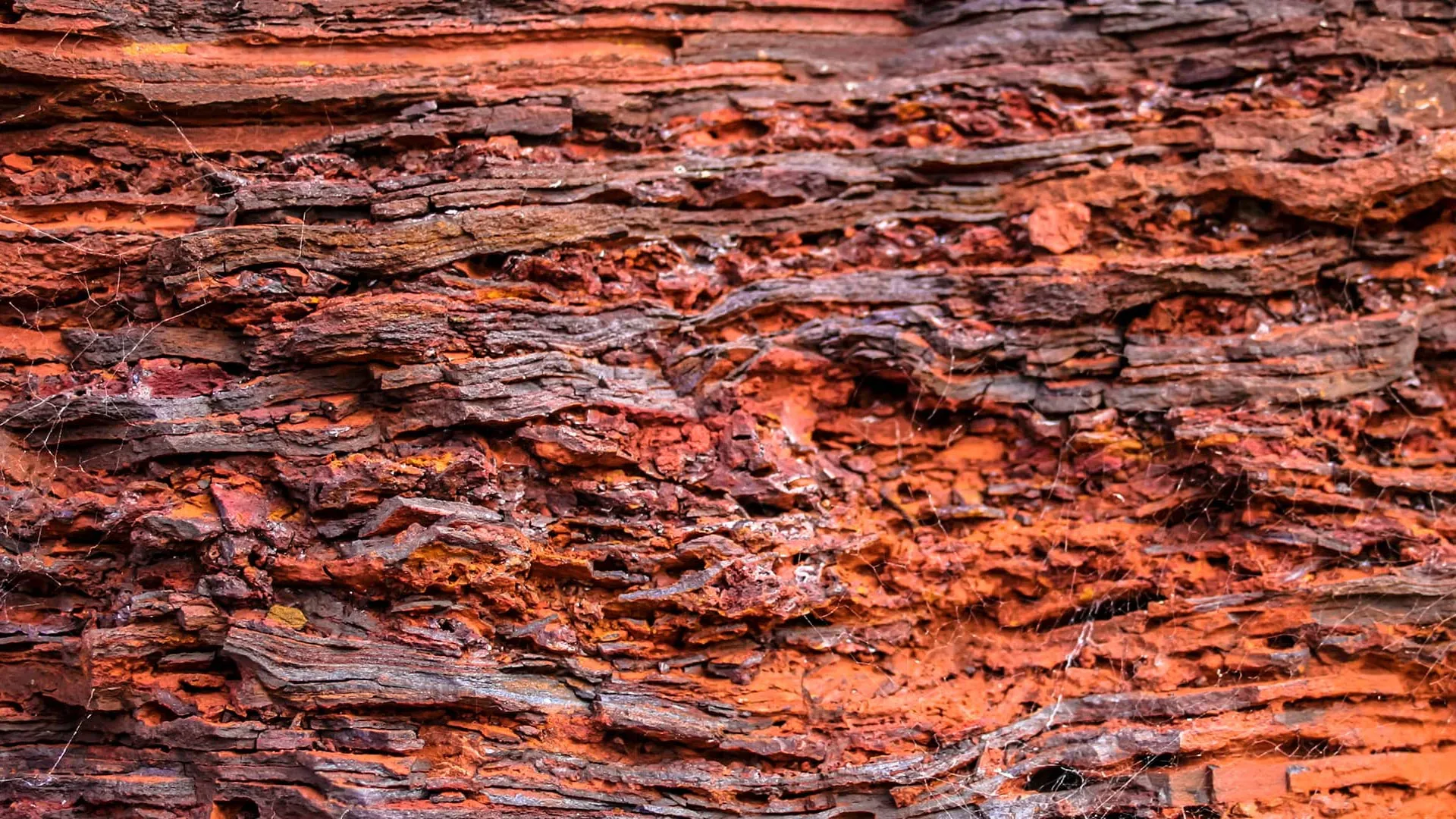
Scientists from Edith Cowan University's School of Engineering found that magnetite can release hydrogen gas when it reacts with hot water under conditions similar to those deep below the Earth's surface.
The researchers placed magnetite samples in water at 200C under high pressure for 60 days, conditions designed to reproduce the hot, pressurised environment found deep underground.
The study found that the amount of magnetite alone does not determine how much hydrogen can be produced: yield depends also on how easily water can access fresh mineral surfaces through fractures, pores and permeable pathways.
Magnetite is abundant in Western Australia's huge iron ore deposits across the Pilbara region.
Western Australia contains some of the largest banded iron formations on Earth.
The research, titled "Geometry-driven controls on hydrothermal natural hydrogen generation from magnetite mineral," was published in the International Journal of Hydrogen Energy, 2026, volume 220, article 154187.
Distinct publishers with included, body-backed reporting in this cluster.
1 article · August 29, 2026
Follow any of these and your For You feed starts watching them — no settings page required.
product
Geologic hydrogen's firmest numbers come from mine vents, not reservoirs1 distinct publisher
Evidence-backed comparisons of source perspectives and observed adoption signals. Read the methodology
Which Builder, Operator, and Investor concerns the observed source mix emphasized—not a truth score.
Evidence, demonstrated adoption, hype gap, incentives, and confidence are assessed independently, each on its own current evidence. How these are measured.
Real paper, unquantified retelling
A citable article stands behind this — International Journal of Hydrogen Energy 2026, volume 220, article 154187, six named authors — and the experimental frame is stated precisely: magnetite in water, 200°C, high pressure, 60 days. Past that boundary the reporting turns to adjectives. Generation 'increased' after injection, with no magnitude, no chemistry and no sample count, so a reader gets a mechanism they can believe and a size they cannot check. The geometry finding is the sturdiest thing on offer, because it is the one conclusion the paper's own title commits to.
No uptake to measure
Nobody in this reporting is drilling, permitting, funding or buying anything. A 60-day bench run and a journal article are publication, not adoption, and we will not read a deployment signal into a university announcement that names no partner, project or site.
'Major exporter' rests on a sealed vessel
Follow the escalation: samples of magnetite sat in hot water for two months, and by the fourth paragraph Australia is a potential major exporter of clean energy with enough hydrogen to benefit for generations. Nothing in between supplies a volume, a rate, a recovery fraction or a cost. The gap is not that the chemistry is doubtful — hydrothermal hydrogen from iron minerals is a respectable line of work — it is that the release skips the entire distance between a laboratory reaction and a wellhead, and does it in quotes rather than data.
The finding and the megaphone share a byline
This is institutional publicity, disclosed as such: ScienceDaily notes the materials came from Edith Cowan University, and every quoted expert is a co-author of the promoted paper. That does not make the chemistry wrong, but it does explain why the language reaches for reserves and export markets rather than error bars — a natural-hydrogen result framed as a state-scale opportunity travels further with funders and with a Western Australian audience already fluent in resource booms. We can see the channel and the authorship; we cannot see who paid for the work, and the reporting does not say.
Transparent, but unaccompanied
We are confident about what this reporting is: one dated item, one issuing institution, one checkable citation, no contradicting account. We are much less able to judge the finding itself, because nothing independent sits alongside it and the numbers that would settle the scale question were never published. Fair reading of a single, self-interested but honestly labelled source.