Product1 publisher3 min readPublished
Underwater data centers relocate the AI infrastructure bill, they do not cancel it
Microsoft quit its subsea program in 2024. China, Japan, Singapore and South Korea kept building, and the open questions are marine impact, maintenance access and who issues the permit.
The Product Desk · Product desk
Drafted by a language model from the sources cited here and checked against its claim ledger before publication. How we use AISend a correction
What happened
- The AI boom is driving unprecedented demand for data centers, raising concerns about energy consumption, water use and carbon footprint, prompting companies to look beyond traditional land-based data centers.
- Some developers are exploring the ocean as a location for AI infrastructure, hoping underwater data centers could improve energy use and cooling efficiency while using less fresh water and land area than onshore buildings.
- In 2015 Microsoft launched a research project to explore the feasibility, benefits and challenges of underwater data centers.
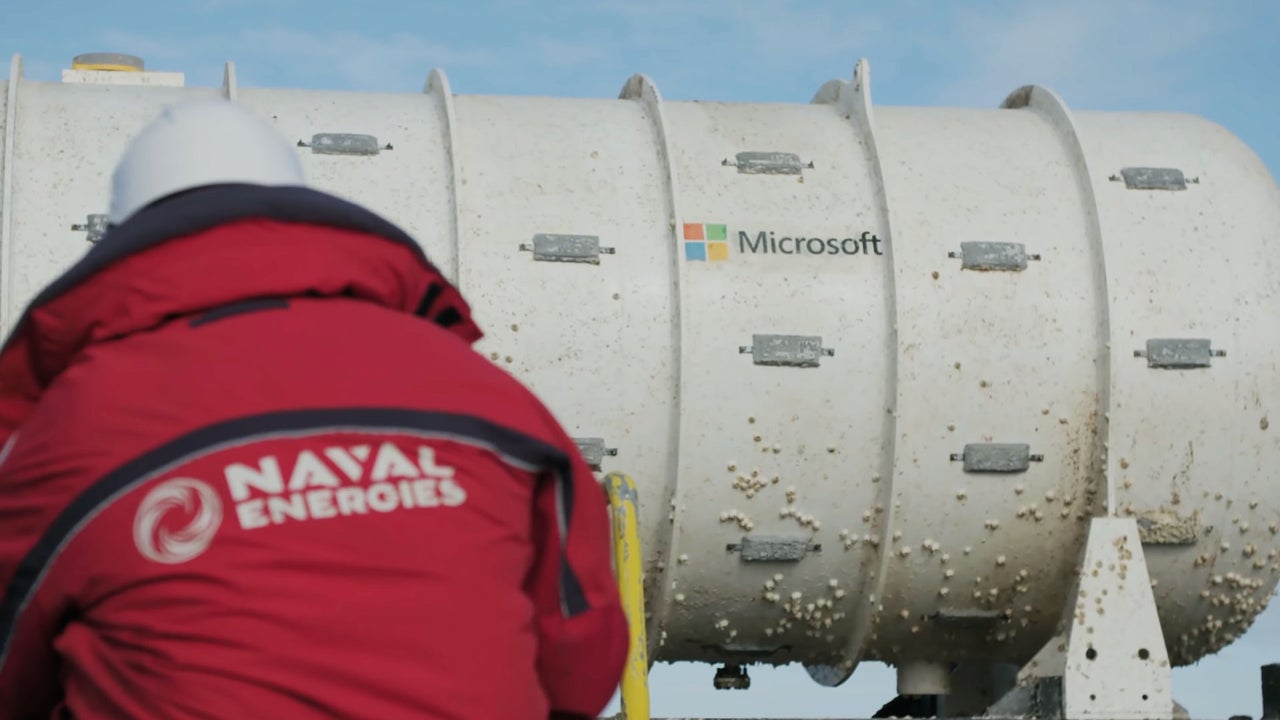
- In 2018 Microsoft set up a waterproof data center on the seafloor near Scotland's Orkney Islands containing 864 servers and connected to shore by an underwater cable.
- After two years, Microsoft reported that servers in the underwater data center failed at about one-eighth the rate of servers in comparable land-based data centers.
Compiled by The Product DeskSomething wrong?How this is made
Why it matters
A researcher writing in Fast Company reports that developers are now putting AI compute into the ocean, in the hope that submerged and floating facilities cut energy use, improve cooling efficiency, and consume less fresh water and land than onshore buildings [1][2]. The same piece notes that Microsoft, which ran the best-known trial, ended its underwater program in 2024 and chose not to build more [8]. That is the tension worth tracking: the projects now under construction inherit the constraints Microsoft walked away from, and those constraints are mostly not engineering ones.
The engineering result was, in fact, good. Microsoft began the research project in 2015 and in 2018 placed a waterproof data center containing 864 servers on the seafloor near Scotland's Orkney Islands, connected to shore by an undersea cable [3][4]. After two years, the company reported the underwater servers failed at about one-eighth the rate of servers in comparable land-based facilities, hypothesising that a sealed environment means less exposure to oxygen, humidity and temperature swings, plus less jostling from technicians swapping parts [5][6].
Microsoft did not say why it stopped [9]. Per the same account, outside analyses point to regulatory concerns including the need for environmental permits, and a preference for faster hardware upgrades and replacements [10]; the company redirected to land-based sites that can be larger, expanded more easily, and physically reached for repair [11]. Read that list carefully. The failure rate improved because nobody could open the box, which is also the reason the box is a problem.
Others took the trade. China built what may be the first wind-powered underwater data center, in Shanghai, launched in June 2025 and in full commercial operation by May 2026 [12][13]. The $226 million project uses seawater as coolant instead of refrigerating fresh water, consuming at least 30% less electricity than traditional data centers, with offshore wind cutting fossil reliance [14][15]. Japan opened a container data center on a floating platform near Yokohama in 2025, powered by on-platform solar with battery storage, with testing running through March 2027 [16][17]. Keppel began building a four-story floating data center in Singapore in 2026, due to open in 2028, using seawater cooling and taking up none of the country's scarce land [18][19]. Ulsan, South Korea, began planning an underwater facility in 2025 for more than 100,000 servers at 30% less power [20] - more than 115 times the server count of Microsoft's Orkney vessel [21]. In Maine, DeepGreen Western Passage has proposed a submersible AI data center in the Bay of Fundy powered by tidal turbines [22].
What the water does not fix: the same researcher is explicit that submerging servers leaves energy consumption and carbon emissions intact, adds concerns about harm to the marine environment, and raises unresolved questions about how these facilities are regulated and how operators maintain and expand them [7]. The source does not quantify the marine impact, which is itself the point at siting time. A permit officer facing a first-of-kind application in a tidal channel has no precedent to apply, and that conversation arrives before the first server rack does.
Watch three dates. The Yokohama test concludes in March 2027 [17], which is the first chance to see operating data from a floating deployment rather than a sealed one. Keppel's 2028 opening is the commercial-scale test of whether four floating stories can be serviced on a normal maintenance schedule [19]. And DeepGreen's Bay of Fundy proposal is where the regulatory question gets answered in public, because a tidal-powered submersible in US waters cannot route around environmental permitting the way a research pod could [22][10].