Product1 publisher2 min readPublished
Apple names Pixel Watch 4 and three rivals in its own 1,400-participant accuracy study
Apple says the Series 12 sensor beat the Pixel Watch 4, Galaxy Watch 8, Oura Ring 5 and Garmin Forerunner 970 against ECG chest straps in a study it ran itself, and the reviewer relaying the claim had none of those devices to check it.
The Product Desk · Product desk
What happened
- Apple detailed a study of more than 1,400 participants wearing ECG-based chest straps, comparing its updated optical heart rate sensing against the Pixel Watch 4, Galaxy Watch 8, Oura Ring 5 and Garmin Forerunner 970.
- The study found the Apple Watch statistically significantly more accurate than the other devices for both overall workouts and overall daily living, according to Apple's account of it.
- The Series 12 carries a new Health Sensing System with a third-generation heart sensor, an always-on optical heart sensor, a blood oxygen sensor and a temperature sensor.
- MobileSyrup's reviewer wrote that Google and Samsung have shipped new devices since the study closed but changed nothing significant in their heart rate sensors.
Compiled by The Product DeskSomething wrong?How this is made
Why it matters
- constraint A reviewer with one loan watch cannot referee a five-device comparison against an ECG chest strap, so the accuracy finding stays Apple's own until another lab runs the measurement and publishes it.
- decision For a buyer, the sensor claim only changes the purchase if somebody will act on the reading, whether that is training load or an apnea screening. A wrist used for notifications and calls will not notice it either way.
- cost The features that would use the better sensor need a settings toggle and a multi-night baseline first. The payoff lands in the second week of ownership, and it lands on whoever sets the watch up.
- precedent A superlative scoped to devices evaluated in this study invites each rival to run a comparison with a sample of its own choosing.
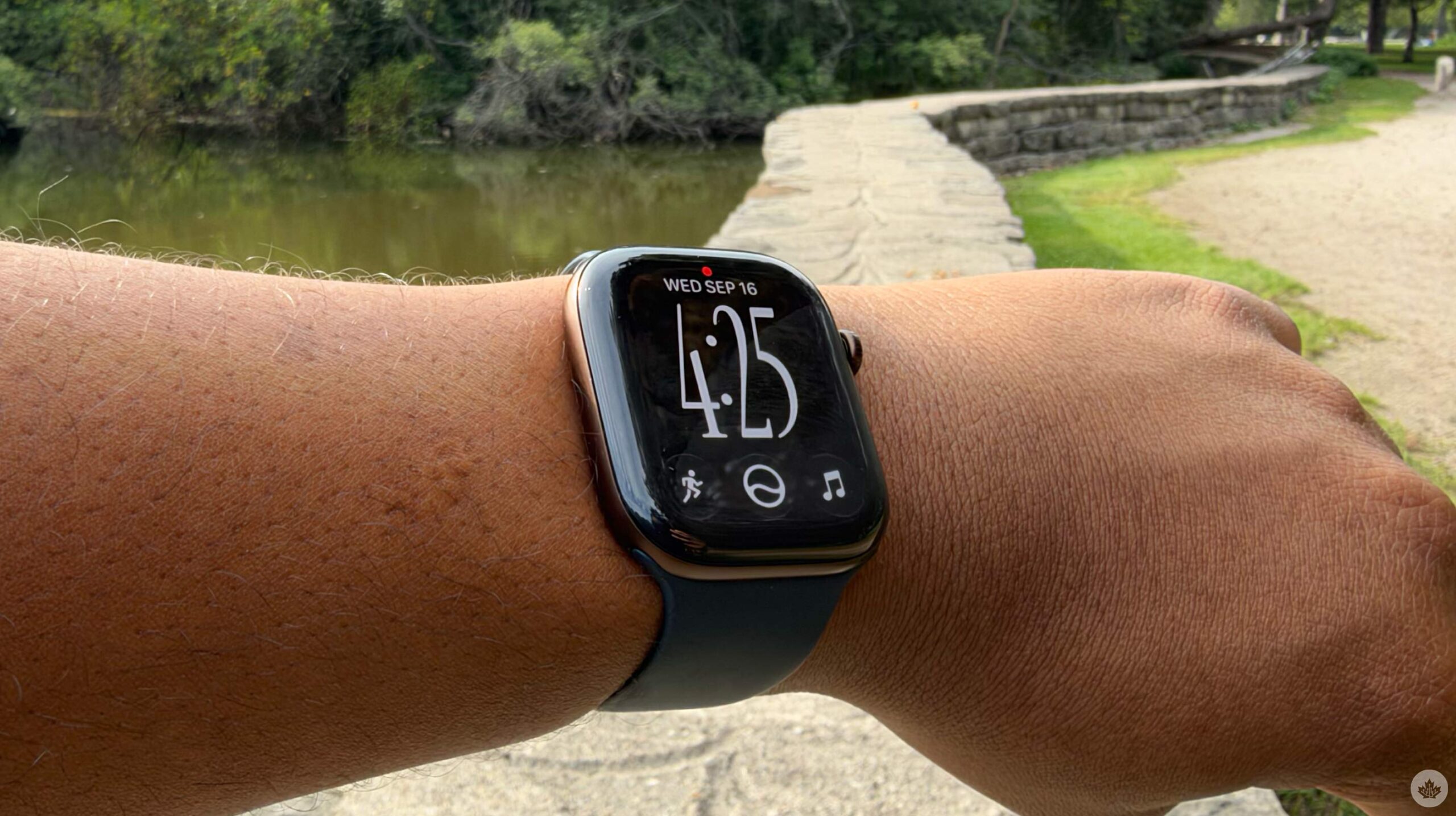
MobileSyrup's reviewer spent his week with the Series 12 checking notifications, answering calls, monitoring sleep and using Siri [8]. He wrote that "a lot of this health stuff isn't for me" [9]. His sleep scores came back better than he expected, including one night at 74 after he woke up several times [13]. Apple's website says sleep quality is influenced by bedtime consistency, sleep duration and how often you wake in the night [14].
Apple's sentence about the sensor is careful about its own scope. "Apple Watch offers users the most accurate heart rate sensing among wearable devices evaluated in this study," the company said [3]. The devices evaluated came to four [18]. The review reports the result as statistically significant without stating the size of the difference [20].
The reviewer was straight about what he could and could not check. "I don't have all of these devices or an ECG-based chest strap to test this out myself," he wrote, adding that Apple "seems to be saying this with its whole chest" and "I'm going to believe them" [5][6][21]. Anyone working from a single loan unit for a week is in that position [15].
Two of the health features that would justify the sensor work are not there on day one. Sleep apnea detection is a separate setting the reviewer had to switch on, and it takes a few days to start working [12]. The Readiness app builds a baseline over seven nights from sleep, overnight vitals, height, weight, age and recent activity, including active calories, workout effort ratings and training load [10][11]. Six nights into wearing the watch, he was one night short of a score [19].
For anyone deciding what to tell a household, a team or a patient about this watch, sort the health features on two axes. Does the wearer have to turn it on? Does it need days of wear before it produces anything? Heart rate accuracy clears both, and when it works nobody sees it. Readiness needs a week of nights before it says a word [10]. Sleep apnea notification needs the toggle, and Apple's own text says it is meant for people who have not been diagnosed [12]. The apnea notification is the feature in this review that changed an outcome for an actual person: it helped MobileSyrup's gaming editor Brad Shankar get diagnosed back on the Series 10 [17].
What to watch
- Whether Google, Samsung, Oura or Garmin publish chest-strap comparisons of their own that name the Series 12.
- Whether Apple releases the study protocol and the size of the accuracy gap, not just the summary claim.
- Whether Readiness, once a full seven-night baseline exists, matches how wearers say they feel.