Product1 publisher2 min readPublished
Apple puts the same watch sensors in a $399 aluminum case and an $899 ceramic one
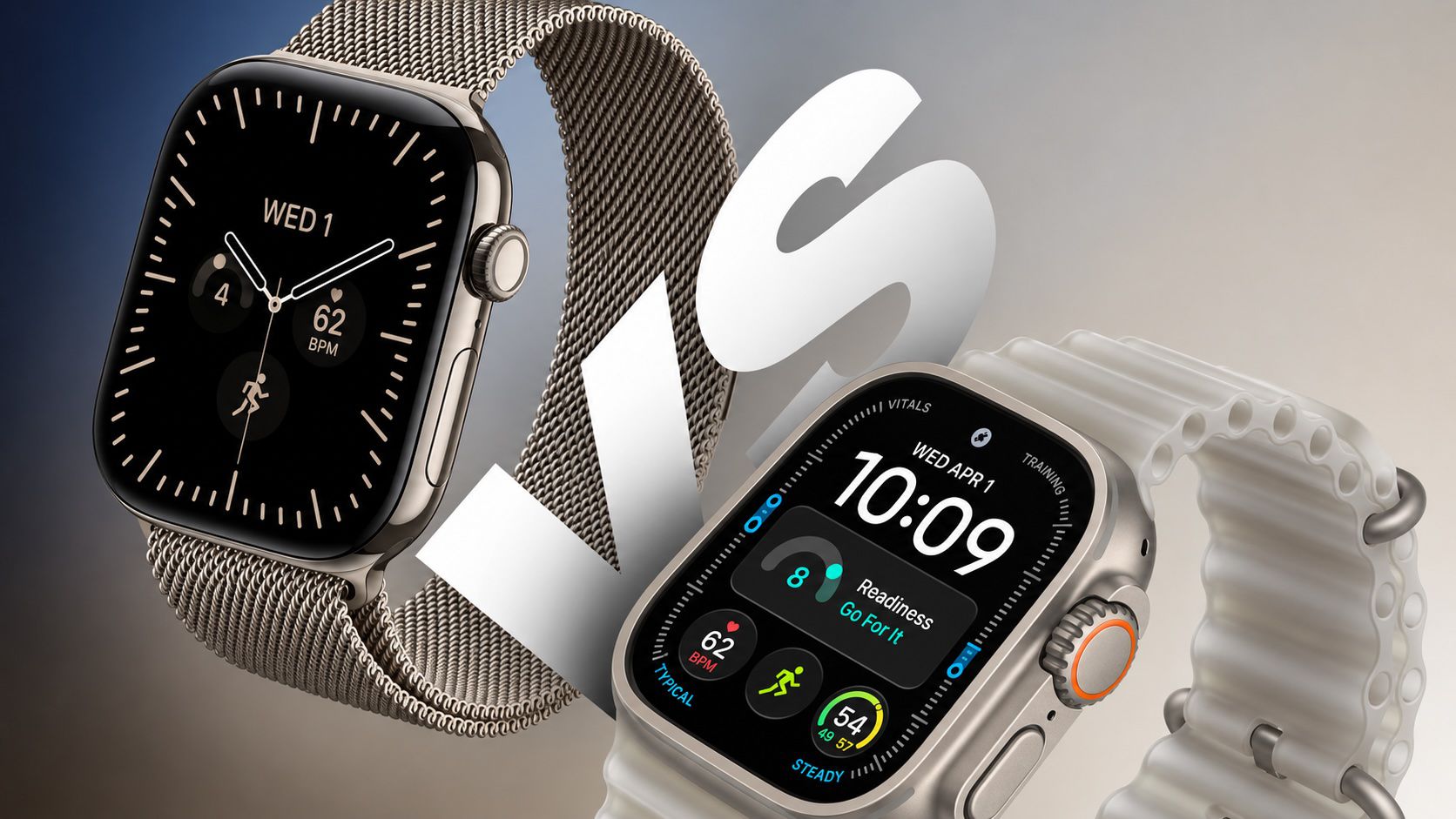
MacRumors' buyer's guide puts the Series 12 and the Ultra 4 on the same S11 chip and the same Health Sensing System, so the $400 between them, and the $500 inside the Series 12 line, buys endurance and case material.
The Product Desk · Product desk
What happened
- MacRumors' buyer's guide puts the Apple Watch Series 12 and Ultra 4 on the same S11 chip, 4GB of RAM, 64GB of storage and the same Health Sensing System, which reads heart rate every five seconds all day.
- The Series 12 starts at $399 and the Ultra 4 at $799, a $400 gap between models whose everyday health features the guide describes as identical.
- A new ceramic Series 12 starts at $899, above the Ultra, in a smaller case with shorter battery life.
- For most users MacRumors recommends the $399 aluminum Series 12, on the grounds that it matches the Ultra 4's performance, sensors and Readiness insights for $400 less.
Compiled by The Product DeskSomething wrong?How this is made
Why it matters
- decision Anyone buying one watch, or issuing a fleet of them, now picks on charging habits and where people work, because the health column comes out the same at either price.
- cost A buyer who wants ceramic pays $500 more than a buyer who wants aluminum for the same silicon and the same sensors, and the money shows up in the finish.
- constraint An upsell script that leans on better health data runs out of material in this generation, so the argument for the dearer watch has to be made on battery hours, water resistance and satellite coverage.
- precedent Pricing a case material above the flagship tier sets the top of the watch range as a finish decision. The next comparison chart has to defend the Ultra on endurance alone.
Someone in a store straps both watches to the same wrist and then hunts for the row where the more expensive one wins. On health there is no such row. MacRumors' guide lists Readiness, Recovery HRV, daytime vitals, improved step tracking, hypertension notifications, sleep apnea notifications and Sleep Score on both models [2], and says the Ultra 4's higher price does not buy more advanced everyday health tracking [3].
The ladder that remains is case material. Aluminum Series 12 starts at $399, titanium at $699 [5] and ceramic at $899 [6]. Titanium costs $300 more than aluminum [16]. From the cheapest Series 12 to the dearest is $500 [13], about 2.25 times the entry price [14], with the same chip and the same sensors at both ends. Titanium sits $100 under the Ultra [11] and ceramic $100 over it [15].
Battery life is the advantage MacRumors calls the Ultra's most broadly useful one [8], with satellite communications, dual-frequency GPS, greater water resistance and extended workout modes behind it for hiking outside cellular coverage, recreational scuba diving and very long events [9]. The guide says the Ultra line stays focused on durability, extended battery life and capabilities for diving and exploration [17]. It is also considerably bulkier and heavier, and its display is only slightly larger than the 46mm Series 12's [10].
The guide sends the buyer who cares most about health data to the $399 aluminum, which it says delivers the same performance, health sensors, Readiness insights and Audio Intelligence features for $400 less [7].
A test for anyone choosing one, or deciding which model to hand a team. Count last month: nights the watch was worn to bed and had to reach morning without a charge, days spent outside cellular coverage, dives, events longer than a normal workout. If those counts come back at zero, the extra $400 is buying endurance nobody scheduled, and the extra $500 inside the Series 12 line is buying ceramic.
The record here is a price list and a spec comparison, so it supports the narrow reading: in this generation, health sensing does not move with price. The guide does not report sales mix or how earlier generations divided sensors between tiers. At the top of the range it is blunt. MacRumors wrote that the $899 ceramic Series 12 "is primarily a choice of material and finish; choose it because you prefer its appearance, rather than expecting more capabilities than the $799 Ultra."
What to watch
- Whether Apple's own comparison pages start leading with battery hours and water resistance now that the sensing rows match.
- Return and exchange behaviour on the $899 ceramic Series 12. That behaviour would show whether buyers expected capability along with the finish.
- Whether a future Ultra regains a sensor the Series does not have, putting health hardware back on the price ladder.