Security1 publisher2 min readPublished
Apple signs iPhone photos inside the camera hardware before software touches the pixels
Reference Image on the iPhone 18 Pro puts one signature on the sensor's raw output and a second on the developed file. The capture time it proves is only good to about 15 minutes.
The Watch · Security desk
What happened
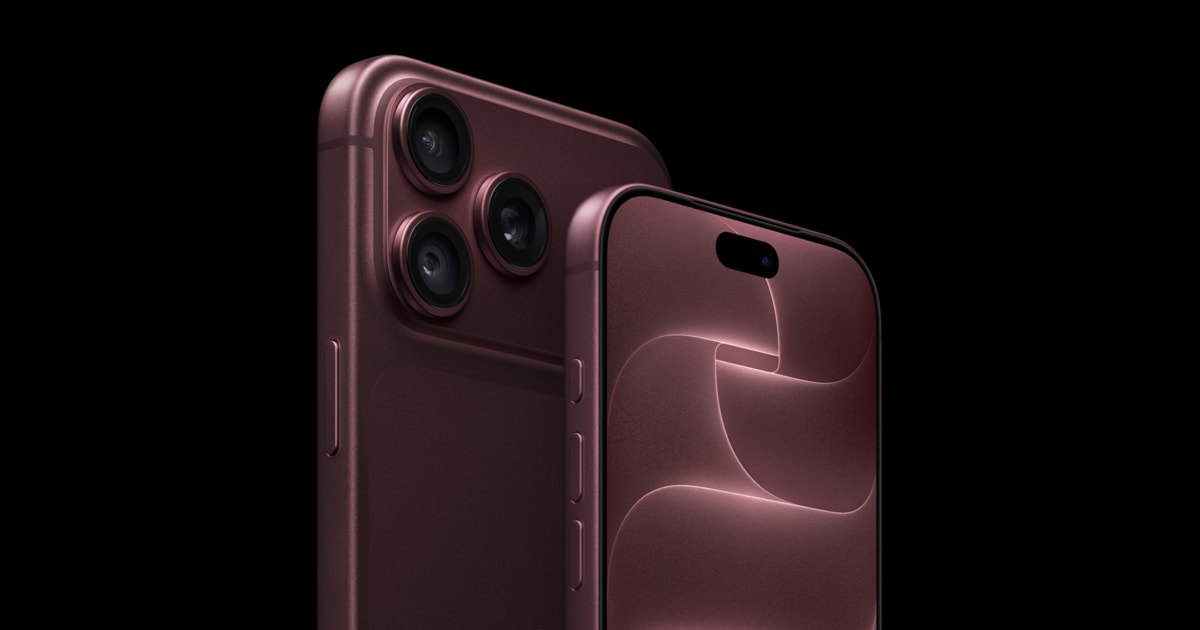
- Apple announced Apple Reference Image, an opt-in mode debuting on the main cameras of the iPhone 18 Pro and iPhone 18 Pro Max that produces securely timestamped images whose capture history can be independently verified.
- When the mode is on, the sensor reboots into a specialized capture mode and cryptographically signs the pixel data immediately after capture, with the sensor's own metadata protected under the same signature.
- Values that did not come from the sensor, including digital zoom and lens parameters, are signed separately by the Secure Enclave Processor, and everything ships in a DNG negative with device information and cryptographic timestamps.
- Signed timestamp tokens delivered roughly every 15 minutes over an existing APNs heartbeat set the lower bound on capture time, and a token requested after the shot sets the upper bound.
- Developing the negative sends it to Private Cloud Compute, which verifies the signatures and device-sensor relationships before demosaicing, tone mapping and JPEG compression.
Compiled by The WatchSomething wrong?How this is made
Why it matters
- capability Fraud, claims and KYC reviewers get one question with a cryptographic answer: did these pixels come off a genuine iPhone sensor, inside a bounded time window.
- constraint Confidence in any given image depends on Apple continuing to attest to its own hardware, because clients decide validity by downloading and checking Apple's revocation lists for compromised sensors and individual images.
- decision A policy that treats a missing signature as a red flag will reject honest submissions, since the mode covers two phone models and only fires when the user turns it on.
Provenance schemes that sign an image after a software pipeline attest to whatever the pipeline emitted. Reference Image starts authentication at the sensor [13]. That moves the target: to forge one, an attacker has to produce data a real sensor would produce, before any software gets to it. Apple says it built the mode because genuine photographs are getting harder to tell apart from AI-generated or heavily manipulated ones [14].
The final artifact is signed by Apple. Once Private Cloud Compute finishes its checks, Apple's signing service signs the developed image using a hybrid RSA-3072 and ML-DSA-87 scheme [8]. Apple says PCC prevents the company itself from viewing the photograph, and that production PCC software is recorded in a cryptographically protected transparency log open to inspection [7].
The time bound is coarser than the cryptography. A frame captured one second after a heartbeat token carries a lower bound up to 15 minutes earlier than the shutter, so the proven window can run about a quarter of an hour wide [15]. That is enough to refute a photo backdated by days, though it will not order two images shot in the same 15 minutes.
Apple says the system cannot establish that the scene itself was truthful or unstaged [12]. Photographing a printed forgery, or a screen, yields a real capture of a fake scene. Against synthetic or injected frames, PCC calculates a confidence score based on whether the captured data resembles expected physical sensor output [11].
Two design choices cut against fraud analytics. Timestamp requests use Oblivious HTTP, so the timestamp service never learns the requesting device's IP address [9]. Reference images contain no public identifier linking multiple photographs to the same iPhone or the same photographer [10], so a reviewer holding fifty submitted images has no way to cluster them by handset.
Apple's announcement does not describe verification tooling or a published specification for third parties [16]. Until one exists, anyone checking a submitted Reference Image has to use Apple's own path to do it.
What to watch
- Whether Apple publishes verification tooling or a specification third parties can implement without routing images through Private Cloud Compute.
- Whether any other sensor vendor ships signing at capture, the test of whether this becomes an industry primitive or an iPhone feature.
- The first revocation list entry for a compromised sensor, and how fast clients pick it up.