Invest1 publisher3 min readPublished
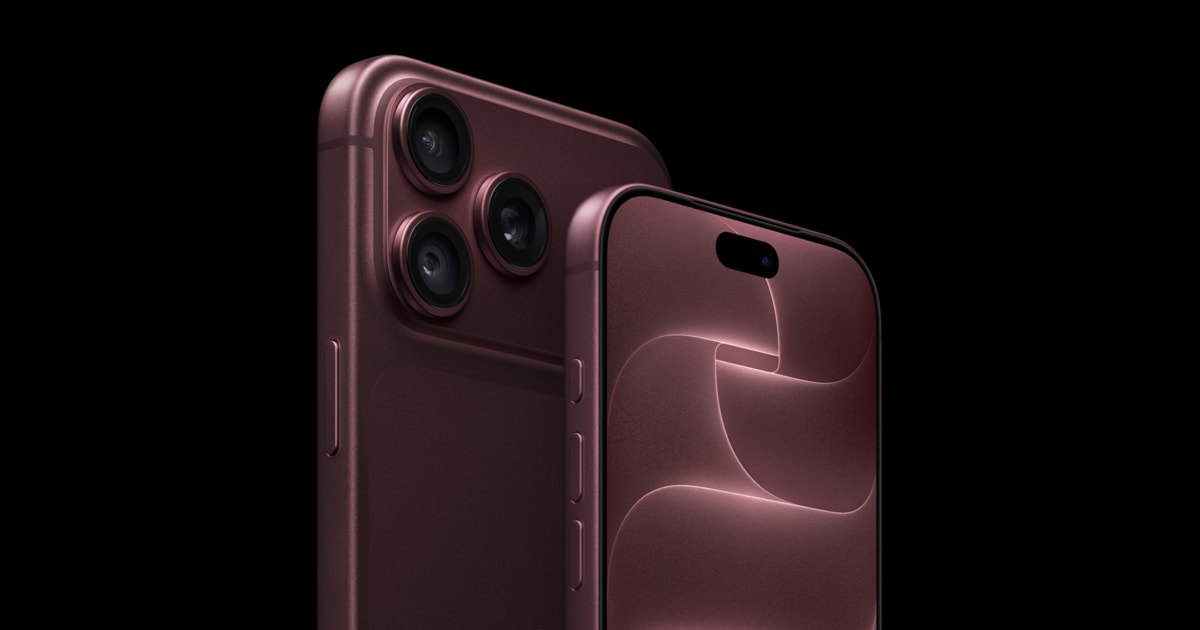
Apple makes itself the notary for every authenticated iPhone 18 Pro photo
Reference Image has the iPhone 18 Pro sensor sign raw pixels inside the Secure Enclave, and Apple keeps verification on its own servers while Google, Leica, Sony and Canon sign with the open C2PA standard.
The Investor · Invest desk
What happened
- Apple has added a capture-authentication feature called Apple Reference Image to its new iPhone 18 Pro models, according to reporting by Fast Company.
- Shoot in the new Reference mode and the camera sensor cryptographically signs every pixel it records, a step Apple says no other phone or camera on the market performs.
- ETH Zurich's on-silicon version of the same idea remains a laboratory prototype with a patent application filed and no commercial product.
Compiled by The InvestorSomething wrong?How this is made
Why it matters
- constraint With Apple as the notary, a picture desk that leans on Reference proofs accepts that its evidence can be withdrawn by a party outside the newsroom.
- decision Anyone funding a provenance workflow now picks between a C2PA parser, Apple's APIs, or both, and that budget line decides which cameras the desk can treat as verified.
- capability A proof that travels with the file and verifies on the recipient's device lets a checker confirm an image without disclosing to Apple that the check happened.
- precedent Because the first sensor-level signing at scale is proprietary, later entrants get measured against Apple's implementation instead of a public key register.
Private Cloud Compute checks each signature against a database of valid hardware, and it can reject an authentication or retroactively revoke one if a sensor or key has been flagged as compromised [7]. Verification is a live lookup against Apple's list.
An authenticated photo can travel by AirDrop or Messages with its proof attached, and it verifies on the recipient's device without another call to Apple's servers. Apple never learns which photos are being checked [8]. Apple sees less of the checking that way. It still maintains the hardware key list [7].
Apple already supports C2PA for AI-generated and AI-edited images, and it did not use the standard for capture [17]. Google's Pixel 10 signs every photo from its stock camera app with C2PA Content Credentials, the keys held in the Titan M2 security chip [10]. Leica, Sony and Canon sign with the same standard [11]. Four named hardware makers are on the open path [1]. Apple's objection is specific. Under current C2PA implementations the seal comes from the main processor, after the sensor data has crossed the device's internal wiring. An attacker who taps that path can substitute an AI-generated feed that the processor then certifies as genuine [12].
Fast Company says it asked Apple about the omission and has not yet published a response [18]. A newsroom tool that wants to read both kinds of proof needs two integrations: a C2PA parser and Apple's APIs across iOS, iPadOS and macOS 27. Those APIs display reference images and show how a photo has been manipulated since capture [9][2].
ETH Zurich built the same idea in March, putting the hashing and signing circuitry on the same silicon as the pixels [13]. "If data is signed the moment it is captured, any later manipulation leaves traces," said researcher Fernando Cardes. Forging it would require a physical attack on the chip, he added, costly enough that "the mass generation of manipulated content for social media platforms would be practically impossible" [14][15]. Their design would publish each sensor's public key to a public, append-only register, with a blockchain floated as one option, so anyone could verify a file without trusting a single company [19]. Franke said that in such a model "it is barely of any relevance whether a person or the technology involved in data processing and transmission is trustworthy" [20]. The chip is a laboratory prototype with a patent application filed and no commercial product [16]. Apple's version stands as the first real-world deployment of sensor-level signing at scale.
The feature ships switched off and needs a trip into camera settings [4]. A check needs someone to tap a badge in Photos or a compatible app [6]. Two affirmative acts stand between a shutter press and an examined proof [3]. The cost of two standards therefore falls on tool builders first. It could run two other ways. Apple publishes a C2PA binding for the capture proof and the split closes at the file level. Or platforms surface Apple's badge and not C2PA's, and the open standard becomes the second-class path. Both designs still depend on distribution [22].
What to watch
- Whether third-party verification tools ship Apple Reference support alongside C2PA during the iOS 27 cycle.
- Whether any camera maker licenses ETH Zurich's patented on-silicon signing design for a shipping sensor.
- Whether Apple turns Reference mode on by default in a later iOS 27 release.