Anthropic's $35B Lambda contract puts Nvidia on both sides of the table
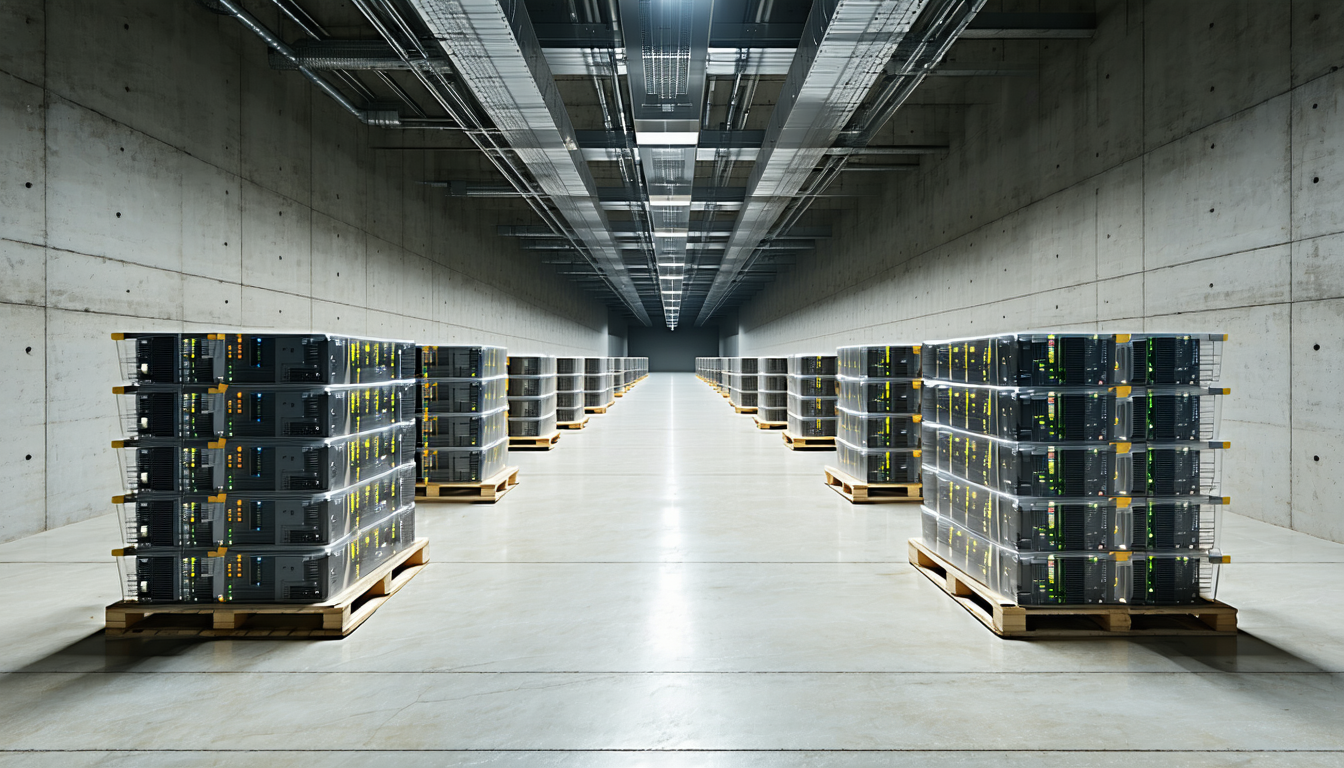
The deal locks in guaranteed silicon rather than platform features. On this Texas site the arithmetic comes to roughly $20 million per megawatt-year, and the concrete shell is the cheap part of it.
The Engineer · Build desk
What happened
- A source familiar with the matter told Reuters that Anthropic has signed a $35 billion cloud-computing deal with Nvidia-backed Lambda covering a Texas data center.
- The same source put the project in Nueces County, developed by former crypto miner Hut 8, with capacity of about 350 megawatts.
- The Wall Street Journal, which broke the story, reported that Nvidia itself would hold the lease on the data center behind the contract.
- A source cited by Reuters described the capacity as tens of thousands of Nvidia H100s, H200s and forthcoming Blackwell chips.
- Anthropic said the week before that it would spend $45 billion renting cloud compute from Nscale's West Virginia campus.
Why it matters
- Who's exposed exposure The supply guarantee is only as firm as Lambda's ability to keep refinancing, since the provider has been buying Nvidia chips with short-term debt while preparing another round.
- Who has to decide decision Funding plus cloud credits from Google and Amazon no longer secures the workload, so hyperscaler stakes in labs have to be justified as financial returns rather than captive demand.
- What it limits constraint Only a tenant whose offtake can underwrite a 350MW build gets this option, which leaves smaller labs bidding for allocation inside someone else's control plane.
- What it costs cost Buyers negotiating dedicated training capacity now have a rough reference of $20 million per megawatt-year, and whoever pays it also absorbs the storage, identity and scheduling work a hyperscaler used to supply.
Next story · Invest · 5d ago
Amazon in talks to buy Decart for about $7 billion, maker of software that optimizes AI models across NVIDIA, Google and Amazon chipsConfirmed11 publishers
Divide the commitment by the site. Thirty-five billion dollars over five years is about $7 billion a year [14]. Set that against roughly 350 megawatts and you get about $20 million per megawatt-year [15]. The $35bn and the 350MW both come from the source Reuters spoke to [1][5]; the five-year term comes from the dev.to account of the deal [2].
Now price the building. Hut 8 said in July that its 15-year lease with an investment-grade customer carried a base-term contract value of $19.6bn [10], and the Financial Times reported Nvidia was the tenant of the 1GW Beacon Point campus [11]. That works out to roughly $1.3 million per megawatt-year [19], about fifteen times cheaper than the capacity price [20]. The two numbers may not describe the same asset, and the sources do not say the Nueces County project is part of Beacon Point. Even so, the direction is unambiguous: the shell and the power contract are a rounding error against the accelerators, the networking, the operators and the margin stacked on top of them.
For that $20 million per megawatt-year to mean anything for your workload, several things have to hold. You have to be buying five-year committed capacity rather than on-demand hours. Your fleet has to be dense H100, H200 and Blackwell of the sort the source described [17]. Power has to be inside the number rather than passed through. And you have to not need the managed storage, identity and orchestration that came free-ish with a hyperscaler contract, because at this layer you build them. A lab with its own training stack clears all four of those conditions; most buyers, by contrast, clear none of them.
What changed here is not independence. Anthropic already holds billions in funding and cloud credits from Google and Amazon [12], and dev.to reads the Lambda deal as a pivot away from depending on firms that ship competing models [4]. But according to the Wall Street Journal the lessee on this data center is Nvidia itself [6], the reseller is Nvidia-backed [1], and the hyperscaler path leads to the same upstream anyway, with AWS reported to be ordering another 2 million Nvidia chips for 2027 and 2028 [18]. The landlord changed; the underlying dependency on Nvidia did not.
What I would underwrite carefully is the counterparty. Lambda has raised $1bn of short-term debt to buy Nvidia chips to rent to Microsoft, and is preparing a further round [13]. A $7bn-a-year book on that balance sheet is a financing question as much as an engineering one. Meanwhile Anthropic added $45bn of Nscale capacity the week before [8], which is $80bn of rent announced in about a week by a company heading for an IPO [16][9]. Nobody in that procurement team is short of paperwork.
What to watch
- On-record confirmation: Anthropic, Nvidia, Hut 8 and Lambda all stayed silent when Reuters asked, so filings or an IPO prospectus are the next hard source.
- Whether the Nueces County project turns out to be part of Hut 8's Beacon Point campus, which would let the lease and the offtake be read as one asset.
- Lambda's next financing round, and whether Microsoft stays a co-tenant of the same Nvidia fleet.
Clarity's read
What the record supports and how the coverage leans. The claims behind it follow.
Reality
- Evidence40
- Adoption30
- Hype gap+40
- Incentives80
- Confidence45
Perspective Coverage
3 publishers- Builder
- Builder 30%
- Operator
- Operator 33%
- Investor
- Investor 37%
Claim ledger
Ranked by verification strength, evidence, and original report placement.
- [1]
Anthropic has signed a cloud-computing deal worth $35 billion with Lambda, a cloud provider backed by Nvidia, for a Texas data center, according to a source familiar with the matter speaking on Monday on condition of anonymity.
- [2]
Anthropic has reportedly committed to a cloud deal valued at $35 billion over the next five years, with Lambda rather than AWS, Azure or Google Cloud.
- [3]
A person familiar with the details of the $35 billion Anthropic-Lambda agreement reported it on 31 August, according to mezha.net citing Reuters.
- [4]
dev.to characterises the Lambda arrangement as a strategic pivot in which Anthropic avoids tying its future to a tech giant that also develops competing AI models.
- [5]
The project is being developed in Nueces County by crypto-mining-turned-AI data center company Hut 8 and covers a capacity of about 350 megawatts, according to the same source.
- [6]
The Wall Street Journal, which first reported the deal, said Nvidia itself would hold the lease on the data center.
- [7]
Anthropic, Nvidia, Hut 8 and Lambda did not immediately respond to requests from Reuters for comment outside regular business hours.
- [8]
Anthropic said in the preceding week that it will spend $45 billion to rent AI cloud computing power from Nscale's West Virginia data center campus.
- [9]
IPO-bound Anthropic has been aggressively expanding its computing power to meet demand growth it expects for products such as its AI coding tool, Claude Code.
- [10]
Hut 8 said in July it had signed a lease deal with an investment-grade customer for 15 years, with a base-term contract value of $19.6 billion.
- [11]
The Financial Times later reported that Nvidia was the tenant for Hut 8's 1-gigawatt Beacon Point campus.
- [12]
Anthropic has already taken billions in funding and cloud credits from both Google and Amazon.
- [13]
Lambda raised $1 billion in short-term debt to buy Nvidia chips to rent to Microsoft, is scaling AI infrastructure and is preparing a new investment round.
- [14]
The Lambda commitment averages about $7 billion a year.
- [15]
Spread over the roughly 350MW Nueces County site, the commitment prices at about $20 million per megawatt-year.
- [16]
The Lambda and Nscale commitments together total $80 billion of announced rented compute.
- [17]
The arrangement secures access to tens of thousands of Nvidia H100s, H200s and forthcoming Blackwell chips, according to a source familiar with the deal cited by Reuters.
- [18]
Amazon Web Services will order a further 2 million Nvidia chips in 2027-2028 to expand its AI infrastructure amid record demand for compute.
- [19]
Hut 8's disclosed lease works out to about $1.3 million per megawatt-year.
- [20]
The capacity price is roughly fifteen times the disclosed lease price on a per-megawatt-year basis.
Sources
3 independent publishers whose own reporting we read for this story.
- dev.toAnthropic + Nvidia: The $35B AI Cloud Shift
1 article · September 1, 2026
- economictimes.indiatimes.comAnthropic cloud deal: Anthropic signs $35 billion cloud deal with Nvidia-backed Lambda - The Economic Times
1 article · August 31, 2026
- mezha.netAnthropic уклала угоду з Lambda на $35 млрд для хмарних обчислень
1 article · August 31, 2026
Topics and entities
Topics
- Data centre capacity and power
- Nvidia ecosystem financing
- Specialist AI clouds
- Anthropic pre-IPO strategy
- AI Compute Contracts