Science1 publisher2 min readPublished
Bite simulations split eight ancient armoured fish into crushers and piercers
Flinders University researchers loaded 3D models of placoderm jaw plates from a Western Australian reef and found the smallest and the largest species both had the strongest jaws for hard food, built on opposite designs.
The Scientist · Science desk
What happened
- Flinders University researchers ran computer-based bite simulations and three-dimensional analysis of biting surfaces on eight placoderm species to reconstruct how they fed in the oceans 385 million years ago.
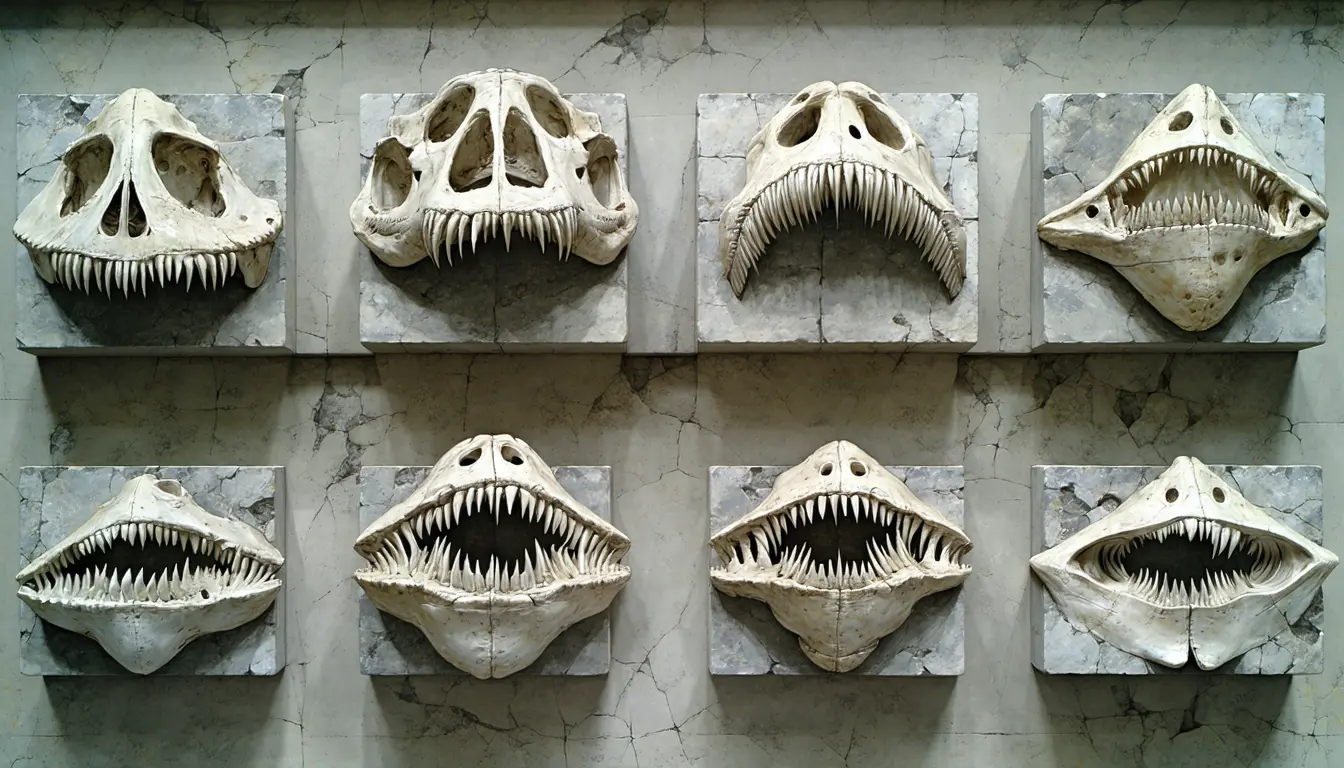
- The smaller species examined used broad, flat plates to crush whole prey, while the larger ones had weapon-like teeth that pierced and broke apart shelled and armoured prey too big to swallow.
- Both the smallest and the largest species came out with the strongest jaws for hard bites, the smallest with almost featureless crushing plates and the largest with highly complex, elevated dental surfaces.
- The work is published in Scientific Reports, with first author Dr Rex Mitchell, who studies how diet relates to skull shape.
Compiled by The ScientistSomething wrong?How this is made
Why it matters
- contradiction The rule Clement states, that hard diets favour broader and flatter crushing surfaces, held at the small end of the size range and inverted at the large end, so surface shape alone is a poor guide to how hard a fossil fish's food was.
- constraint Eight species of a single age can show that one reef had more than one hard-biting design; they cannot date that diversity to the origin of jaws, which is at least 15 million years older than the fossils.
- capability Loading 3D models of the fossil plates gives palaeontologists a way to compare feeding function in animals with no single lower jaw bone, where no living species offers a match to calibrate against.
The simulations measure how well each jaw shape supported biting force. The team built 3D models of the fossil jaw bones, loaded them digitally, then compared the results against a second measurement, the complexity of each species' biting surface [11]. Diet itself is an inference drawn from those two numbers together with body size [11][12].
The usual expectation runs in one direction. Dr Alice Clement, an ARC Future Fellow at Flinders, said: "We know that animals feeding on hard foods usually evolve stronger jaws and broader, flatter crushing surfaces, but that's not exactly what we found in this analysis." [7]
In the largest species, the teeth sat along a raised bony crest, a shape the authors compare to the heads of medieval armour-piercing weapons such as war hammers and poleaxes [13]. Their explanation for the split turns on the size of the predator against the size of its prey. Small armoured prey could be engulfed whole and crushed between broad flat plates, while larger prey had to be broken into pieces first, and piercing armour needs a point [12]. Austin Fitzpatrick, a PhD student and co-author, said the two ends of the size range "solved the problem of processing harder foods in completely different ways" [10].
The jaws themselves are unfamiliar. "Unlike many animals around today, including humans, placoderms did not possess a single lower jaw bone. Instead, their jaws consisted of paired bony plates supported by cartilage, with surfaces ranging from broad crushing plates to sharp slicing edges with tooth-like structures," Mitchell said [9].
The sample is eight species, all from the Gogo Formation in northern Western Australia and all of one age [2][3]. Clement said placoderms "experimented with an extraordinary range of jaw shapes and biting parts during the early evolution of vertebrates" [8]. Eight species support the conclusion the authors draw for this reef, which is that hard-object feeding among the earliest jawed vertebrates had more than one solution [14]. They are a weaker basis for dating that diversity to the origin of jaws. Placoderm jaws and teeth appeared more than 400 million years ago, at least 15 million years before these fossils [1][18].
John Long, an emeritus professor at Flinders and a co-author, has worked at the Western Australian site for 40 years and found some of the specimens used in the study [15]. Research at the Gogo Formation has included collaborations with the local Gooniyandi and Gogo community [16]. "Since 2013, placoderms have been directly linked to our evolution, as the start of the line leading from fishes to humans," Long said [17].
What to watch
- Whether the same crusher and piercer division appears in placoderm assemblages outside the Gogo Formation.
- Whether direct dietary evidence, such as gut contents or tooth breakage, matches the mechanical predictions for these eight species.
- Whether older placoderms, closer to the 400-million-year origin of jaws, show a comparable range of biting surfaces.