Security1 publisher3 min readPublished
Pentagon memo orders seven mandatory wellbeing steps at Cyber Command after a suicide cluster
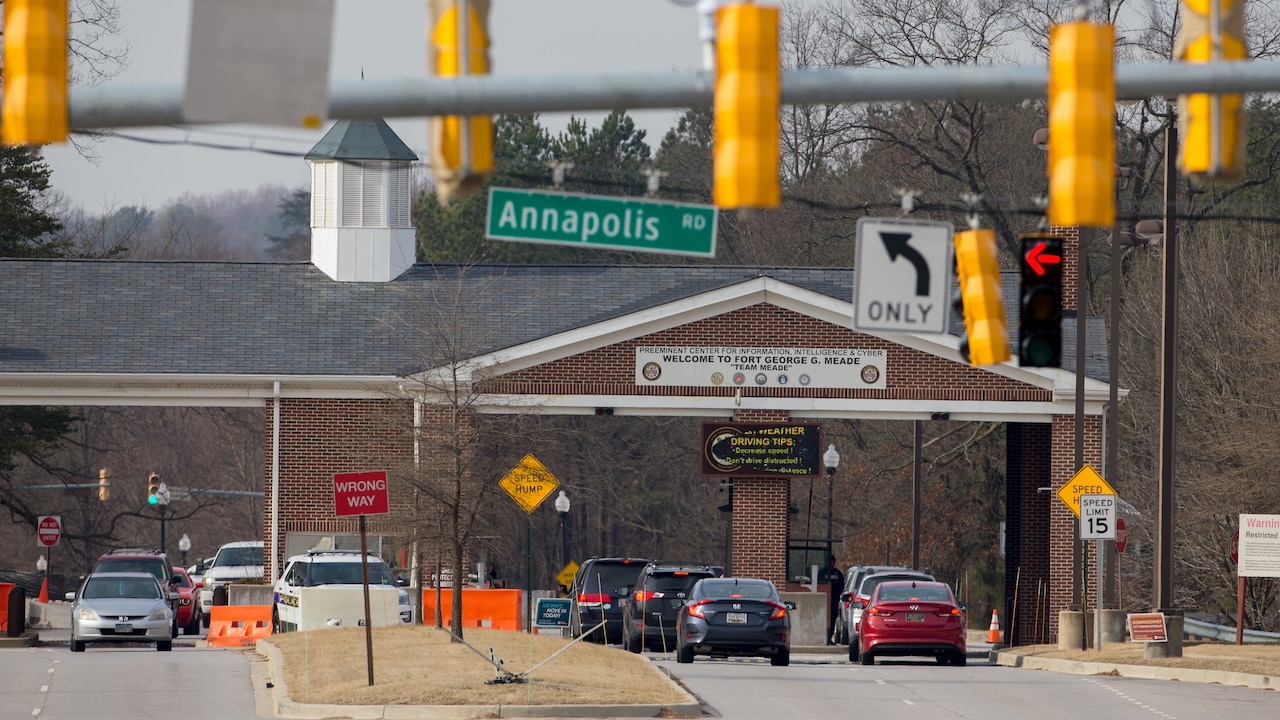
Katherine Sutton, the Pentagon's top cyber policy official, gave Cyber Command seven mandatory wellbeing steps in an August 31 memo, two due within 30 days. The memo puts dates on operator strain, though whether workload played any part in the deaths is still unknown.
The Watch · Security desk
Drafted by a language model from the sources cited here and checked against its claim ledger before publication. How we use AISend a correction
What happened
- News reports this summer of a suicide cluster at Cyber Command came before the memo and sent command officials and congressional lawmakers looking for more mental health resources.
- Cyber Command must finalize an agreement with the NSA, its Fort Meade neighbor also led by Gen. Joshua Rudd, to place behavioral health professionals inside Cyber Mission Force operational spaces.
- The command has 60 days to propose changes to consecutive tour policy, adding instructor duties, career pathing and educational assignments that break up continuous operational stress.
- Col. Dan Kim of Sutton's office said the department is working on unit phasing that would let operators almost always in contact with adversaries step away regardless of operational demands.
Compiled by The WatchSomething wrong?How this is made
Why it matters
- constraint If phasing works as Kim described, operators leave the keyboard whatever the operational demand, so mission planners have to staff around scheduled gaps in contact with adversaries.
- exposure Four years of climate surveys and exit interviews give Sutton's office a baseline to measure the command against, so retention and strain can be checked from outside the command.
- decision The NSA arrangement is labeled interim, so the command still has to decide how it will build and staff a permanent behavioral health capacity of its own.
- precedent Modeling on SOCOM's force-preservation program sets special operations units as the benchmark for how much structured recovery cyber teams can expect.
The memo describes the problem as a workload problem. The "continuous, high-tempo nature of ongoing active cyber operations imposes a unique cumulative, cognitive and psychological toll," it states [6]. It continues: "Unlike traditional kinetic forces, cyber teams lack standardized periods of operational restitution, reconstitution between deployments which impact retention and long-term analytic performance." [7]
According to Recorded Future News, which obtained the memo, it is still unknown whether daily workloads were a factor in the deaths. The outlet said the memo's language signals that senior officials are aware of the possibility [5]. It described the memo as "something of a bureaucratic warning to Cyber Command to act swiftly" [20]. Spokespersons for the Pentagon and Cyber Command did not respond to its request for comment [13].
The clock started August 31 [2]. The first two steps have 30 days, which puts them due around September 30 [1]. They require four years of "historical organizational climate survey data and standardized exit interview summaries" to set a health baseline for the force [9]. By mid-October the command owes a Cyber Occupational Resiliency and Engagement Framework. It also owes force employment and "dwell phasing" measures meant to make recovery more predictable and reduce cumulative strain in the Cyber Mission Force [11]. The tour-policy proposal falls due around October 30 [2].
Sutton tied the order to readiness. "As we look to expand and enhance the long-term resilience and readiness of our cyber forces, we must establish formal, proactive structures to support our operators," she wrote [3]. She asked the command to move "from a reactive posture to a systematic, proactive force preservation model" [8].
Part of that structure was already owed. The memo is meant to make Gen. Joshua Rudd follow through on an action the department said it would take in response to a provision in the fiscal 2024 defense policy bill to study the "occupational resiliency" of the Cyber Mission Force [12]. The command must now appoint a co-lead for the Governance and Cyber Wellness Working Group, which was also promised in response to the previous defense policy bill. That co-lead will be the primary liaison between Fort Meade and Sutton's office [18]. So Congress created the obligation and the policy office has now set the dates. A final step has the command working with the department and the Joint Staff on a review [19].
Air Force Col. Dan Kim, the senior military adviser in Sutton's office, described where this is heading at HammerCon, the Military Cyber Professionals Association's annual event [14]. He said the command is developing "elite performance modeling" based on U.S. Special Operations Command's Preservation of the Force and Family program, which puts the "human at the center" [16].
What to watch
- Whether Cyber Command delivers the four-year climate survey and exit interview baseline by about September 30, and whether any of it is released.
- Whether the NSA memorandum of agreement is signed, and how many behavioral health professionals it actually places in Cyber Mission Force spaces.
- Any finding on whether workload contributed to the deaths, which would test whether phasing and tour changes address the cause.