Science1 distinct publisher3 min readPublished
Every child in the Columbia study was under 18 in 2001 and had a parent diagnosed with PTSD, and the ones whose parents arrived earliest or handled human remains are doing worst a quarter-century later, without a sample size attached.
The Scientist · Science desk

Compiled by The ScientistSomething wrong?How this is made
Follow any of these and your For You feed starts watching them — no settings page required.
science
Herders' heat protocols are written for a rest break the job never allows1 distinct publisher
Yael Cycowicz describes a kind of transmission that happens without anyone saying a word. "The children did not see the tremendous amount of destruction that their parents saw, but their parents brought it home in a way. They didn't have to talk about it, but in their behavior, they somehow communicated their fear, anxiety, mistrust and worry," she says of the cohort she led [9]. That is a plausible route. It is not the only one a design like this leaves open: shared genetic liability and the household consequences of living with a parent whose functioning changed both predict child depression too, and the interview does not say which of them the paper adjusted for [14].
The part that carries real weight is the gradient. Because every family in the study already had a parent diagnosed with PTSD soon after the attacks [3], the contrast doing the work is between families with more and less parental exposure: parents who reached the site very early, stayed a long time, or were exposed to human remains have children with more mental health problems now [5]. A within-cohort gradient of that shape is harder to explain backwards. A child who is depressed in 2026 was not the reason a parent went to the pile in September 2001. What it does not rule out is that the more heavily exposed parents differed beforehand, in seniority, in assignment, in how long they were kept on the job.
The occupational split has the same virtue and a sharper limit. Children of rescue and cleanup workers are doing somewhat worse than children of police [6]. Cycowicz attributes that to preparation and peer community, noting that the cleanup workers were largely construction workers with no established support structure for this kind of work [7]. The same sentence contains the confound: they were also there for months and months [7]. Training and duration move together in these two groups, so the study can report the gap and not apportion it.
That same direction had already turned up in earlier reports, and nobody followed it. Prior reports had more than 20% of police officers and more than 30% of relief workers describing behavioral problems in their children after the attacks, with no follow-up on those children [8]. Those are thresholds rather than point estimates, but they sit 10 percentage points apart in the same order as the new finding [16]. And the arithmetic on age matters for reading the outcomes: 25 years on [13], a cohort that was under 18 in 2001 [3] now runs from roughly 25 to 42 [15], so these are adult psychiatric outcomes, not childhood behavior reports.
What the study does not report is magnitude. The interview reports no sample size, no effect sizes, and no comparison against population base rates [14], and depression and anxiety are common in adults of that age. "More likely" is a direction, and a program office planning dependent care needs a number. Cycowicz also flags that every parent here had PTSD, so the result does not yet speak to responders who developed other conditions [12]. What she does name as protective is social support inside the family, among friends, and in the wider community, for responders and children alike [10]. That is a household variable. A protocol keyed to the worker's own diagnosis never measures it.
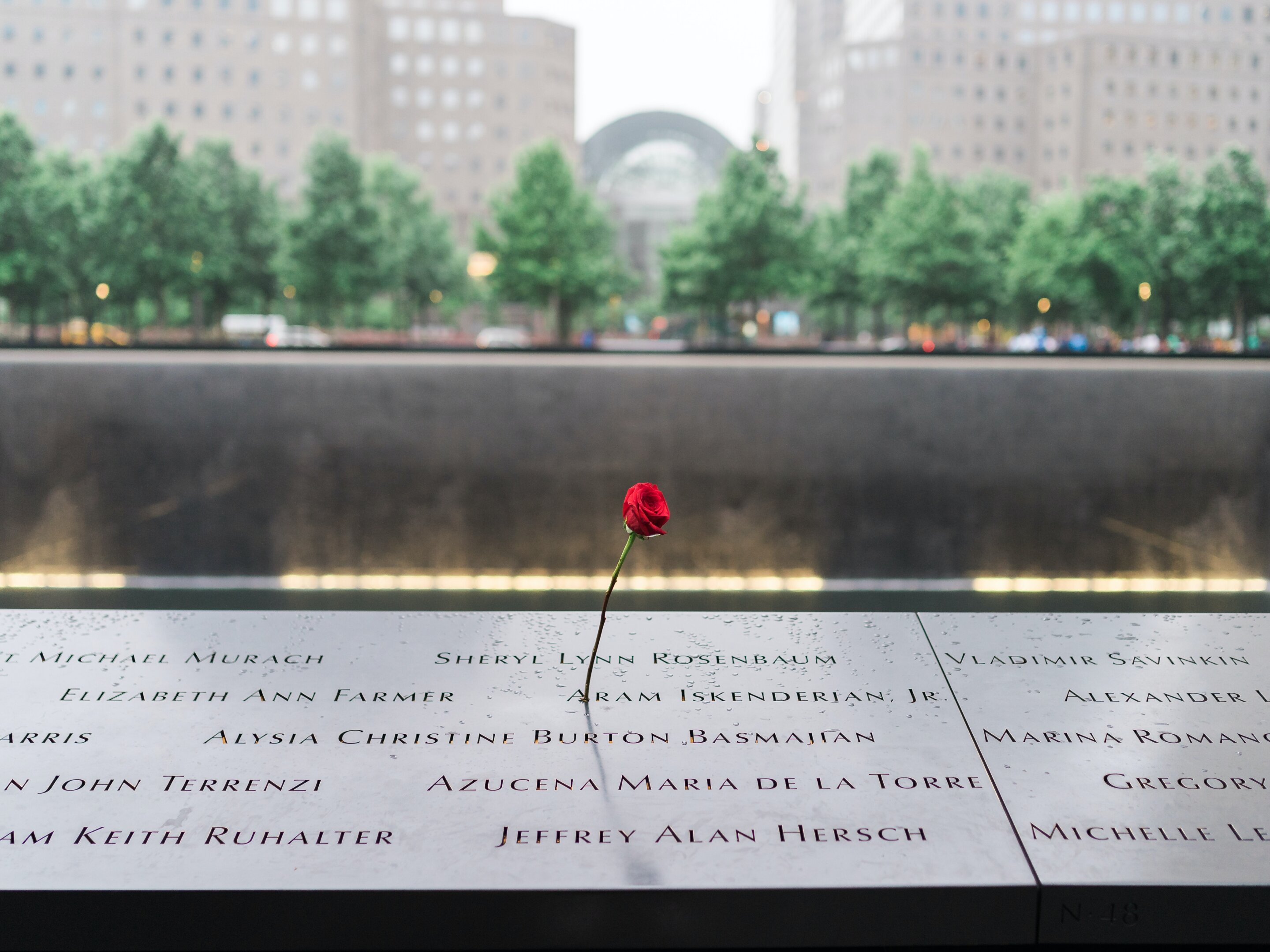
Ranked by verification strength, evidence, and original report placement.
The study found that children of 9/11 responders who developed PTSD soon after the attacks were more likely to develop PTSD, depression, anxiety or panic symptoms themselves.
Cycowicz says there was a clear psychological impact on the children, although they were less likely to develop PTSD themselves; the researchers saw much more depression and anxiety, which she attributes to the parent's mental health affecting the children's.
The length and type of the parent's exposure mattered: when parents came to the site very early after the attack, spent a lot of time at the site, or were exposed to human remains, their children were more likely to have mental health issues. Cycowicz says she was surprised the associations were still detectable so many years later.
Cycowicz says police are trained to deal with challenges and have their own community for support, while the rescue and cleanup workers were largely construction workers who were not trained for such destruction, lacked an established peer-support community, and unlike many first responders "were there for months and months."
The study also examined resilience: the better the social support, within the family, with friends and with a larger community, the better the outcome for both the responders and the children.
The study was conducted by researchers in the Department of Psychiatry at Columbia University Vagelos College of Physicians and Surgeons, published in the journal PLOS Mental Health, and led by Yael Cycowicz, associate professor of clinical neurobiology, who directs the Neuro-Cognition and Emotion Lab.
Distinct publishers with included, body-backed reporting in this cluster.
phys.org
1 article · September 1, 2026
Evidence-backed comparisons of source perspectives and observed adoption signals. Read the methodology
Which Builder, Operator, and Investor concerns the observed source mix emphasized—not a truth score.
Evidence, demonstrated adoption, hype gap, incentives, and confidence are assessed independently, each on its own current evidence. How these are measured.
Peer-reviewed paper, unquantified retelling
A real PLOS Mental Health paper sits behind this — Columbia's department is named and the DOI is printed — but every fact reaching the reader arrives through a conversation with its lead author. The findings are given as directions only: children 'more likely' to be depressed or anxious, rescue and cleanup workers' children 'a little worse.' No sample size, no effect sizes, no general-population comparison, no statement of what the analysis adjusted for. Direction is well attested; magnitude is entirely absent.
A finding, not yet a practice
There is nothing to count. Cycowicz recommends bringing families into treatment and building community support around responders, but our coverage shows no clinic, union, or responder health program that has changed anything in response. Uptake may follow; none of it is on the record here, and we will not invent it.
Headline settles what the interview leaves open
The headline says responders 'passed effects of trauma to their children' — causal, finished. Underneath, the study looked only at families where a parent already had a PTSD diagnosis, and Cycowicz herself notes the children were less likely to develop PTSD and that extension to other responders' families remains untested. The overreach is in the packaging rather than in the researcher's answers, which are consistently hedged.
The paper's author, in her own institution's format
One voice speaks, and it belongs to the person whose work is under discussion, in the university-interview genre that exists to make research land well. You can see it in the closing turn: the resilience result is nominated as 'probably our most important finding' because 'it gives hope,' and the piece ends on what New Yorkers owe the people who cleared downtown. None of that makes the findings wrong. It does mean nobody in this coverage is positioned to push back on them.
Confident about what, not about how much
We can say the study exists, who ran it, whom it studied and which way its results point. We cannot say how strong the effects are, how many families they rest on, or whether they hold outside a sample chosen for parental PTSD. One reading of the paper itself, or one comment from an outside psychiatric epidemiologist, would move this figure sharply in either direction.