Science1 distinct publisher3 min readPublished
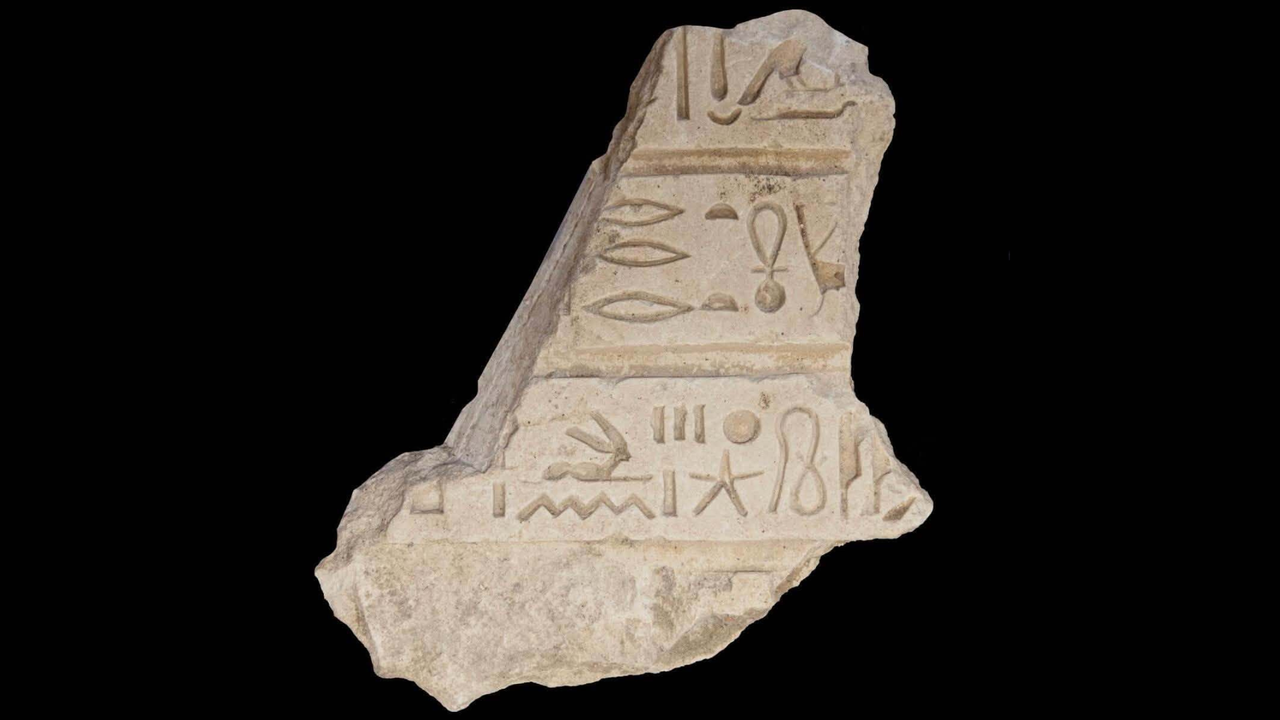
Archaeologists at Tell Abu Seifi have a Ramesside inscription calling Horus "Lord of the City of Mesn" and a nearly destroyed temple to him. The same divine title turns up at other sites, which is the problem.
The Scientist · Science desk

Compiled by The ScientistSomething wrong?How this is made
Fixing an ancient name to a mound is an argument about whether the name sat still. A divine epithet does not sit still: it belongs to a cult, and cults travel with their priests and their portable objects. That is why Gregory Mumford's point carries weight, that similar inscriptions mentioning Mesn have been found at other sites in the region [19], and why the ministry's own wording stops at a strong possibility rather than an identification [7]. What makes the label worth arguing over is Peter Brand's reading of the place as one of the jumping-off points for Egyptian armies heading to Canaan, Lebanon and Syria [13].
The part of the announcement that does positional work is a match between a text and an object in the same ground. Brand, a historian at the University of Memphis who was not involved in the excavation, notes that the new inscription describes Ramesses II restoring a statue of Horus of Mesen [16], and that the pedestal of a statue like it had already been found at the site [17]. Two records of one act of royal patronage in one location is a better link than either on its own. The thing this doesn't tell you is whether the pedestal was found where it stood, and for an object whose evidential value here is its immobility, that is the detail worth waiting for.
A temple would ordinarily settle much of this. Hesham Hussein, who helped lead the work for Egypt's Ministry of Tourism and Antiquities, told Live Science that the Horus temple at the site was almost completely destroyed and hard to get much information from [5]. Brand calls the temple of Horus of Mesen the most important religious center in its area [15]; what is left of it at Tell Abu Seifi is a thin witness to that.
Most of the site's other Mesn evidence is late. A bronze seal from the Ptolemaic period, roughly 304 to 30 B.C., reads "Horus, Lord of Mesen", and Ptolemaic coffins from the site carry similar inscriptions [9]. Set the end of Ramesses II's reign, about 1213 B.C. [2], against the start of the Ptolemaic period, about 304 B.C., and the same divine title brackets roughly 909 years at one location [20]. Cult persistence of that length is interesting in itself, and it is not a measurement of a city: Hussein said that while the archaeological identification remains uncertain, no reliable estimate of Mesn's extent or population can be offered [8].
James Hoffmeier, of Trinity International University, calls the case strong and wants ceramics from the site before he is sure [18]. Pottery cannot name a place. It can say when the place was occupied and how continuously, which is the control on an argument currently built from one royal text and a set of later objects bearing the same god's title.
Ranked by verification strength, evidence, and original report placement.
Hussein noted that a bronze seal previously found at Tell Abu Seifi, dating to the Ptolemaic period (circa 304 to 30 B.C.), is inscribed "Horus, Lord of Mesen", and that coffins of Ptolemaic date previously found at the site carry similar inscriptions.
A 3,200-year-old Egyptian inscription found near an ancient military road at the site of Tell Abu Seifi may indicate the location of a long-lost city, archaeologists announced.
The inscription mentions Ramesses II, who reigned from about 1279 to 1213 B.C.
The inscription says that Horus, a falcon-headed god associated with the sky and war, is the "Lord of the City of Mesn", according to representatives of the Egyptian Ministry of Tourism and Antiquities in a translated statement.
The team also found the remains of a temple dedicated to Horus at Tell Abu Seifi, according to the ministry statement.
Hesham Hussein, director general of Delta and Sinai Archaeology at Egypt's Ministry of Tourism and Antiquities and a leader of the research team, told Live Science by email that "the temple was almost completely destroyed", making it difficult to get much information from it.
Distinct publishers with included, body-backed reporting in this cluster.
Follow any of these and your For You feed starts watching them — no settings page required.
science
Zircon ages tie a caldera buried under eastern England to Scandinavia's Kinnekulle ash1 distinct publisher
science
A drug-insensitive enzyme in the mouse gut strips 80% of metformin's glucose-lowering effect1 distinct publisher
science
Feeds are triaging patients by engagement, and the proposed defence is literacy, not moderation1 distinct publisher
science
A transplanted lung carried a 12-year-old donor's peanut allergy for a year1 distinct publisher
Evidence-backed comparisons of source perspectives and observed adoption signals. Read the methodology
Which Builder, Operator, and Investor concerns the observed source mix emphasized—not a truth score.
Evidence, demonstrated adoption, hype gap, incentives, and confidence are assessed independently, each on its own current evidence. How these are measured.
One outlet, one ministry statement, four outside scholars
Every primary fact arrives through a single translated statement: the inscription is quoted, never shown, and no excavation report or independent epigraphic reading exists to check it against. What raises this above a press handout is the reporting around it. Brand supplies the only piece of outside reasoning, matching the restoration text to a pedestal already excavated at the site, and Hoffmeier and Mumford supply the reasons that match is not yet decisive.
No published uptake to measure
Nothing here ships or gets deployed, and the equivalent measure, whether Egyptologists accept the identification in print, has nothing to read yet: no publication, no peer review and no excavation report is cited, only emailed comments and a ministry statement.
The ministry's "lost city", not the reporting's
"Lost city" is the ministry's phrase and it does a lot of work for a place whose own field director says cannot yet be identified, sized or populated. Live Science does not swallow it: the headline hedges with "may point to", Hussein's caveat sits high in the piece, and the dissenters get named. The overstatement lives in the announcement, and it is the announcement's wording that onward retellings will carry.
Excavator and tourism promoter are one ministry
The body that dug the trench, translated the text and chose the words "lost city" is Egypt's Ministry of Tourism and Antiquities, which counts visitors as well as potsherds. The scholars offering caution are all flagged as uninvolved in the excavation, which is the right disclosure and also why their reluctance carries more weight than the announcement's confidence.
Single account that documents its own dissent
A lone source would normally cap how much can be said, but this one records the disagreement in usable detail: who accepts the identification, who wants pottery first, and which rival sites carry the same title. What cannot be closed from here is that nobody outside the ministry has seen the stone.