Published Security3 min read
Meta's glasses patent puts face recognition inside the capture loop, not beside it
A filing published Thursday describes smartglasses that identify who is in frame, then clip what those people do. Wearables policy at your office stops being hypothetical.
Not a builder's beat, but builders have a standing stake in it.See today for builders
What happened
- Meta has filed a patent for its AI smartglasses that uses facial recognition to automatically detect who is in the frame.
- The patented system creates a video clip whenever one of the detected people does something, such as picking an item up or walking around.
- The system then generates a highlight reel of what just happened.
- A copy of the patent was published Thursday.
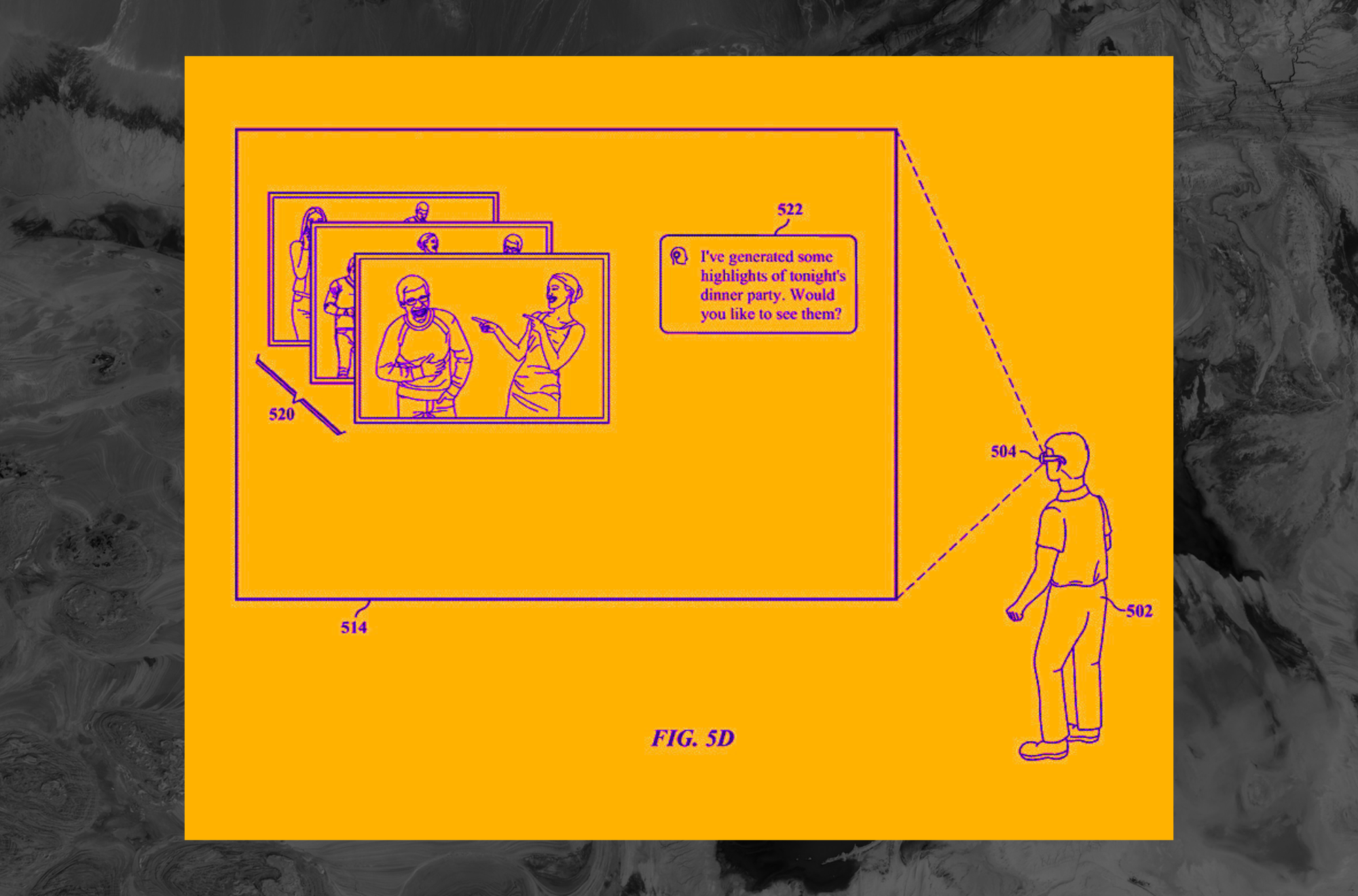
- One example given in the patent is the system capturing highlights from a dinner party and then serving those up to the user.
Compiled by The WatchSomething wrong?How this is made
Why it matters
Meta has filed a patent describing AI smartglasses that use facial recognition to automatically detect who is in the frame, cut a video clip whenever one of those people does something such as picking an item up or walking around, and then generate a highlight reel of what just happened, according to 404 Media, which reviewed a copy of the patent published Thursday [1][2][3][4]. What matters here is not the highlight reel. It is the ordering: as described, recognising who a person is comes before deciding what to record, which makes identification a trigger in the capture path rather than an optional filter applied afterwards [8].
That distinction is the whole compliance question. A feature you can switch off in settings is a policy problem you can delegate to the wearer. A recognition step that sits upstream of clip selection is a property of the device's normal operation, and the person being identified is not the customer. The reporting describes no step in which the people detected in frame agree to any of this [9], and it does not say whether the matching happens on the glasses or on Meta's servers [10]. Those two gaps are where your obligations live, because they determine whether a template derived from a visitor's face ever leaves the room, and who holds it if it does.
Some perspective on stage: this is a patent filing, not a shipped product. 404 Media presents it as new, granular insight into what Meta may be planning around facial recognition and its AI glasses [6], and the publication notes that Meta's push in this direction is already contentious, with the glasses widely nicknamed "pervert glasses" [7]. The example use case in the patent is a dinner party, with the system serving up highlights to the wearer [5]. Read that as a consumer framing that does not survive contact with an office lobby, a hospital corridor, a works council, or a customer site visit.
So treat wearables policy as a live control, not a future one. Three questions are answerable this quarter without waiting for Meta to ship anything. First, does your visitor agreement and your reception script say anything at all about camera glasses, and can your front desk tell the difference between a recording device and a pair of spectacles. Second, do your meeting-room rules distinguish between recording a meeting, which most organisations already govern, and identifying the people in it, which most do not. Third, when an employee or contractor brings their own glasses, whose retention schedule applies to whatever the device generated, and does anyone in your organisation know where that data landed. If the answers are improvised, they will be improvised under pressure, by the person at the door.
What to watch: whether an identification step of the kind described in the filing appears in shipped Meta glasses software rather than staying on paper [1][6]; whether Meta states publicly where face matching runs and how long any derived data persists, since the reporting on the patent does not [10]; and whether your own legal team is asked for a wearables position before, rather than after, the first visitor complaint.
Claim ledger
Ranked by verification strength, evidence, and original report placement.
- [1]
Meta has filed a patent for its AI smartglasses that uses facial recognition to automatically detect who is in the frame.
- [2]
The patented system creates a video clip whenever one of the detected people does something, such as picking an item up or walking around.
- [3]
The system then generates a highlight reel of what just happened.
- [5]
One example given in the patent is the system capturing highlights from a dinner party and then serving those up to the user.
- [6]
404 Media says the patent gives new, granular insight into what Meta may be planning around its push into facial recognition in combination with its AI glasses.
Sources & coverage · 1 publisher
The reporting this story was synthesized from, earliest first. Every link goes to the original.
Additional citations
- 404 Media, reviewing a copy of the patent
- 404 Media