Published · 5d agoProduct3 min read
Ukraine's Samara strike moves Russia's space bottleneck from the pad to the factory floor
A cruise missile hit on the Progress Rocket Space Center targets where Soyuz vehicles are built, not where they fly. Roscosmos was already short of rockets before the strike.
Not a builder's beat, but builders have a standing stake in it.See today for builders
What happened
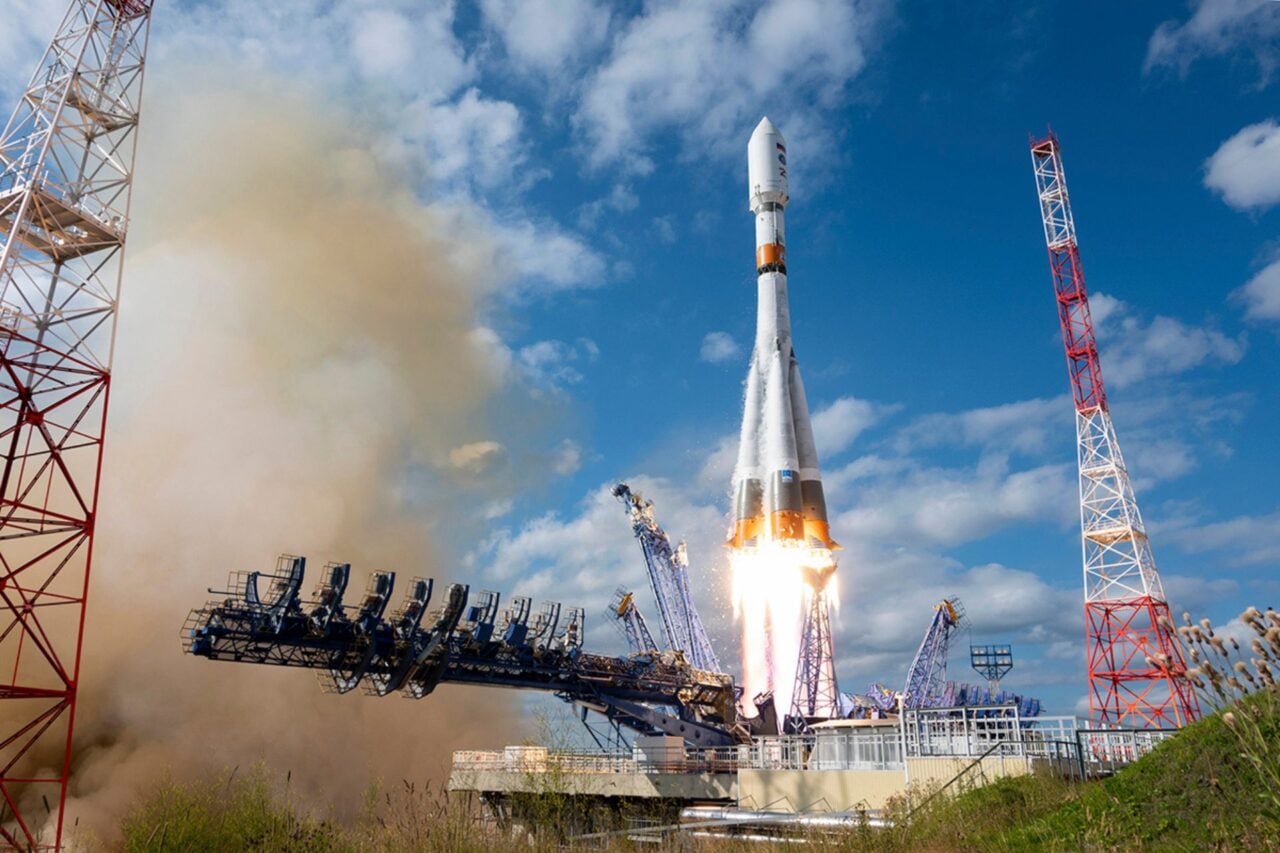
- On Saturday, Ukrainian President Volodymyr Zelenskyy confirmed that his forces carried out a missile strike that damaged the Progress Rocket Space Center in Russia's Samara region, which assembles Soyuz rockets for Roscosmos.
- Zelenskyy said on X: "In Russia's Samara region, one of the key enterprises within Roscosmos - the Progress Center, which was involved, among other things, in electronics production - was hit. Flamingo missiles were used. A good achievement."
- According to Zelenskyy, Ukraine used FP-5 "Flamingo" missiles for the attack.
- Ukraine struck the Progress Rocket Space Center deep within Russia using ground-launched cruise missiles.
- Zelenskyy's post describing the deep strikes is dated August 15, 2026.
Compiled by The Product DeskSomething wrong?How this is made
Why it matters
Ukrainian President Volodymyr Zelenskyy confirmed on Saturday that Ukrainian forces struck the Progress Rocket Space Center in Russia's Samara region, the plant that assembles Soyuz rockets for Roscosmos [1]. According to Zelenskyy, FP-5 "Flamingo" missiles were used, and he described the result as "a good achievement" [2][3]; Ars Technica reported the weapons as ground-launched cruise missiles [4]. The post was dated August 15, 2026 [5].
The consequence is not a slipped launch window. It is supply. Progress assembles the Soyuz-2 and the newer Soyuz-5, and also builds military satellites [7]; the U.S.-based analyst Anatoly Zak of RussianSpaceWeb.com describes it as a prime developer of rockets and spacecraft including both vehicles [8]. Neither Soyuz rockets nor Soyuz spacecraft are reusable, so Roscosmos depends on a steady supply of new vehicles, and a lasting production delay would essentially halt Russian spaceflight [12]. Samara sits roughly 900 km from the Ukrainian border and is Russia's most important rocket manufacturer [6].
The dependency is concentrated. More than 85 percent of Russian rocket launches since 2020 have involved the Soyuz-2 family, according to Ars Technica [10], which leaves under 15 percent of that cadence to everything else [11]. Soyuz-2 lifts about 8 metric tons to low-Earth orbit and is the principal rocket for Russian crew launches to the International Space Station [9]. The Soyuz-2.1b variant also deploys the "Rassavet" constellation, Russia's analogue to Starlink [17]. Cargo and crew rotation, reconnaissance, and broadband build-out all draw on the same production line.
What was hit matters for how long the effect lasts. The Kyiv Post, citing Ukraine's General Staff, reported a direct hit that started a fire on the facility's grounds [13]. Zak points to imagery analysis by the Ukrainian group CyberBoroshno indicating that Building 106A, a clean-room facility for avionics, was struck, next door to Building 106B, used for vehicle integration [14]. Officials have not confirmed which buildings were damaged, and Ars Technica reported it was not immediately clear [15]. Clean rooms and integration halls are slow to replace, and Zelenskyy himself framed Progress as involved in electronics production [2].
The plant was already the constraint before Saturday. In January, Dmitry Baranov, the Roscosmos official responsible for launch systems and a former head of the Center, said orders for Soyuz vehicles were exceeding production capacity, with demand between 2027 and 2030 potentially running 30 to 50 percent above what the plant can build, according to Zak [16]. That warning predates the strike [20]. Roscosmos has meanwhile been contending with funding shortages, technical problems, and isolation from international partners because of the war [18].
Watch for the first Soyuz-2 launch after the strike and any quiet slip in ISS cargo and crew manifests, which would indicate integration capacity rather than avionics stock is the binding limit. Watch also whether military satellite and Rassavet deployments are deprioritised in favour of ISS obligations [7][17]. Zelenskyy also reported strikes on the Savasleyka airbase and an oil facility at Ust-Luga the same day, so the Samara hit fits a broader campaign against deep-rear industry [19].
Claim ledger
Ranked by verification strength, evidence, and original report placement.
- [1]
On Saturday, Ukrainian President Volodymyr Zelenskyy confirmed that his forces carried out a missile strike that damaged the Progress Rocket Space Center in Russia's Samara region, which assembles Soyuz rockets for Roscosmos.
- [2]
Zelenskyy said on X: "In Russia's Samara region, one of the key enterprises within Roscosmos - the Progress Center, which was involved, among other things, in electronics production - was hit. Flamingo missiles were used. A good achievement."
- [3]
According to Zelenskyy, Ukraine used FP-5 "Flamingo" missiles for the attack.
- [4]
Ukraine struck the Progress Rocket Space Center deep within Russia using ground-launched cruise missiles.
- [6]
Samara, the largest city in Samara Oblast, is about 900 km from the Ukrainian border and is home to Russia's most important manufacturer of rockets.
ReportedView cited source
Sources & coverage · 2 publishers
The reporting this story was synthesized from, earliest first. Every link goes to the original.
- arstechnica.comEric BergerAug 15Ukraine strikes major Russian rocket factory with cruise missiles
Cited in this coverage: arstechnica.com
- gizmodo.comEllyn Lapointe6d agoUkraine Strikes Rocket Factory Critical to Russia’s Space Program
Cited in this coverage: Zelenskyy, via gizmodo.com
Cited in this coverage: Ars Technica, cited by gizmodo.com