Published Product3 min read
The drone tariff taxes capability, not just origin: thermal imaging now costs 100%
A three-band schedule puts 100 percent on heavy or thermal-equipped drones, 25 percent on smaller DJI-class units and 15 percent on allied models. Every fleet plan needs requalifying.
Not a builder's beat, but builders have a standing stake in it.See today for builders
What happened
- President Trump has imposed tariffs up to 100 percent on drones that are "particularly sensitive" for national security, the White House announced.
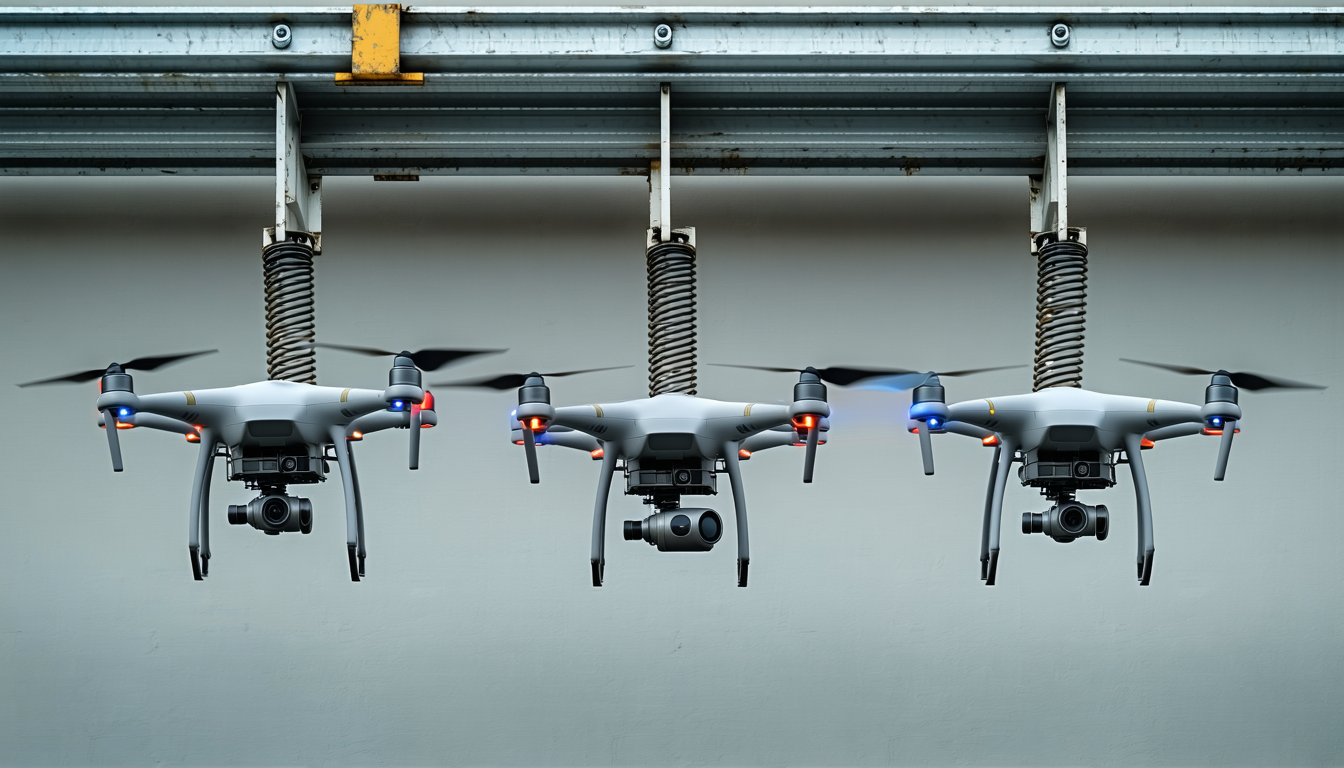
- The White House will impose a 100 percent tariff on drones over 25kg (55 pounds), or those equipped with docking stations or thermal imaging capabilities.
- The 100 percent category includes commercial models from DJI and others used for operations like power line inspection, crop spraying and search and rescue, along with any parts used in their manufacturing.
- Drones under 25kg will be hit with a 25 percent tariff that will apply to new and existing drones by DJI and others already approved by the FCC.
- A 15 percent levy will be applied to models from the EU, Japan, Korea, Switzerland and Taiwan, provided their components are primarily made in those countries.
Compiled by The Product DeskSomething wrong?How this is made
Why it matters
The White House has imposed tariffs of up to 100 percent on drones it calls "particularly sensitive" for national security, in a schedule that bands by weight and capability rather than by vendor alone [1]. For anyone running a commercial fleet, that turns a procurement line item into an engineering decision: find another supplier or accept less capable aircraft than the Chinese models that dominate the US market [15].
The bands: 100 percent on drones over 25kg (55 pounds) or equipped with docking stations or thermal imaging, 25 percent on drones under 25kg from DJI and others already approved by the FCC, and 15 percent on models from the EU, Japan, Korea, Switzerland and Taiwan provided their components are primarily made in those countries [2][4][5]. UK drones get 10 percent [6]. The 100 percent band is four times the sub-25kg rate and sits 85 percentage points above the allied rate [2][1].
Read the 100 percent criteria as written and the capability triggers are alternatives to the weight threshold, which means a compact aircraft with a thermal camera or a docking station lands in the top band, not the 25 percent one [3]. That is the part that reorganises fleets. Power line inspection, crop spraying and search and rescue are exactly the missions Engadget lists as covered, and the tariff extends to any parts used in manufacturing those models [3]. A US assembler sourcing Chinese components does not route around it; an expert told the Financial Post the move closes that loophole [9].
The 25 percent band deserves attention too, because it applies to new and existing models already cleared by the FCC [4]. The SKU on your approved list does not carry its old price.
Tariffs are paid by the importing vendors and passed to buyers, and Engadget notes that even if the levy is struck down in court, buyers are unlikely to see refund cheques [10]. So the cost is immediate and the relief, if any, is not.
Substitution is where the schedule gets hard. The stated aims are national security and on-shoring of drone components, backed by incentive programs for US firms making new manufacturing investments [7][8]. But according to Engadget, DJI's models are advanced enough to be virtually irreplaceable, and the US lacks the localised supply chains, specialised factories, engineering knowledge and skilled labour pools that China has [13][14]. Incentive programs do not deliver a thermal-equipped inspection platform this fiscal year. The 15 percent allied band is the practical alternative for most operators, and it comes with a documentation burden: components primarily made in those countries [5].
The tariff also lands on top of other restrictions. The FCC recently moved to ban sales of LiDAR-equipped drones it had previously approved, citing military use, including DJI models currently on sale in the US, and that ban would also hit drones used by farmers and rescue workers [11]. Separately, there is an existing US ban on new DJI drones, cameras, microphones and other consumer products, which the tariffs appear unrelated to [12].
Watch how the capability triggers get administered: whether a spec sheet or an installed payload determines the band, since detachable thermal and docking accessories decide an 85-point spread [1][2]. Watch whether allied vendors can document component origin fast enough to qualify at 15 percent [5]. And watch the incentive programs against replacement cycles, because the tariff bites now and the factories do not exist yet [8][14].
Claim ledger
Ranked by verification strength, evidence, and original report placement.
- [1]
President Trump has imposed tariffs up to 100 percent on drones that are "particularly sensitive" for national security, the White House announced.
- [2]
The White House will impose a 100 percent tariff on drones over 25kg (55 pounds), or those equipped with docking stations or thermal imaging capabilities.
ReportedView cited source - [3]
The 100 percent category includes commercial models from DJI and others used for operations like power line inspection, crop spraying and search and rescue, along with any parts used in their manufacturing.
ReportedView cited source - [4]
Drones under 25kg will be hit with a 25 percent tariff that will apply to new and existing drones by DJI and others already approved by the FCC.
ReportedView cited source - [5]
A 15 percent levy will be applied to models from the EU, Japan, Korea, Switzerland and Taiwan, provided their components are primarily made in those countries.
ReportedView cited source
Sources & coverage · 1 publisher
The reporting this story was synthesized from, earliest first. Every link goes to the original.
Additional citations
- Engadget, citing the White House
- White House, via Engadget
- an unnamed expert speaking to The Financial Post, as reported by Engadget
- Engadget