Published Product3 min read
Samsung's reported humanoid shortcut aims at the 60 percent line: appliance motors
Korean media reports say Samsung is adapting home-appliance motor technology for humanoid actuators, the cost line that decides whether these machines ever get cheap.
Not a builder's beat, but builders have a standing stake in it.See today for builders
What happened
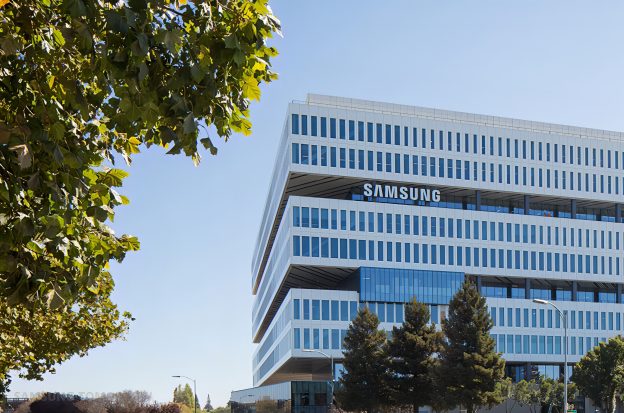
- Samsung Electronics has reportedly been developing a humanoid robot internally for years, separate from its publicly announced Robotics eXperience (RX) division and its Rainbow Robotics subsidiary; Korean media reports say the confidential project has reached an advanced stage and could outperform several domestic competitors.
- Samsung is said to be adapting motor technology from its home-appliance business to develop the robot's actuators, which can account for up to 60 percent of humanoid production costs.
- Samsung produces brushless DC (BLDC) motors at large scale for products such as washing machines, air conditioners and refrigerators.
- These appliance motors use technologies also relevant to robotic actuators, including windings, permanent magnets, rotor balancing and electronic control systems.
- According to experts cited in the report, Samsung's existing production infrastructure could help reduce the cost and time required to manufacture robotic actuators compared with companies building dedicated production capabilities from scratch.
Compiled by The Product DeskSomething wrong?How this is made
Why it matters
Korean media reports, relayed by Interesting Engineering, say Samsung Electronics has been developing a humanoid robot in-house for years, separate from both its Robotics eXperience (RX) division and its Rainbow Robotics subsidiary [1]. The part worth attention is not the secrecy but the supply chain: the same reports say Samsung is adapting motor technology from its home-appliance business to build the robot's actuators, which can account for up to 60 percent of humanoid production costs [2].
Take that 60 percent seriously and the arithmetic is unkind to everyone else in the category. At the upper end of the stated range, the actuators cost more than every other part of the machine combined [1]. A 30 percent reduction on that one line would move total build cost by up to 18 points [2], which is a bigger swing than any other single component can deliver if the 60 percent figure holds [1].
The claimed transfer is plausible on paper. Samsung already produces brushless DC motors at scale for washing machines, air conditioners and refrigerators [3], and the report lists the shared ground as windings, permanent magnets, rotor balancing and electronic control [4]. Experts cited say existing production infrastructure could cut both the cost and the time to manufacture actuators, compared with building dedicated capacity from scratch [5]. Note where that list stops. It is described as motor technology relevant to robotic actuators, not as an interchangeable part [4], and the reports offer no figure for the resulting actuator or unit cost, only that the approach "could give Samsung a significant cost advantage" over rivals [6].
The software side is being reported in more concrete terms. Samsung's Gauss large language model is described as the foundation for its robotics AI [7], and Samsung Research has built Shallow-pi, a vision-language-action model said to cut computational requirements to one third of conventional VLA systems, roughly a 67 percent reduction [8][3], while making 17 decisions per second [8]. In factory testing it reportedly hit a 95 percent success rate on precision water-hose insertion, coordinating 22 degrees of freedom across two arms and hands [9]. Samsung is also said to be developing a World Model that predicts physical consequences before execution [10], and plans a Robot Data Factory at its Gumi campus fed by robots working on semiconductor, smartphone and appliance lines, aimed at the sim-to-real gap [11].
The organisational picture is more crowded. Samsung holds a 35 percent controlling stake in Rainbow Robotics and is its largest shareholder [12]; Rainbow's RB-Y1 wheeled dual-arm robot is reportedly in logistics testing, while the in-house humanoid is described as the more advanced project [13]. The RX division, which the report dates to a July 2026 launch, oversees core technology, business execution and overseas research hubs [14].
All of this rests on unnamed Korean media reporting about a confidential project Samsung has not announced [1][15]. Three things would turn it into evidence: a disclosed actuator specification or unit price rather than a percentage claim, a decision about whether the in-house robot or Rainbow Robotics carries the commercial product [13], and whether the Gumi data operation actually opens and produces training data from live production lines [11]. Until then, the 60 percent number is the useful takeaway, because it tells you where every humanoid maker's margin is currently sitting [2].
Claim ledger
Ranked by verification strength, evidence, and original report placement.
- [1]
Samsung Electronics has reportedly been developing a humanoid robot internally for years, separate from its publicly announced Robotics eXperience (RX) division and its Rainbow Robotics subsidiary; Korean media reports say the confidential project has reached an advanced stage and could outperform several domestic competitors.
- [2]
Samsung is said to be adapting motor technology from its home-appliance business to develop the robot's actuators, which can account for up to 60 percent of humanoid production costs.
- [3]
Samsung produces brushless DC (BLDC) motors at large scale for products such as washing machines, air conditioners and refrigerators.
ReportedView cited source - [4]
These appliance motors use technologies also relevant to robotic actuators, including windings, permanent magnets, rotor balancing and electronic control systems.
ReportedView cited source - [5]
According to experts cited in the report, Samsung's existing production infrastructure could help reduce the cost and time required to manufacture robotic actuators compared with companies building dedicated production capabilities from scratch.
- [6]
The report states the approach could give Samsung a significant cost advantage over rival humanoid makers, without giving a figure for actuator or unit cost.
ReportedView cited source
Sources & coverage · 1 publisher
The reporting this story was synthesized from, earliest first. Every link goes to the original.
- interestingengineering.comJijo MalayilAug 13Samsung’s humanoid robot is quietly developing with lower actuator costs: Reports
Additional citations
- Korean media reports relayed by Interesting Engineering
- experts cited by Interesting Engineering