Published · 5h agoProduct8 min read
Priced by somebody else's data centre: DDR5, drive heat, and the cost levers you still own
Intel is keeping a 2022 CPU alive because AI buyers took the memory. A 443,000-drive study says the failure levers you control are heat and capacity. The rest of the bill is set elsewhere.
Not a builder's beat, but builders have a standing stake in it.See today for builders
What happened
- TechSpot reports that the RAM crisis has made the latest hardware so unaffordable that components from four years ago are storming sales charts.
- Robert Hallock, Intel's vice president and general manager of enthusiast channel business, told Tom's Hardware that Intel plans to continue offering Raptor Lake CPUs, first launched in 2022, and confirmed the company aims to stabilize and maintain supply of 10-nanometer chips supporting the LGA 1700 socket "for years to come".
- Prior rumours, heard by Tom's Hardware at Computex, say Intel might introduce a third Raptor Lake refresh, tentatively dubbed Raptor Lake Next, during the first half of 2027, existing alongside the DDR5-exclusive Nova Lake.
- At Computex, at least two motherboard vendors confirmed plans to increase production of aging LGA 1700-compatible boards to meet rising demand.
- The price of DDR5 RAM has skyrocketed over the past year, driving PC users to either purchase DDR4 memory at much lower but still inflated prices or hold onto the RAM they already have.
Compiled by The Product DeskSomething wrong?How this is made
Why it matters
Vendors are now shipping to the memory market, not the compute market
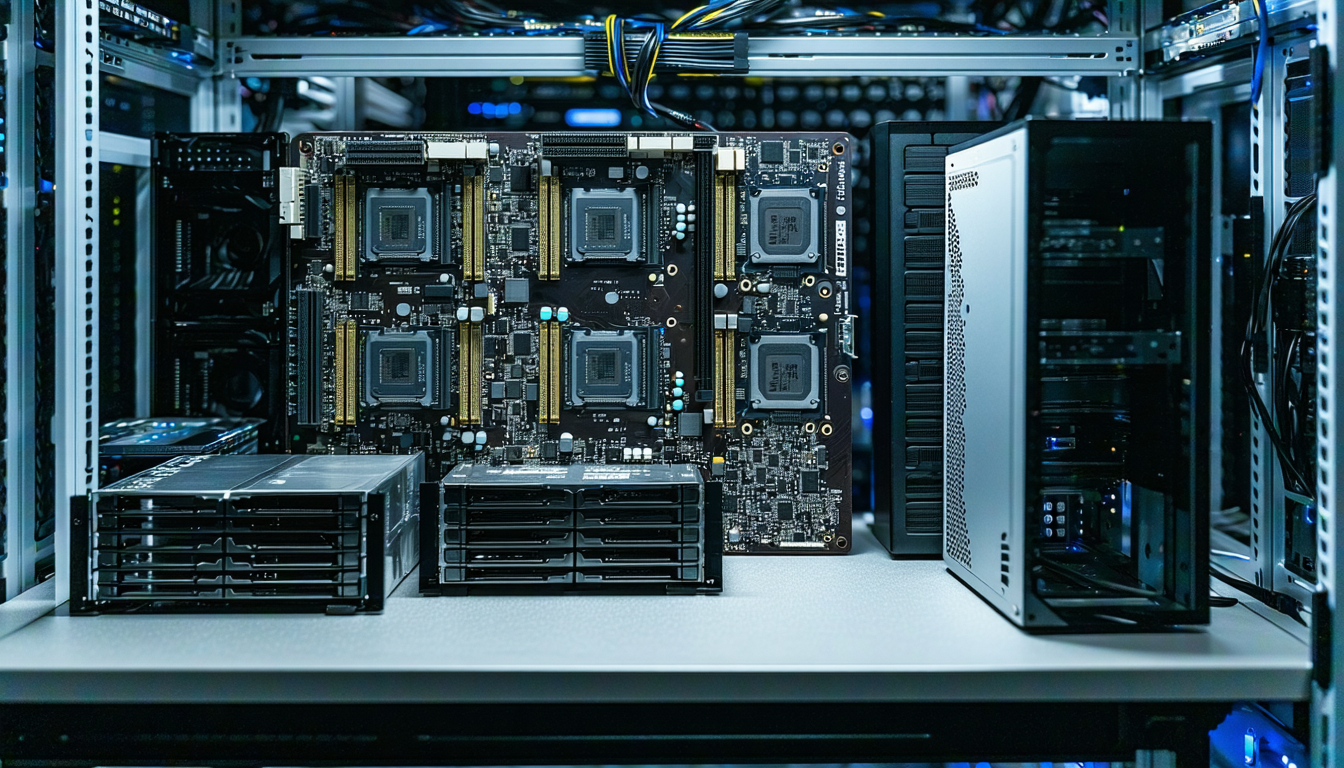
Robert Hallock, Intel's vice president and general manager of enthusiast channel business, told Tom's Hardware that Intel will keep offering Raptor Lake, a line first launched in 2022, and intends to stabilise supply of the 10-nanometer LGA 1700 chips "for years to come" [2]. Rumours heard at Computex put a third refresh of that line, tentatively Raptor Lake Next, in the first half of 2027, living alongside the DDR5-exclusive Nova Lake [3], and at least two motherboard vendors said they would increase production of the aging LGA 1700 boards [4]. TechSpot's summary of the market is that components from four years ago are storming sales charts [1].
Nothing about 2022 silicon improved. DDR5 prices have gone vertical over the past year, pushing buyers either onto DDR4 at lower but still inflated prices or onto the RAM they already own [5], and Raptor Lake accepts both kinds of memory, which makes it the part that lets someone upgrade a processor without also buying memory [6]. AMD ran the same manoeuvre by re-releasing the Ryzen 7 5800X3D, while the Ryzen 5 5500 became its budget leader because the better-performing 7500F and 9800X3D all demand DDR5 [7]. On the graphics side, tightening GDDR7 stocks raised RTX 5000-series prices and delayed the Super refresh, and Nvidia brought back the 12GB RTX 3060, also a 2022 part, as a substitute [8]. TechSpot attributes the whole squeeze to RAM shortages driven by AI data centres [9].
That is the mechanism to hold onto: the memory line in your bill of materials is now priced by a bidder who does not compete with you for customers, and the parts that remain affordable are affordable because they use memory that bidder does not want. A roadmap is being redrawn around supply rather than performance, and product managers who assumed the newest generation would also be the cheapest path have lost that assumption for at least the next planning cycle [3].
The other side of that trade published its numbers
GitHub's post-incident write-up is the same demand curve seen from inside a platform that has to buy into it. According to the account summarised by DevOps'ish, GitHub added over 3 million CPU cores and 120 petabytes of high-speed storage, moved Azure from 12% of platform load in May to 58% while carrying half of all Git operations, watched monthly commits go from 1.4 billion in April to 2.9 billion in August, and recorded 115.4 million Actions runs [23]. Azure's share climbed 46 percentage points in that window, close to a fivefold increase in the load it carries [5].
Capacity added at that rate still was not enough on the day. A critical infrastructure component in the Central US data centre failed to scale under record traffic, capacity pressure cascaded, and authentication began failing, in an outage that ran 7 hours and 47 minutes across github.com, Actions, the APIs, pull requests, issues and Copilot [21]. Copilot came back last, because a client-side retry loop pushed more traffic into a system that was trying to recover [22]. The retry loop is the detail worth stealing: an AI client under failure conditions does not behave like a browser tab, it behaves like additional load, and the recovery cost lands on the operator who provisioned for the happy path.
Storage is where the study tells you which lever to pull
The economists Christoph Siemroth of the University of Essex and Yeomyung Park of Sungkyunkwan University re-crunched twelve years of Backblaze's public data in a peer-reviewed IEEE study covering 443,156 drives and more than 1.66 million drive-years, from 2013 through Q2 2025 [10]. Matching drives on age, capacity, form factor and operating temperature, they put HGST at roughly 41% of Seagate's failure rate, WD at about 52%, and Toshiba last at 107% [11]. Toshiba's matched rate is therefore about 2.6 times HGST's [1]. The reason this differs from the quarterly tables everyone reads is fleet vintage: HGST led new installations in 2014, Seagate from 2015 to 2020, Toshiba in 2023 and WD in 2024, so raw annualised figures set aging stock against much fresher units [20]. And the brand that wins the matched comparison cannot be bought new, because WD acquired HGST in 2012 and wound it down [12].
Which leaves two findings an operator can actually act on. Each additional degree Celsius of average drive temperature raised failure rates by 2.1% in the models, compounding to roughly 23% across ten degrees [14]. Each additional terabyte of capacity cut failure rates by about 3.4%, which the authors attribute partly to helium-filled enclosures and newer head fabrication in higher-capacity designs [15]. Cooling and drive selection are set after purchase, by someone in your building. Vendor reliability, in a market where the best-performing name is unpurchasable, is not.
There is a real disagreement inside this material about when drives die. Backblaze's own analysis of its dead drives previously found most failures happened before three years of service [16], while the study finds Toshiba's monthly failure rate more than quadrupling once drives pass 60 months, a jump no other manufacturer shows at any age, with Toshiba running at five to six failures per 1,000 drives per month between 50 and 100 months against 2.5 or below for the other three brands [13]. Both can hold, and the sample explains why: across twelve years the average drive in the dataset accumulated only about 3.7 drive-years [3], only 0.52% ran longer than a decade, and the drives are enterprise units in Backblaze's data centres, so the ranking may not carry to consumer models [18]. A further 146,943 drives, about 31% of the sample, left without ever failing, mostly pulled during capacity upgrades [19]. Fleets that refresh for capacity retire hardware before it reaches the age band where the cliff appears.
The size of that cliff is worth stating in the units a budget uses. Five failures per 1,000 drives per month annualises to about 6% a year, roughly 4.4 times the 1.36% fleet-wide annualised rate Backblaze reported for 2025 [2] [17]. And Toshiba topped new installations in 2023 [20], which puts that cohort at the 60-month mark in 2028 [4] - past the end of the study window, so an extrapolation rather than a measurement [10].
The third variable has a name, and it is resigning
Gergely Orosz spoke with almost 20 CTOs, VPs of engineering and heads of engineering who are on a career break or seriously considering one, and reports that six in ten of the CTO-level people he asked said they are on the way out [30]. His list of what turned the job bad in 2026 leads with unrealistic expectations about AI, engineering cost cuts of 20% to 50% including job cuts, and pressure on business results as AI coding bills accumulate [31]. One departing CTO described a founder shipping a 60,000-line pull request into the product, delighted at his own new productivity [32].
DevOps'ish reads the same piece slightly differently, arguing the reasons are less about AI than about what AI gave people cover to demand [25]. That distinction matters for diagnosis and not at all for arithmetic: a 20% to 50% cut in engineering cost sits in the plan either way [31], while the memory and storage lines are being set by other people's capacity purchases [9].
What efficiency work is actually worth, honestly measured
This is the point where tooling news normally gets oversold, so take Go's own figures. Size-specialised allocation in Go 1.27 cuts small-object allocation cost by up to 30%, which the release notes translate to about 1% overall improvement for allocation-heavy programs [27]. That is a real gain and it is not going to fund a 20% cut.
The larger recoveries are in waste you did not know you were buying. The author of the Kubernetes probes walkthrough found and reproduced a bug on k3s, minikube and kind, introduced in v1.35.0, in which liveness probes fire before the startup probe has succeeded [24]; combined with a CrashLoopBackOff that starts at 10 seconds and doubles to a five-minute ceiling [26], that is a slow-starting service restarting itself indefinitely while consuming capacity you paid for at current prices. Docker's unified VMM, in beta with Docker Desktop v4.86 on Windows and macOS and slated for Linux at general availability in October [28], is pitched on faster startup and recovery, smoother I/O and file sharing, and releasing memory back to the host when containers idle [29] - claims made by the vendor, and worth checking against your own edit-compile-test loop before they enter a business case.
Encore's account is the cleanest illustration of what a hardware constraint costs when you cannot buy your way past it. Every build has run inside a Firecracker microVM since mid-2022, and Firecracker drives KVM, so it needs a Linux host with /dev/kvm, which no Mac has [33]. For four years that meant each engineer had a personal environment on one shared machine in a datacentre, reachable over Tailscale, provisioned by a script that added them to the kvm and docker groups, copied VM images into their home directory and hard-linked the firecracker binary under their own tree [34]. The fix was crackling, a single microVM API driving Firecracker on Linux and Apple's hypervisor on macOS, and getting the same images to boot on both required rebuilding much of the Linux image toolchain to run on macOS [35]. Four years of coordination overhead, removed by owning the abstraction rather than the box.
The evidence here is all cost-side, and it points one way. Memory pricing belongs to the data centre buildout [9]. The most reliable drive brand in the largest public dataset is not for sale [12]. What remains yours is the temperature you run at, the capacity per drive you buy [14] [15], and whether your platform quietly manufactures restarts [24].
Claim ledger
Ranked by verification strength, evidence, and original report placement.
- [1]
TechSpot reports that the RAM crisis has made the latest hardware so unaffordable that components from four years ago are storming sales charts.
ReportedView cited source - [2]
Robert Hallock, Intel's vice president and general manager of enthusiast channel business, told Tom's Hardware that Intel plans to continue offering Raptor Lake CPUs, first launched in 2022, and confirmed the company aims to stabilize and maintain supply of 10-nanometer chips supporting the LGA 1700 socket "for years to come".
ReportedView cited source - [3]
Prior rumours, heard by Tom's Hardware at Computex, say Intel might introduce a third Raptor Lake refresh, tentatively dubbed Raptor Lake Next, during the first half of 2027, existing alongside the DDR5-exclusive Nova Lake.
ReportedView cited source - [4]
At Computex, at least two motherboard vendors confirmed plans to increase production of aging LGA 1700-compatible boards to meet rising demand.
ReportedView cited source - [5]
The price of DDR5 RAM has skyrocketed over the past year, driving PC users to either purchase DDR4 memory at much lower but still inflated prices or hold onto the RAM they already have.
ReportedView cited source - [6]
Raptor Lake CPUs support both DDR4 and DDR5 memory, giving buyers the opportunity to upgrade without replacing an entire PC.
ReportedView cited source
Sources & coverage · 10 publishers
The reporting this story was synthesized from, earliest first. Every link goes to the original.
- blog.golang.orgNicholas Husin, on behalf of the Go team4d agoGo 1.27 is released
- cloudnativenow.com14h ago