Published Product3 min read
JLL's $3 Trillion Assumes the Shape of Demand Changes in 2027
The headline number is a capacity forecast, not a campus forecast. Inside it is a claim that inference passes training in 2027 and pulls demand out to regional sites - which is roughly where private equity money already...
Not a builder's beat, but builders have a standing stake in it.See today for builders
What happened
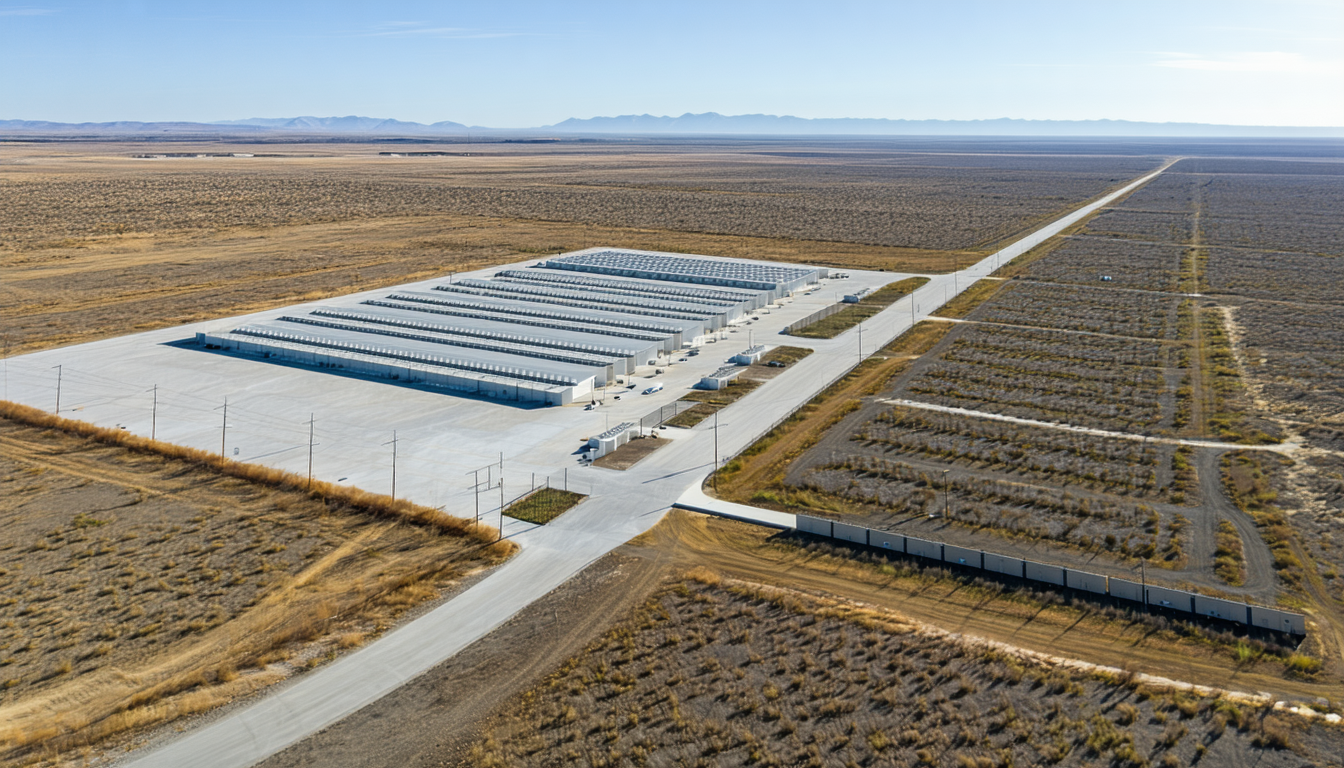
- The current rate of forecasted data center capacity growth demands an additional $3 trillion in total investment through 2030, according to statistics from JLL.
- That level of investment results in $1.2 trillion in real estate asset value creation.
- JLL says AI workloads could represent half of all data center capacity by 2030.
- In JLL's scenario, inference will overtake training workloads by 2027 and likely redistribute demand from today's centralized clusters to distributed regional demand centers.
- The forecast implies roughly 40 cents of real estate asset value created per dollar of investment.
Compiled by The Product DeskSomething wrong?How this is made
Why it matters
JLL's forecast of data center capacity growth requires an additional $3 trillion of investment through 2030, producing $1.2 trillion in real estate asset value creation [1][2]. Buried in the same forecast is a structural claim that matters more than the headline figure: AI could account for half of all data center capacity by 2030, and in that scenario inference overtakes training workloads by 2027 and redistributes demand away from today's centralized clusters toward distributed regional demand centers [3][4].
Read the arithmetic. Every dollar of that investment converts into about 40 cents of real estate asset value [5], and the crossover point sits three years before the end of the forecast window [6]. The gigawatt campuses currently absorbing the news cycle are being built for a workload mix that, on JLL's own numbers, stops being the dominant one before the spending period closes [7][3].
The vast majority of that capital will come from hyperscalers [8], who can commit country-level spending against returns that remain unproven [9]. The more useful signal is what investors with smaller balance sheets are doing, because they have to be right sooner. According to DatacenterDynamics, many private equity firms believe cloud remains the workhorse through 2026, on the view that returns on AI investment - training in particular - are less attractive than steady cloud returns [10].
Menlo Digital, the data center arm of Menlo Equities, is a concrete version of that position. Kevin Kujawski, the firm's partner, president and COO, says Menlo is putting "a little less" emphasis on AI [11]. The firm has a pipeline of around 880MW and $9.7 billion in AUM, of which 50 to 60 percent is digital, against 10 percent or less five years ago [12][13][14] - implying roughly $4.9bn to $5.8bn of digital assets under management [15]. Kujawski attributes most of that growth to low-latency and cloud demand in primary markets such as Virginia and Silicon Valley [16].
AI still shapes the economics without being the tenant. Kujawski says its presence has driven up lease rates and consumed power availability, which makes securing power for a site a "great opportunity" [17]. He describes the assets as infrastructure that will be essential "regardless of what AI does and the pace of rollout," and notes that although some top hyperscalers have asked Menlo to fit out for potential AI deployment with closed-loop liquid cooling, its deployments remain air cooled and cloud-focused [18][19]. The stated fear is specific: there will be winners and losers in the arms race, it is not yet clear who they are, and a wrong call leaves you with orphaned facilities [20][21].
Meanwhile power scarcity is pushing development into secondary and emerging markets, some of which are now becoming primary markets themselves [22]. That is the same geographic dispersion the inference thesis predicts, arriving for a different reason.
What to watch: whether hyperscaler requests for liquid-cooling fit-out in air-cooled cloud shells become standard rather than optional, which would mark the 2027 crossover showing up in lease documents [19][4]; whether the AI-driven lease rate inflation Kujawski describes holds once training capacity comes online [17]; and whether the secondary markets taking the lead on power hold their tenants when demand disperses [22].
Claim ledger
Ranked by verification strength, evidence, and original report placement.
- [1]
The current rate of forecasted data center capacity growth demands an additional $3 trillion in total investment through 2030, according to statistics from JLL.
- [2]
That level of investment results in $1.2 trillion in real estate asset value creation.
- [3]
JLL says AI workloads could represent half of all data center capacity by 2030.
- [4]
In JLL's scenario, inference will overtake training workloads by 2027 and likely redistribute demand from today's centralized clusters to distributed regional demand centers.
- [7]
The investment wave dominates news cycles with stories about GPU farms and the race to build gigawatt campuses in regions severely lacking the infrastructure to support them.
ReportedView cited source - [8]
The vast majority of the forecast investment will come from hyperscalers.
ReportedView cited source
Sources & coverage · 1 publisher
The reporting this story was synthesized from, earliest first. Every link goes to the original.
- datacenterdynamics.comAug 13Cloud is (still) king: Private equity investments in the AI data center era
Additional citations
- JLL, via DatacenterDynamics
- DatacenterDynamics
- Kevin Kujawski, Menlo Digital