Published Product3 min read
Fresno's solar array skipped the steel, and that is the part worth copying
A ground-laid array at a Fresno water treatment plant has delivered 862 MWh since late March. The interesting number is not the output, it is the racking and civil work that never got bought.
Not a builder's beat, but builders have a standing stake in it.See today for builders
What happened
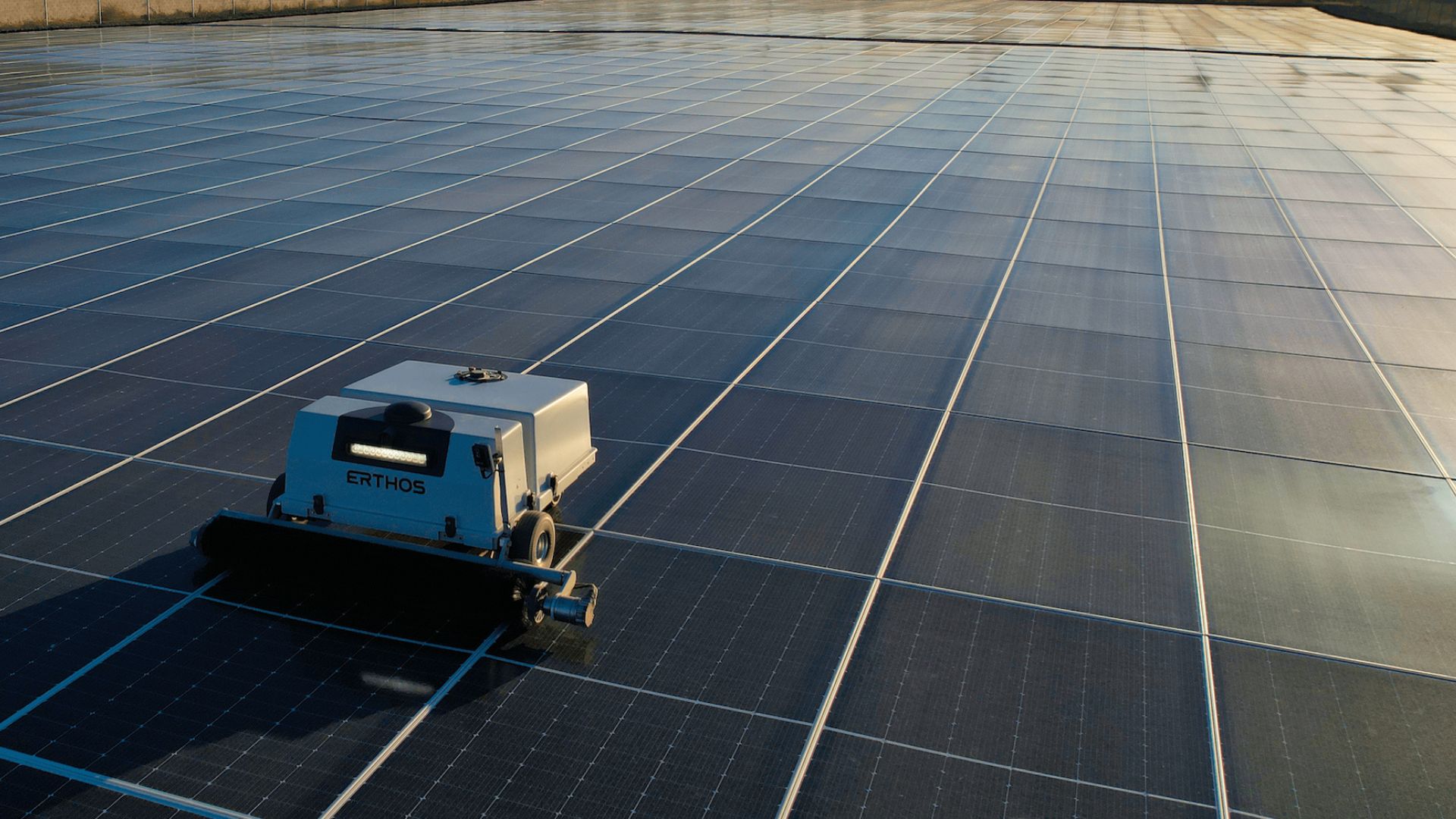
- ForeFront Power brought a new solar system online at the Northeast Surface Water Treatment Plant in Fresno, California, using Erthos' Earth Mount Solar technology, in which photovoltaic modules sit directly on the ground instead of on conventional steel racking.
- The system entered commercial operation in late March 2026 and has since produced 862 megawatt-hours of electricity for the City of Fresno.
- The ground-laid design removes much of the steel procurement and steel installation work found in traditional solar projects.
- ForeFront Power avoided costly civil upgrades at the Fresno site.
- Those savings helped make the project financially viable during a period of high labor and material costs.
Compiled by The Product DeskSomething wrong?How this is made
Why it matters
ForeFront Power has energized a solar system at Fresno's Northeast Surface Water Treatment Plant that lays photovoltaic modules directly on the ground instead of mounting them on steel racking, using Erthos' Earth Mount Solar product [1]. The system entered commercial operation in late March 2026 and has produced 862 megawatt-hours for the City of Fresno [2], but the design decision matters more than the meter reading.
Removing racking removes a procurement line and a labor line at the same time: most of the steel buying and most of the steel installation work disappear [3]. ForeFront Power also avoided civil upgrades at the site, in part because the panels can follow slopes up to 15 percent and adapt to existing topography rather than forcing the ground to be reshaped [4][8]. Those two avoided costs are what the developer says made the project financially viable in a period of high labor and material prices [5], and they are what allows Fresno to buy the power at a fixed rate under a 20-year power purchase agreement [6]. Erinne Davis, a senior project manager at ForeFront Power, said the avoided construction work could otherwise have stalled the project, and that the savings let the offer beat the local utility's rate [9][10]. Erthos also says eliminating conventional row spacing raises generation per acre [7].
Treat the performance claim carefully. The array has generated at an average of 101 percent of expected output [11], which is one percent above forecast. The headline on the trade coverage said the plant "beats expected output by 101%" [12], which is a hundredfold overstatement of what the article's own body says [13]. One percent above a first-quarter estimate is a fine start and nothing more.
The 862 MWh figure is also less informative than it looks, because the source gives no separate DC capacity for the Northeast plant array [14]. What it gives is the portfolio: three Fresno water facilities totaling 27 megawatts DC, pairing solar with battery storage [15], projected to save more than $122 million in electricity costs through 2045 [16]. That works out to roughly $4.5 million of claimed savings per megawatt DC [17], or about $6 million a year over the roughly 19 and a half years from commercial operation to 2045 [18]. Those are forecasts against an unstated utility rate escalator, not receipts.
Operations were designed around the same labor logic as construction. Erthos maintains the array under an energy services agreement and cleans it with an autonomous robot, the ErthBot, which uses a dry nylon brush, works at night, and returns to a charging dock [19][20]. Each unit is rated to service more than 3.5 megawatts [20], so a fleet covering the full 27 megawatt portfolio would need at least eight of them [21]. Erthos keeps responsibility for the robots' operation and maintenance for the term [22].
What to watch: whether the 101 percent figure holds through a Central Valley summer and a dust season, since ground-level modules and soiling are the obvious risk in this geometry and the cleaning robot is the only stated mitigation [11][19]. Watch also for a published DC capacity for the Northeast site, which is what turns 862 MWh into a comparable performance number [14]. And watch whether other municipal buyers with land, slopes, and no appetite for civil work start writing the racking out of their specifications [3][4].
Claim ledger
Ranked by verification strength, evidence, and original report placement.
- [1]
ForeFront Power brought a new solar system online at the Northeast Surface Water Treatment Plant in Fresno, California, using Erthos' Earth Mount Solar technology, in which photovoltaic modules sit directly on the ground instead of on conventional steel racking.
ReportedView cited source - [2]
The system entered commercial operation in late March 2026 and has since produced 862 megawatt-hours of electricity for the City of Fresno.
ReportedView cited source - [3]
The ground-laid design removes much of the steel procurement and steel installation work found in traditional solar projects.
ReportedView cited source - [5]
Those savings helped make the project financially viable during a period of high labor and material costs.
ReportedView cited source - [6]
ForeFront Power can offer Fresno electricity at a fixed rate through a 20-year power purchase agreement.
ReportedView cited source
Sources & coverage · 1 publisher
The reporting this story was synthesized from, earliest first. Every link goes to the original.
- interestingengineering.comAamir KhollamAug 13Ground-mounted California solar plant delivers 862 MWh, beats expected output by 101%
Cited in this coverage: interestingengineering.com headline
Additional citations
- Erthos
- Erinne Davis, senior project manager, ForeFront Power
- ForeFront Power