Published Product3 min read
ETH Zurich wants to run cement kilns as air-capture machines
A calcium-looping design reuses the limestone cement plants already heat as a carrier for CO2 pulled from the air, but the study reports a climate benefit, not a cost.
Not a builder's beat, but builders have a standing stake in it.See today for builders
What happened
- Cement manufacturing is responsible for an estimated 5 to 8 percent of global carbon dioxide emissions.
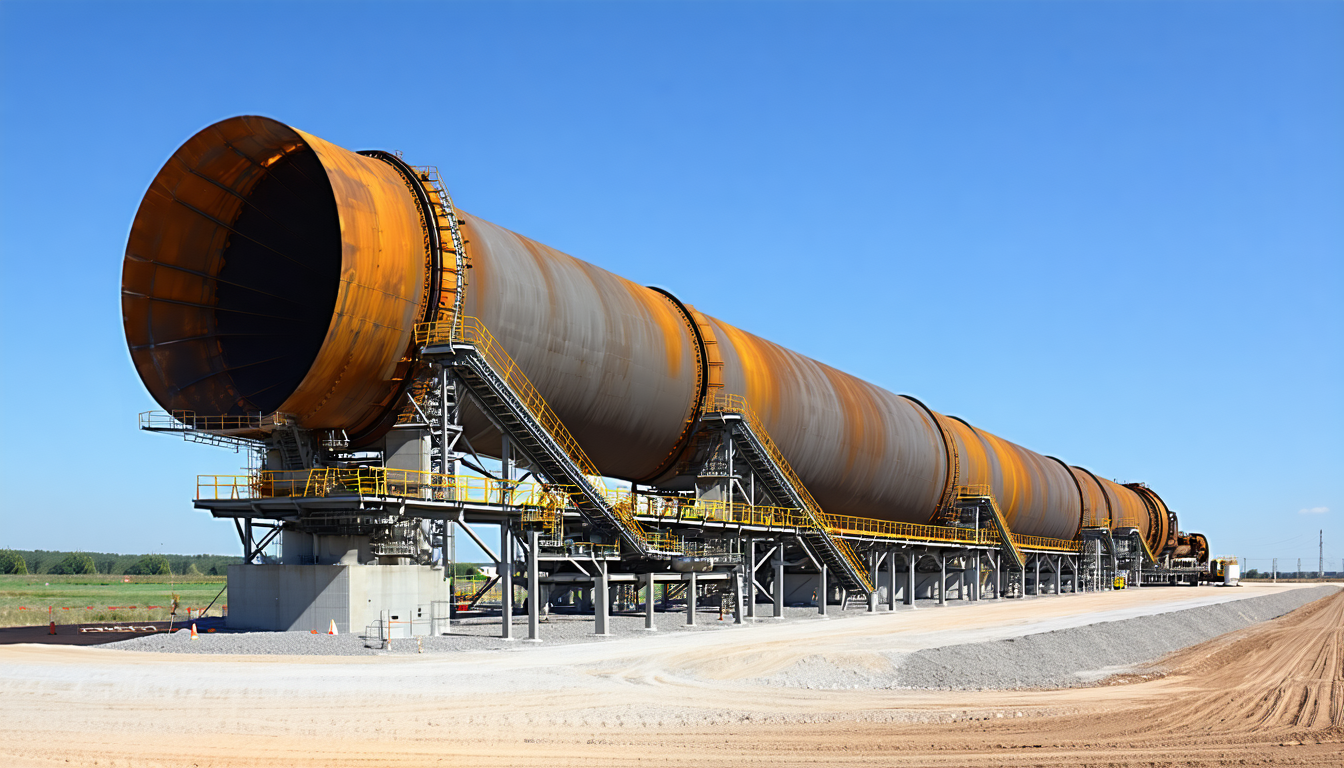
- A new approach developed by researchers at ETH Zurich could transform cement plants from major sources of carbon emissions into facilities capable of removing carbon dioxide from the atmosphere.
- The research, published in Chem Circularity, explores a system based on calcium looping, a process that uses limestone, the same material central to cement manufacturing.
- Cement production generates CO2 in two ways: heat from burning fossil fuels in the kiln, and calcination, in which limestone (calcium carbonate) is broken down when heated, producing quicklime and CO2.
- Because limestone itself releases CO2 during calcination, replacing coal or gas with cleaner energy does not eliminate all emissions from cement manufacturing, which is why cement is considered one of the world's difficult-to-decarbonise industries.
Compiled by The Product DeskSomething wrong?How this is made
Why it matters
Researchers at ETH Zurich have proposed operating cement plants as direct air capture facilities, using the limestone they already heat as a reusable carrier for CO2 drawn from ambient air [2][3][7]. The idea matters because cement is responsible for an estimated 5 to 8 percent of global CO2 emissions and has resisted the fixes that work elsewhere [1][5].
Cement makes CO2 twice. The first stream comes from burning fossil fuels to reach kiln temperatures; the second, and harder, comes from calcination, in which limestone breaks down into quicklime and CO2 when heated [4]. Because that second stream comes from the rock itself, swapping coal for cleaner electricity lowers emissions but does not eliminate them, which is why cement sits in the difficult-to-decarbonise category [5].
The study, published in Chem Circularity, is built on calcium looping [3]. Limestone is heated to quicklime and the released CO2 is collected rather than vented; water is added to make slaked lime, which absorbs CO2 from the surrounding air and reverts to limestone that re-enters cement production [7]. The calcium acts as a reusable carrier, and the more cycles it makes through the air-capture stage before becoming cement, the more atmospheric CO2 it removes [7][8]. That captured air CO2 can be compressed and stored underground, so in principle the plant becomes net-negative, removing more than the whole system emits [9].
The reason to host this in a cement plant is that both processes turn on the same material and the same act of heating limestone [7]. That shared chemistry is the substance behind reframing the industry as an asset rather than a liability: the kiln and the limestone supply already exist.
It is worth being precise about what the paper actually quantifies. Modelling indicates that electrifying the kiln and capturing CO2 directly could cut the climate impact of cement production by up to 78 percent by 2050 [10]. That is a reduction figure, not a cost figure; the source does not price this retrofit against standalone direct air capture, so the claim that cement plants are the cheapest available host is an inference the material supports in principle but does not measure. The outcome also hinges on power, because direct air capture is energy-intensive and the benefit depends on where the electricity comes from [11].
The researchers' own language is careful. Lead author Vittoria Bolongaro, a PhD student working with Bardow, describes the combination of direct air capture and cement production as "very promising" from a climate perspective, which is a claim about potential rather than deployment [6].
What to watch is whether anyone builds it, on what power, and at what cost. The 78 percent figure assumes a 2050 electricity system and an electrified kiln, neither of which exists yet at scale [10][11]. Until a pilot reports energy use and a per-tonne removal cost, the case for cement plants as the default DAC host rests on shared equipment rather than demonstrated economics.
Claim ledger
Ranked by verification strength, evidence, and original report placement.
- [1]
Cement manufacturing is responsible for an estimated 5 to 8 percent of global carbon dioxide emissions.
ReportedView cited source - [2]
A new approach developed by researchers at ETH Zurich could transform cement plants from major sources of carbon emissions into facilities capable of removing carbon dioxide from the atmosphere.
ReportedView cited source - [3]
The research, published in Chem Circularity, explores a system based on calcium looping, a process that uses limestone, the same material central to cement manufacturing.
ReportedView cited source - [4]
Cement production generates CO2 in two ways: heat from burning fossil fuels in the kiln, and calcination, in which limestone (calcium carbonate) is broken down when heated, producing quicklime and CO2.
ReportedView cited source - [5]
Because limestone itself releases CO2 during calcination, replacing coal or gas with cleaner energy does not eliminate all emissions from cement manufacturing, which is why cement is considered one of the world's difficult-to-decarbonise industries.
ReportedView cited source - [6]
Vittoria Bolongaro, a PhD student working with Bardow and lead author of the publication, stated that from a climate perspective the combination of DAC and cement production is very promising.
ReportedView cited source
Sources & coverage · 1 publisher
The reporting this story was synthesized from, earliest first. Every link goes to the original.
- interestingengineering.comPrabhat Ranjan MishraAug 12Scientists’ new tech could help cement plants remove CO2 from atmosphere