Published · 3d agoProduct3 min read
A GOP memo moves data-center siting from a permitting problem to an electoral one
The NRSC has privately told AI companies that data centers are sinking a Senate seat in Ohio. That changes what belongs on an infrastructure roadmap.
Not a builder's beat, but builders have a standing stake in it.See today for builders
What happened
- Axios reported that the GOP's Senate campaign arm, the National Republican Senatorial Committee, privately warned AI companies that they need to do something about the increasingly toxic image of data centers.
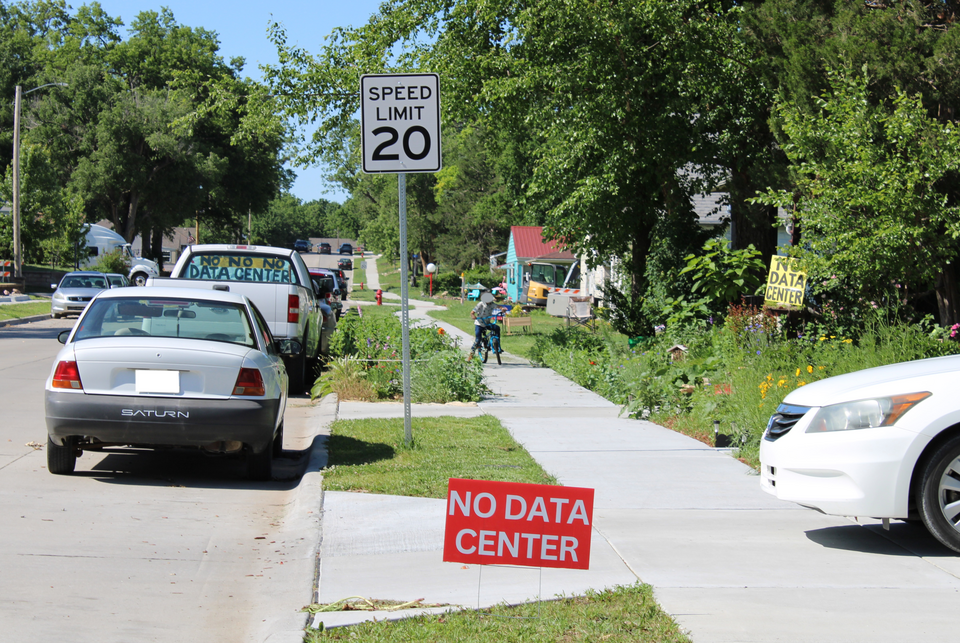
- AI data centers continue to proliferate across Ohio and public opposition is growing.
- Republican senator Jon Husted could lose his Ohio Senate seat to Democratic challenger and former senator Sherrod Brown; Brown is currently eight points ahead.
- Brown's campaign has spent millions portraying Husted as "the face of data centers in Ohio."
- The NRSC has said that "data centers are the anchor hanging around Husted's neck," adding that if he loses, the data centers will be blamed and this will have a knock-on effect across the U.S.
Compiled by The Product DeskSomething wrong?How this is made
Why it matters
The National Republican Senatorial Committee has privately warned AI companies that the public image of data centers has turned toxic, in a memo titled "Ohio Data Center Risk" that Axios reported on and SiliconANGLE summarized [1][9]. For anyone holding a capacity plan, that is a category change: siting risk has stopped being a queue-and-interconnect problem and become a thing that shows up in campaign advertising [4][5].
The specifics matter more than the tone. In Ohio, Republican senator Jon Husted could lose his seat to Democratic challenger and former senator Sherrod Brown, who is reported to be eight points ahead after his campaign spent millions casting Husted as "the face of data centers in Ohio" [2][3][4]. The NRSC's framing, per the memo, is that "data centers are the anchor hanging around Husted's neck," and that if he loses and data centers get the blame, "politicians across the country will take notice - and they will not go near the next one" [5][6]. The committee calls it "a sleeper issue for the entire election cycle" [7].
The polling behind that anxiety is not marginal. Reuters reported in 2026 that 77% of respondents were concerned AI development could raise their electricity bills, and that among 4,531 people polled, 64% opposed the rapid construction of AI data centers against 33% in support [10][11]. That is opposition outrunning support by roughly two to one [1]. It also runs against the position of the top of the ticket: Donald Trump continues to champion the projects [8].
Now put that next to the build pipeline. The United States leads the world with around 4,000 data centers switched on and close to another 3,000 in planning [13]. The planning book is therefore roughly three-quarters the size of the operating fleet [2], and Ohio, one of the country's hotspots with one of the largest shares of finished projects, still has dozens more in planning [12]. Every one of those planning-stage sites is a local political event, and the memo's implication is that the outcome of a single Senate race will reprice all of them.
The practical read for operators: a siting model that scores power availability, water, land, fiber, and tax abatement is now missing a column. The memo asks the companies to tell Americans who will benefit, who will pay, and "why a community should want one" [9]. Those are not messaging questions. They are questions about the cost allocation in a rate case, the terms of a development agreement, and the local hiring and tax numbers a company is willing to commit to in writing. A roadmap that cannot answer them per site is carrying an unpriced risk, and the NRSC's argument is that the risk is contagious across state lines [5][6].
What to watch: whether any of the named AI firms actually publish per-project who-pays disclosures rather than jobs-and-investment totals; whether the Ohio result is read nationally as a data-center referendum, which the NRSC memo predicts [6]; and whether the roughly 3,000 planning-stage projects start slipping on local approvals rather than on grid interconnection [13]. The energy-bill number is the one to track most closely, because 77% concern about electricity costs is the mechanism by which a national build becomes a local vote [10].
Claim ledger
Ranked by verification strength, evidence, and original report placement.
- [1]
Axios reported that the GOP's Senate campaign arm, the National Republican Senatorial Committee, privately warned AI companies that they need to do something about the increasingly toxic image of data centers.
ReportedView cited source - [2]
AI data centers continue to proliferate across Ohio and public opposition is growing.
ReportedView cited source - [3]
Republican senator Jon Husted could lose his Ohio Senate seat to Democratic challenger and former senator Sherrod Brown; Brown is currently eight points ahead.
ReportedView cited source - [4]
Brown's campaign has spent millions portraying Husted as "the face of data centers in Ohio."
ReportedView cited source - [5]
The NRSC has said that "data centers are the anchor hanging around Husted's neck," adding that if he loses, the data centers will be blamed and this will have a knock-on effect across the U.S.
ReportedView cited source - [6]
The memo states: "If he loses and data centers get the blame, politicians across the country will take notice - and they will not go near the next one."
ReportedView cited source
Sources & coverage · 2 publishers
The reporting this story was synthesized from, earliest first. Every link goes to the original.
- siliconangle.comJames Farrell3d agoGOP urges top AI firms to do something about the toxic image of data centers
- gizmodo.comMatt Novak2d agoRepublicans Turn to Elon Musk and AI Super PACs for a Bailout Ahead of Midterms