Published Leadership3 min read
The Phone Ban Is a Removal, Not a Program
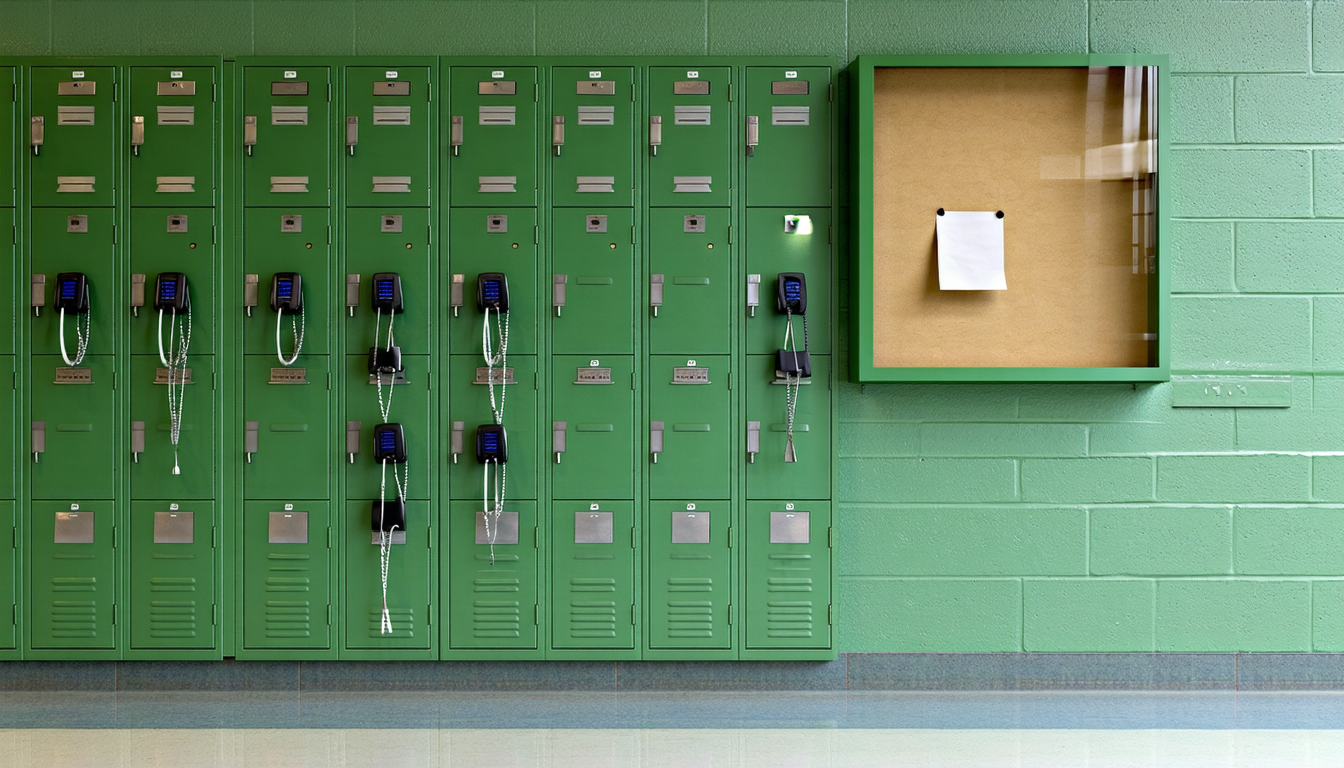
School phone restrictions now cover at least 39 states and DC. The students who support them say enforcement is haphazard and the root cause is untouched, which leaves every operator of a youth-facing program holding...
Context for builders, not their beat.See today for builders
What happened
- School phone policies are now in effect in at least 39 states and Washington DC.
- Student organizers told the Guardian they support screen-time bans in schools, but said such policies are often haphazardly enforced and do not address the root causes of screen addiction, such as intense social pressure and feelings of isolation.
- If at least 39 states plus Washington DC have such policies in effect, at most 11 states do not.
- A new California state law that took effect on 1 July requires school districts to develop policies that restrict phone use on campus.
- Olivia Howard, a rising junior in New York state, said she received her first iPad when she was in kindergarten.
Compiled by The Board RoomSomething wrong?How this is made
Why it matters
School phone policies are now in effect in at least 39 states and Washington DC, and the student organizers who back them told the Guardian that the rules are often haphazardly enforced and do not address the root causes of screen addiction, including intense social pressure and feelings of isolation [1][2]. For anyone running a school, a district, a camp or a youth program, that is a warning that the thing you adopted is a subtraction, and subtractions do not hold on their own.
Start with coverage. At least 39 states plus DC means at most 11 states are without such a policy, so the regulatory phase is close to finished and the operating phase is what remains [3]. California's version took effect on 1 July and requires districts to develop policies restricting phone use on campus, which pushes the design work down to the district and school level rather than settling it [4].
The students quoted by the Guardian are not arguing against the bans. They are arguing that the bans were written without them and without a plan for the vacated time. Olivia Howard, a rising junior in New York state who said she received her first iPad in kindergarten, told the Guardian that legislators implementing bans need to account for substitutes, because most students her age have a relationship with technology that requires an alternative to replace it [5][6]. Elise Choi, a junior at the Orange County School of the Arts and a K-12 policy co-chief with the youth-led group GENUp, said locking up devices is a step in the right direction but may not be effective on its own because students will find ways around regulations [7][8]. Choi spent most of the year authoring and building a coalition for a state bill that would mandate district-wide digital wellness education covering how social media and AI affect mental health [9]. Her framing is that the harm extends beyond the classroom, since students stay up scrolling and texting, which can cause insomnia and affect focus at school [10][11].
The most transferable case is procedural. At Legacy Magnet Academy in Tustin, California, a bell-to-bell ban was implemented without student input and drew what Liv Kong, a rising senior there, described to the Guardian as a huge backlash [12]. Kong then led a student advisory group that ran surveys and piloted three separate phone policies to find the one that fit students and faculty; the group settled on banning phones in class but not during breaks, a narrower rule than the one imposed from above [13][14]. In San Diego, where the district banned classroom phone use last year, Vihaan Bhardwaj of GENUp said students were apprehensive and confused about the intent, and a committee with students from each school now meets regularly with senior education officials on communicating the rules in a way that feels supportive rather than punitive [15][16].
The pattern across all three: the ban that survives is the one people helped write and can explain. Enforcement cost is a function of legitimacy, and legitimacy is cheaper to buy before the policy ships than after.
What to watch: whether the California digital wellness bill Choi is organizing around gets introduced and funded [9], whether districts writing policies under the 1 July law budget anything for substitute activities rather than only storage pouches [4], and whether the San Diego student committee outlasts the school year that created it [16].
Claim ledger
Ranked by verification strength, evidence, and original report placement.
- [1]
School phone policies are now in effect in at least 39 states and Washington DC.
- [2]
Student organizers told the Guardian they support screen-time bans in schools, but said such policies are often haphazardly enforced and do not address the root causes of screen addiction, such as intense social pressure and feelings of isolation.
- [4]
A new California state law that took effect on 1 July requires school districts to develop policies that restrict phone use on campus.
- [5]
Olivia Howard, a rising junior in New York state, said she received her first iPad when she was in kindergarten.
- [6]
Howard said that if legislators are implementing phone bans, they need to take into account what the substitutes are, because most kids her age have a relationship with technology and there has to be other alternatives to replace it.
- [7]
Elise Choi is a junior at the Orange County School of the Arts and a K-12 policy co-chief with GENUp, a youth-led education advocacy group.
Sources & coverage · 1 publisher
The reporting this story was synthesized from, earliest first. Every link goes to the original.
- theguardian.comClaire WangAug 13Schools across the US banned phones. Teens are demanding more offline support
Additional citations
- The Guardian
- student organizers, via The Guardian
- Olivia Howard, via The Guardian
- Elise Choi, via The Guardian
- Liv Kong, via The Guardian
- Vihaan Bhardwaj, via The Guardian