Published Leadership3 min read
The Chelsea Facility That Takes the Patients Nobody Wants
A Massachusetts nursing home runs ventilator and ALS care that most operators decline on cost grounds. Its design choices are worth copying.
Context for builders, not their beat.See today for builders
What happened
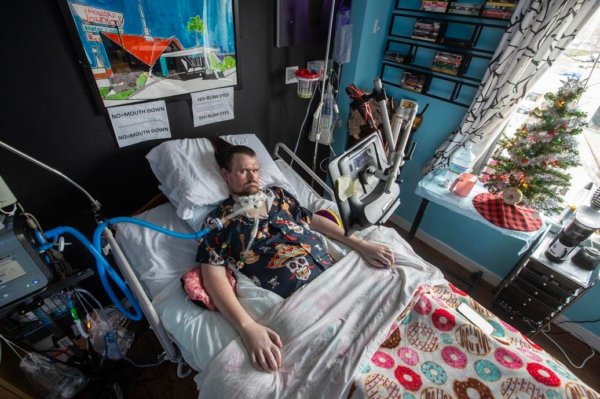
- Howard Gleckman published a column in Forbes dated August 13, 2026, describing his recent visit to the Leonard Florence Center for Living, a skilled nursing facility in Chelsea, Massachusetts, a blue-collar Boston suburb.
- The Florence Center specializes in ventilator care, a service that the vast majority of nursing facilities will not provide due to its cost and complexity.
- The Florence Center focuses on care for residents living with multiple sclerosis and for 50 patients with amyotrophic lateral sclerosis (ALS), also known as Lou Gehrig's disease.
- The Florence Center claims to care for more ALS residents than any facility in the world.
- The Florence Center struggles with insufficient Medicaid reimbursement.
Compiled by The Board RoomSomething wrong?How this is made
Why it matters
Howard Gleckman used a Forbes column on August 13 to describe a visit to the Leonard Florence Center for Living, a skilled nursing facility in Chelsea, Massachusetts, that provides ventilator care and runs a dedicated ALS program [1][2][3]. It matters because the services it offers are the ones most operators decline: Gleckman reports that the vast majority of nursing facilities will not provide ventilator care because of its cost and complexity [2].
The specialisation is unusually deep. The center serves residents living with multiple sclerosis and 50 residents with amyotrophic lateral sclerosis, and it claims to care for more ALS residents than any facility in the world [3][4]. The program came out of a partnership between Chelsea Jewish Lifecare chief executive Barry Berman and Steve Saling, an architect and assisted living resident with ALS who concluded that traditional assisted living could not keep caring for him as the disease progressed, and who helped design the replacement [8]. Saling has lived with the disease for more than 20 years, and one of the homes at the center bears his name [9]. The current building opened in 2010 [6].
The operating model has three visible parts. The building is organised on the Green House model as 10 households of 10 private rooms, each with its own dedicated staff, with communal dining and a shared living area [15][16]. Staffing is universal rather than functional, so a single aide may handle a resident's personal care and help cook for the household, which Gleckman argues lets front-line staff act without waiting for instructions from a nurse [17]. And assistive technology lets residents who cannot move their limbs operate lights, televisions, doors and elevators through eye movement or brain waves [13]. One resident told Gleckman that without the equipment, "I'd have to wait 30 minutes for an aide to come and open my apartment door for me" [14]. That is the operational point: resident independence is also a labour input, because it frees staff time [20].
The reported outcomes are striking. ALS life expectancy averages two to five years [10]. Gleckman writes that at the Florence Center, residents often live a decade or more, are extraordinarily active and rarely need hospital care [11]. These figures come from his visit and the facility, not from an independent audit, and should be read that way. A 2022 RAND Corporation study is cited as the underlying evidence that resident and staff autonomy matter [18].
Where the autonomy-beats-reimbursement argument breaks down is the staffing line. Gleckman reports, citing federal data, that staffing levels at the center are more than twice the national nursing home average [12]. That is the single most expensive variable in the business, and it is present here at double the norm. He also reports that the facility struggles with insufficient Medicaid reimbursement [5], and that it is hard to make money running a good nursing home at all [19]. So the honest reading is that the center pairs a better organisational design with a costlier labour model and a non-profit parent that operates communities in Chelsea, Peabody and Longmeadow [7]. Design explains why the money buys more. It does not substitute for it.
Worth watching: whether the survival and hospitalisation results hold up in claims data rather than site visits, and whether any operator adopts the household structure and universal staffing without also doubling its staffing ratio. If ten households of ten rooms is roughly 100 beds [1], then 50 ALS residents is about half the census [2], which is a concentration few operators could reproduce without the referral flow that comes with a two-decade reputation.
Claim ledger
Ranked by verification strength, evidence, and original report placement.
- [1]
Howard Gleckman published a column in Forbes dated August 13, 2026, describing his recent visit to the Leonard Florence Center for Living, a skilled nursing facility in Chelsea, Massachusetts, a blue-collar Boston suburb.
- [2]
The Florence Center specializes in ventilator care, a service that the vast majority of nursing facilities will not provide due to its cost and complexity.
- [3]
The Florence Center focuses on care for residents living with multiple sclerosis and for 50 patients with amyotrophic lateral sclerosis (ALS), also known as Lou Gehrig's disease.
- [4]
The Florence Center claims to care for more ALS residents than any facility in the world.
- [5]
The Florence Center struggles with insufficient Medicaid reimbursement.
- [6]
The current Florence Center building opened in 2010, and its institutional pedigree dates back more than a century to an old-school house for the aged.
Sources & coverage · 1 publisher
The reporting this story was synthesized from, earliest first. Every link goes to the original.
- forbes.comHoward Gleckman, Senior ContributorAug 13Nursing Homes Can Provide Quality, Creative Care. Here’s One
Additional citations
- Howard Gleckman, Forbes
- the Florence Center, via Howard Gleckman, Forbes
- federal data, cited by Howard Gleckman, Forbes
- unnamed resident, quoted by Howard Gleckman, Forbes
- RAND Corporation 2022 study, cited by Howard Gleckman, Forbes