Published · 4d agoInvest3 min read
Washington controls the chip, not the login: Nvidia's GB300 ban has an offshore hole
Chinese AI firms can reportedly rent restricted Nvidia capacity from data centers abroad. Bank of America is unmoved, keeping a $350 target on a stock near $225.
Context for builders, not their beat.See today for builders
What happened
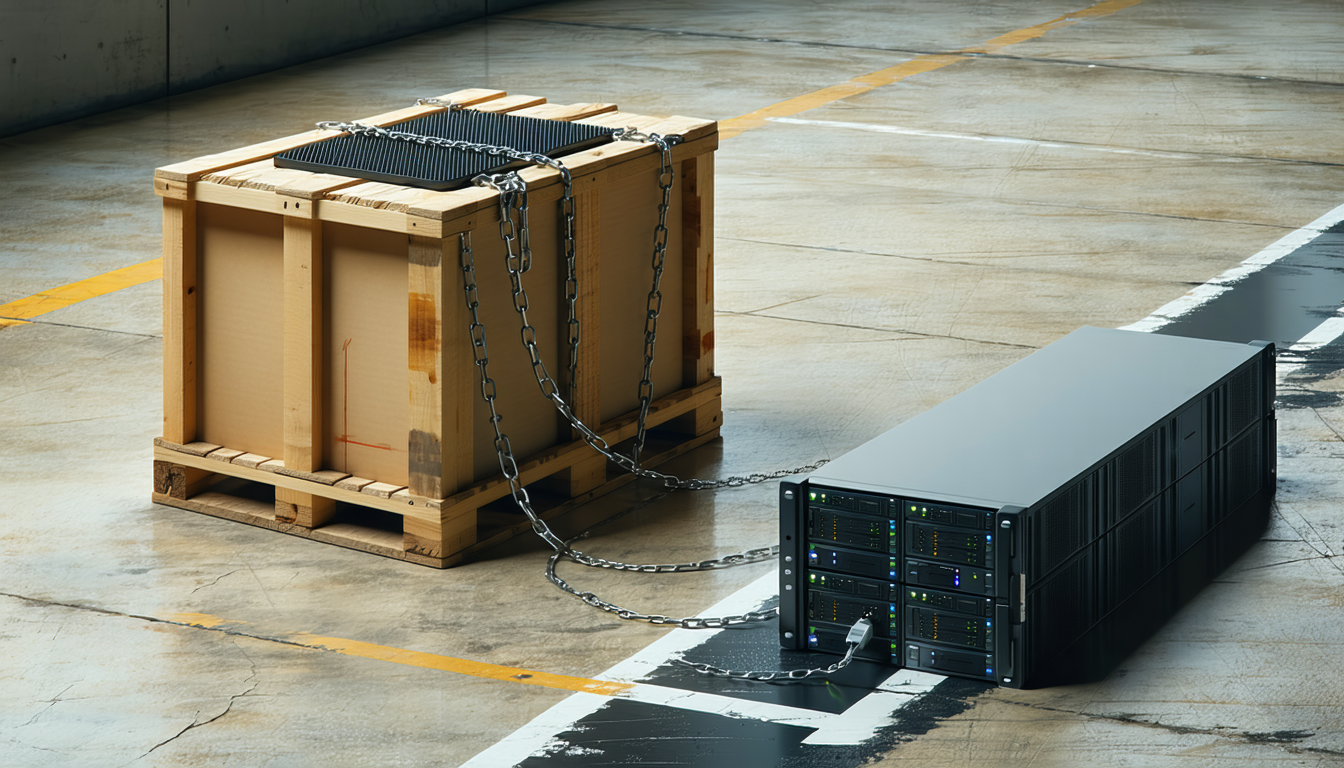
- US chip restrictions can stop Nvidia's most powerful chips from being shipped directly into China but do not stop Chinese AI companies from using them; if the processors sit in a data center elsewhere, a Chinese developer can potentially pay to use the computing power remotely.
- Nvidia's GB300 is among the products that cannot currently be sold into China, while some less powerful chips can still be exported there.
- Moonshot AI was accused of accessing GB300 systems in Thailand after releasing Kimi K3.
- Current US restrictions are mainly focused on who buys the chip, where the chip is shipped and who physically has it, and do not automatically stop a company in China from paying to use a machine sitting in another country.
- Cassia King, a senior researcher on the Compute Policy team at the Institute for AI Policy and Strategy, told CNBC that Moonshot's reported use of the facility in Thailand could still be legal "so long as Moonshot isn't actually buying and owning the physical hardware directly."
Compiled by The InvestorSomething wrong?How this is made
Why it matters
US export controls can stop Nvidia's GB300 from being shipped into China, but they do not stop a Chinese developer from paying to use one that is sitting somewhere else [1][2]. Moonshot AI was accused of accessing GB300 systems in Thailand after releasing Kimi K3, according to reporting relayed by Cryptopolitan [3].
The gap is structural, not accidental. The current rules are built around who buys a chip, where it ships, and who physically holds it [4]. Cassia King, a senior researcher on the Compute Policy team at the Institute for AI Policy and Strategy, told CNBC that Moonshot's reported use of the Thai facility could still be legal "so long as Moonshot isn't actually buying and owning the physical hardware directly," and that the US system "controls physical AI chips. It does not cover remote access to those chips" [5][6]. The operator of the service said its customers "do not have ownership, potential future claim or physical access to the chips that power our solutions," and that access is fully compliant with applicable regulations [7]. A White House official told CNBC the administration "has implemented the most rigorous export control regime in modern history" [8].
Both statements can be true at once, which is the point. Chinese firms have reportedly been reaching more advanced compute through cloud services run from other countries, including in Southeast Asia [9]. Nvidia can still export some less powerful chips into China directly [2]. So the policy constrains ownership of silicon while the input Chinese labs actually need is time on it.
For shareholders, the enforcement question sits oddly next to the sell-side case. Bank of America's Vivek Arya kept his Buy rating and a $350 price target, which the source puts at 55.5% above the price at press time [10][11]. Nvidia trades around $225 after gaining roughly 39% last year, based on Yahoo Finance pricing data cited by Cryptopolitan, and is up in 2026 but not at last year's pace [12][13]. From $225, a $350 target is about 55.6% upside, consistent with the figure quoted [14].
The more interesting part of Arya's note is how he handles Nvidia's cash. BofA argues the market is worrying too much about Nvidia taking on financial exposure outside its main balance sheet, and frames the company as embedded across the AI buildout rather than a GPU vendor, including revenue from renting out GPU capacity [15][16][17]. To account for money that funds other companies, projects and infrastructure, BofA splits cash generation roughly in half: about 50% treated as returnable through buybacks and dividends, the rest as investment, financing and related spending [18][19]. That is an analyst conceding that half of the free cash flow is not the shareholder's.
Two things to watch. First, whether Washington extends controls from physical possession to remote access, because that is the only version of the rule that touches the Thailand arrangement, and the reported legality of that arrangement rests on the ownership test [5][6]. Second, how much of offshore GPU rental demand is Chinese; the source does not quantify it, and neither does anyone else on the record here [9]. Until it is quantified, an export-control headline is not a demand event for Nvidia, and the half of cash flow BofA sets aside for the buildout is the number that decides whether $350 holds [18].
Claim ledger
Ranked by verification strength, evidence, and original report placement.
- [1]
US chip restrictions can stop Nvidia's most powerful chips from being shipped directly into China but do not stop Chinese AI companies from using them; if the processors sit in a data center elsewhere, a Chinese developer can potentially pay to use the computing power remotely.
ReportedView cited source - [2]
Nvidia's GB300 is among the products that cannot currently be sold into China, while some less powerful chips can still be exported there.
ReportedView cited source - [3]
Moonshot AI was accused of accessing GB300 systems in Thailand after releasing Kimi K3.
ReportedView cited source - [4]
Current US restrictions are mainly focused on who buys the chip, where the chip is shipped and who physically has it, and do not automatically stop a company in China from paying to use a machine sitting in another country.
ReportedView cited source - [5]
Cassia King, a senior researcher on the Compute Policy team at the Institute for AI Policy and Strategy, told CNBC that Moonshot's reported use of the facility in Thailand could still be legal "so long as Moonshot isn't actually buying and owning the physical hardware directly."
ReportedView cited source - [6]
King also said the US system "controls physical AI chips. It does not cover remote access to those chips."
ReportedView cited source
Sources & coverage · 1 publisher
The reporting this story was synthesized from, earliest first. Every link goes to the original.
- cryptopolitan.comJai Hamid4d agoChinese AI firms still use Nvidia computing power despite US chip restrictions