Published Invest3 min read
Miryang reservoirs at 25.2% push Seoul's drought task force up a rung
South Korea has elevated its interagency drought task force to headquarters level and created a Southern Region Drought Response Team as southern reservoirs empty before the early rice harvest.
Context for builders, not their beat.See today for builders
What happened
- The Ministry of the Interior and Safety said on the 14th that it would strengthen the existing interagency drought task force and set up a new Southern Region Drought Response Team under it; the report is dated August 14, 2026.
- As concerns over a prolonged drought grew, the ministry decided to elevate the task force leadership to the head of its Disaster and Safety Management Headquarters to strengthen the whole-of-government response.
- The newly formed Southern Region Drought Response Team will be led by the ministry's director general for natural disasters.
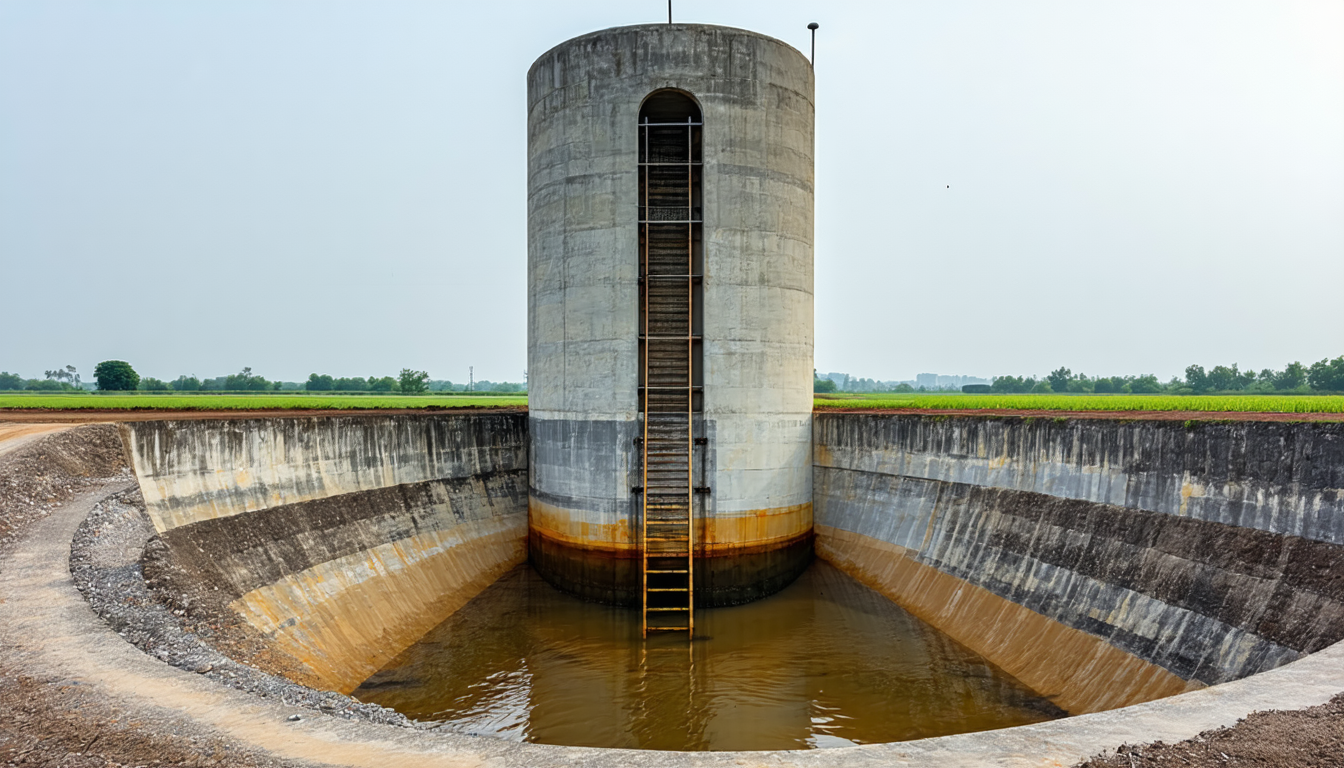
- The reservoir level in Miryang, South Gyeongsang Province, recently fell to 25.2%, or 33.9% of the average-year level of 74.3%.
- Miryang's 25.2% reservoir level is 49.1 percentage points below the 74.3% average-year level.
Compiled by The InvestorSomething wrong?How this is made
Why it matters
South Korea's Ministry of the Interior and Safety said on the 14th that it is elevating leadership of its interagency drought task force to the head of its Disaster and Safety Management Headquarters and standing up a new Southern Region Drought Response Team beneath it, led by the director general for natural disasters [1][2][3]. The number behind the reorganisation is a reservoir reading: the level in Miryang, South Gyeongsang Province, recently fell to 25.2% of capacity against an average-year level of 74.3%, or 33.9% of normal [4].
That is a gap of 49.1 percentage points to the average year [5]. The affected regions named by the ministry are South Jeolla Province, Gwangju and South Gyeongsang Province, following recent low rainfall [6].
The task force previously ran under the ministry's director general for disaster management policy, with the Agriculture Ministry, the Ministry of Climate, Energy and Environment, the Korea Meteorological Administration, the Korea Water Resources Corporation and the Korea Rural Community Corporation taking part [7]. The new team adds the National Fire Agency, the Korea Forest Service and the three affected local governments [8]. The composition tells you what kind of response this is. The team's stated method is to use the Korea Resource Management System to inventory equipment already held by each agency, including water trucks and pumps, and move it to affected areas [9]. To do the moving, it plans to work with national disaster logistics firms including CJ Logistics, Hanjin, BGF Logis and Lotte Global Logistics [10]. Local governments nationwide have been asked to send their drought response resources south [11], and the government says it will quickly deploy available funds, including a special disaster and safety grant, alongside a water-conservation campaign [12]. Interior Minister Yoon Ho-jung said the government would mobilise all available resources so that residents "can feel the effects of real support" [13]. This is haulage and cash, not new supply.
Boseong County in South Jeolla shows what that looks like on the ground. Its reservoirs average 47.8% full, which the county says puts it at the "caution" stage [14]. It has 9,550 hectares of rice paddies [15]. It is running 41 pumping stations and has added 11 temporary intake facilities and 25 simple pumping units [16], meaning emergency additions equal roughly 88% of the permanent station count [17]. Rain-fed paddies are being served with wells, river water and portable pumps [18], and a water-truck system has been built with Korea Electric Power Corp, the Korea Rural Community Corp and the Boseong Fire Station [19]. County chief Kim Chul-woo inspected the Dogae pumping station in Miryeok-myeon, where river levels have fallen and a temporary intake weir is being installed [20], and a site in Gangsan-ri where farm water is being supplied on an emergency basis from the village water supply [21]. Kim said the county would mobilise pumping stations, wells and intake facilities to build a rapid response system [22], and plans to continue water supply and pest control through the harvest of early-maturing varieties [23].
Note the asymmetry: Boseong sits at nearly twice Miryang's reservoir level and is already classified as caution [24].
Neither the ministry nor Boseong has published an estimate of hectares affected, yield loss or price effect. Watch for that first. Then watch the size of the special disaster and safety grant actually disbursed [12], whether more southern counties publish reservoir percentages the way Boseong has [14], and whether the temporary intake weirs hold as river levels keep dropping [20].
Claim ledger
Ranked by verification strength, evidence, and original report placement.
- [1]
The Ministry of the Interior and Safety said on the 14th that it would strengthen the existing interagency drought task force and set up a new Southern Region Drought Response Team under it; the report is dated August 14, 2026.
ReportedView cited source - [2]
As concerns over a prolonged drought grew, the ministry decided to elevate the task force leadership to the head of its Disaster and Safety Management Headquarters to strengthen the whole-of-government response.
ReportedView cited source - [3]
The newly formed Southern Region Drought Response Team will be led by the ministry's director general for natural disasters.
ReportedView cited source - [4]
The reservoir level in Miryang, South Gyeongsang Province, recently fell to 25.2%, or 33.9% of the average-year level of 74.3%.
ReportedView cited source - [6]
The drought is worsening across southern regions including South Jeolla Province, Gwangju and South Gyeongsang Province, following recent low rainfall.
ReportedView cited source - [7]
The interagency drought task force had been led by the ministry's director general for disaster management policy, with participation from the Ministry of Agriculture, Food and Rural Affairs, the Ministry of Climate, Energy and Environment, the Korea Meteorological Administration, the Korea Water Resources Corporation and the Korea Rural Community Corporation.
ReportedView cited source
Sources & coverage · 1 publisher
The reporting this story was synthesized from, earliest first. Every link goes to the original.
- en.sedaily.comAug 13Korea Sets Up Task Force to Fight Worsening Southern Drought
Cited in this coverage: Interior Minister Yoon Ho-jung, quoted by en.sedaily.com
Cited in this coverage: Boseong County chief Kim Chul-woo, quoted by en.sedaily.com
- en.sedaily.comAug 13Boseong Chief Mobilizes Resources to Secure Farm Water Amid Drought