Published · 3d agoInvest3 min read
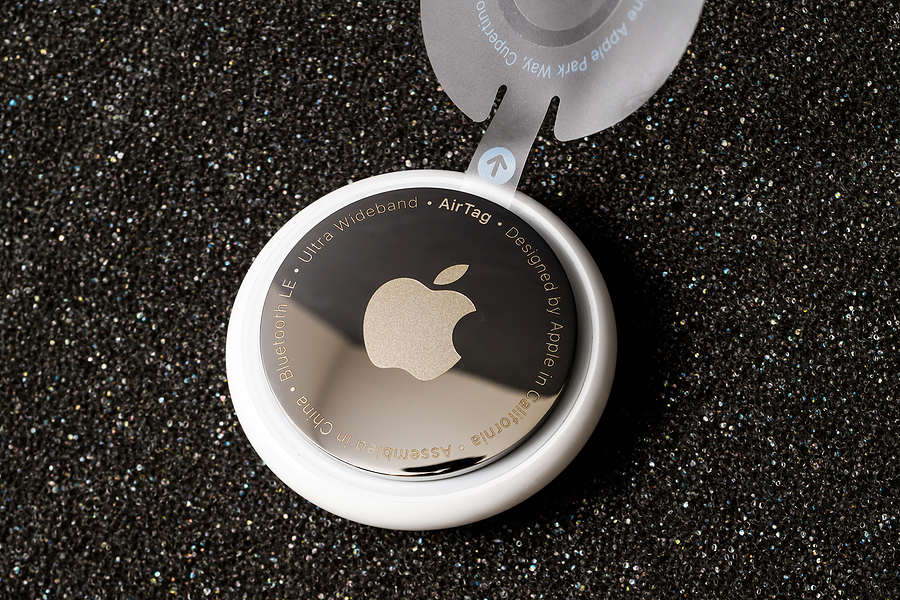
An AirTag in a book shipment reveals what legally clean training data actually costs
404 Media tracked a rare-book order to an Amazon warehouse in Las Vegas where spines are cut off to feed a scanner. The destruction is not a quirk. It is a compliance expense.
Context for builders, not their beat.See today for builders
What happened
- An Apple AirTag hidden in a major book order led to an investigation that tracked the shipment to Amazon's VGT3 warehouse in Las Vegas. 404 Media placed the tracking device inside a shipment of rare books.
- Workers at the Amazon VGT3 facility cut book spines so pages feed a scanner faster, destroying the printed book in the process; employees said all they do is receive massive shipments of printed books and cut the bindings off.
- The 404 Media investigation was published Monday and is the first to publicly pinpoint where bulk book purchases tied to AI training end up.
- Amazon confirmed it "purchases books through commercial channels to help develop and improve the products and services our customers use."
- Amazon said the operation had not been reported before.
Compiled by The InvestorSomething wrong?How this is made
Why it matters
An Apple AirTag hidden inside a shipment of rare books led an investigation to Amazon's VGT3 team at a warehouse in Las Vegas, where employees cut the bindings off printed books so the pages feed a scanner faster, destroying the book [1][2]. The investigation, published Monday by 404 Media, is the first to publicly pinpoint where bulk book purchases tied to AI training physically end up [3], which turns a year of bookseller suspicion into an auditable supply chain.
Amazon said it "purchases books through commercial channels to help develop and improve the products and services our customers use," and said the operation had not been reported before [4][5]. The team's logo is a dinosaur clutching a book in its claws [6].
The scale is the story. Anthropic ran a comparable programme, Project Panama, described in internal documents as an "effort to destructively scan all the books in the world," digitising millions of books [7][8]. One vendor's project proposal requested 500,000 to two million books over six months [9]. That is roughly 2,800 to 11,100 books a day, every day, from a single request [10]. For comparison, the source notes that the upper end alone would cover the entire physical catalogue of Montreal's Grande Bibliotheque, estimated at 1.2 million books [11].
Why paper, and why now. Books printed before 2022 contain text that is not mostly available online and, critically, was not written by a machine; training on machine output risks model collapse, where quality degrades with each recursive loop [12]. Large AI companies are running out of useful text [13]. A cottage industry has formed to supply labs with physical books that get stripped, scanned and discarded [14].
The economics only make sense alongside the case law. A federal judge ruled that training on legally purchased books can qualify as fair use, a partial win Anthropic, Meta and OpenAI all claimed [15]. Pirated copies were treated differently: Anthropic agreed to a $1.5 billion settlement over scanned pirated titles, and Salesforce now faces a class action over alleged book piracy [16][17]. Buying and shredding a physical copy is therefore not sentiment or sloppiness. It is the cheapest available proof of provenance, and the destruction is what you pay for a receipt.
The market has already priced it. Booksellers noticed a spike in bulk orders over the past year from buyers who were not price-sensitive and picked titles seemingly at random [18], and secondhand sales are reportedly booming, which some owners tie to AI bulk buying [19]. One bookseller told the BBC the world "no longer needs five million copies of The Da Vinci Code" [20]. The same appetite is showing up outside books: Google and Mercor fought over access to Spirit Airlines' old data, including hundreds of millions of internal emails, Microsoft Teams chats and employee productivity records, and Google won [21].
What to watch. First, whether other labs' scanning facilities get named the same way, now that a $30 tracker has proved the method works [1][3]. Second, whether vendors of the 500,000-to-two-million-book variety start pricing on scarcity rather than volume, since indiscriminate title selection suggests buyers have not yet hit a supply constraint [9][18]. Third, the Salesforce class action, which will test whether the purchased-versus-pirated line drawn so far holds as a durable liability boundary rather than a one-off settlement number [15][17]. For anyone selling data, the operative fact is that clean provenance, not volume, is what commands a premium.
Claim ledger
Ranked by verification strength, evidence, and original report placement.
- [1]
An Apple AirTag hidden in a major book order led to an investigation that tracked the shipment to Amazon's VGT3 warehouse in Las Vegas. 404 Media placed the tracking device inside a shipment of rare books.
ReportedView cited source - [2]
Workers at the Amazon VGT3 facility cut book spines so pages feed a scanner faster, destroying the printed book in the process; employees said all they do is receive massive shipments of printed books and cut the bindings off.
ReportedView cited source - [3]
The 404 Media investigation was published Monday and is the first to publicly pinpoint where bulk book purchases tied to AI training end up.
ReportedView cited source - [4]
Amazon confirmed it "purchases books through commercial channels to help develop and improve the products and services our customers use."
Sources & coverage · 3 publishers
The reporting this story was synthesized from, earliest first. Every link goes to the original.
- decrypt.coJose Antonio Lanz4d agoRare Books Traced to Amazon AI Training Facility to Be Scanned and Destroyed
- betakit.comAlex Riehl3d agoWhy AI companies are gobbling up books