Published Invest3 min read
Acemoglu says the educated class broke liberalism. The AI manifestos are written by its successors.
A new book argues left liberalism collapsed from the inside and that automation alone will not spread prosperity. It landed the same month tech CEOs published thousands of words promising it will.
Context for builders, not their beat.See today for builders
What happened
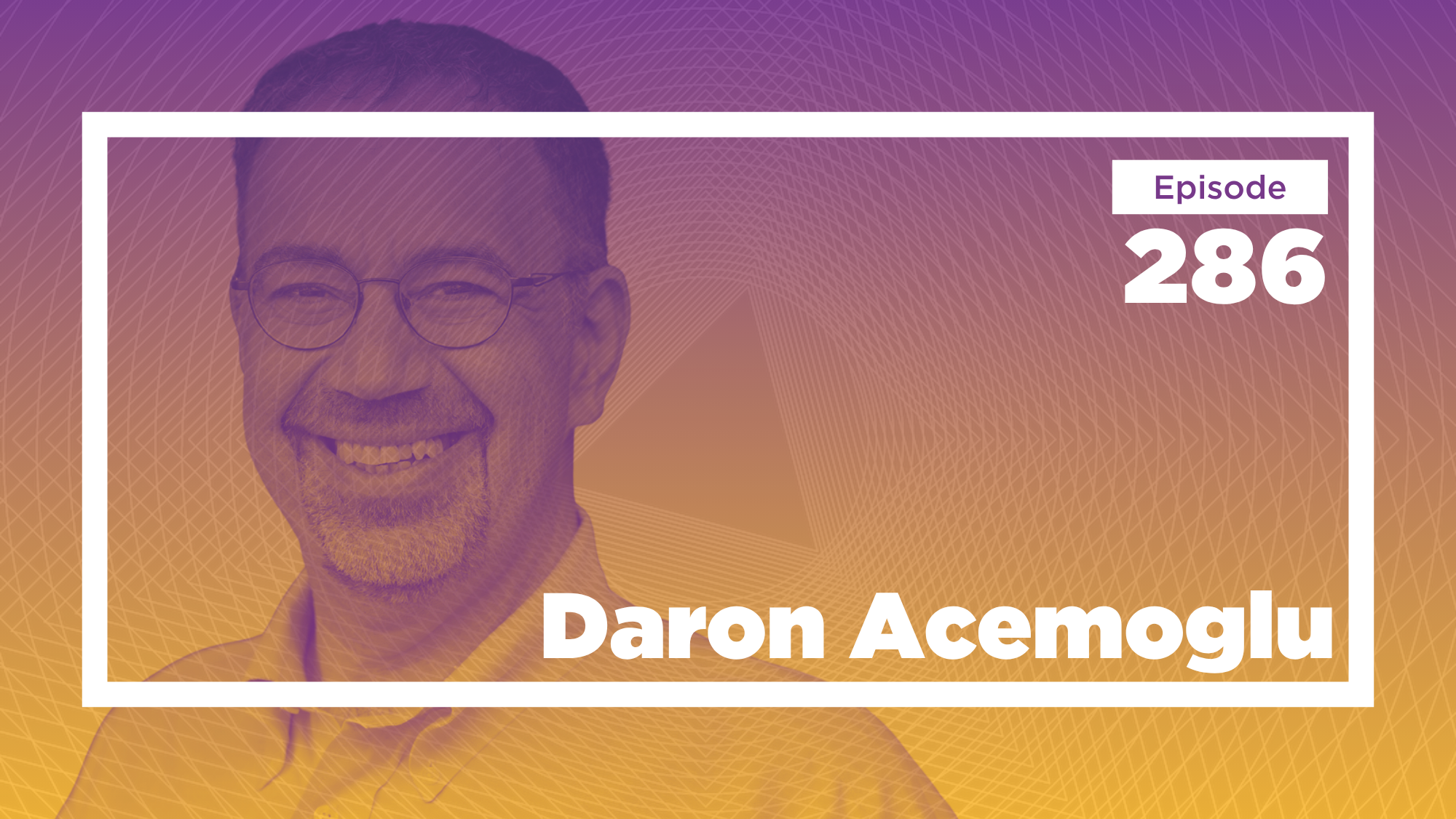
- Daron Acemoglu returned for a second appearance on Conversations with Tyler with a new book, What Happened to Liberal Democracy?, which Tyler Cowen reads as an attempt to redefine and revitalize liberalism for our times; the post is dated August 2026.
- The episode summary says the conversation asks what liberals themselves got wrong, and that the answer implicates the educated elite, "that is to say, you."
- The episode summary lists among the topics discussed "why he blames left liberalism's own establishment power for its collapse."
- The episode summary lists among the topics discussed "why automation alone will not lead to widespread prosperity," "what pro-worker AI actually means," and "whether open-source models undercut the centralization worry." The published excerpt covers only the opening of the conversation and does not include those sections.
- Acemoglu said, "I see myself firmly within the left liberal tradition," and attributed the lack of convergence partly to "the failure of left liberalism."
Compiled by The InvestorSomething wrong?How this is made
Why it matters
Daron Acemoglu returned to Conversations with Tyler in August 2026 with a new book, What Happened to Liberal Democracy?, and an argument that the collapse of left liberalism was mostly self-inflicted by its own establishment [1][4]. That matters for anyone underwriting AI capex, because the same episode is billed as covering why automation alone will not lead to widespread prosperity [5], and it arrived in the same month that the people buying the compute published long essays asserting the opposite [13][16].
Acemoglu's framing is internal, not external. He told Cowen that left liberalism became influential across much of the Western world and some emerging economies over the last 70 or 80 years, and then "did not use that establishment power just in the right way, creating its own weaknesses that made it much more vulnerable to outside attacks" [8]. His analogy is Rome: not that the barbarians were too strong, but that internal problems opened the door [7]. Cowen's summary is blunter about the target, saying the answer implicates the educated elite, "that is to say, you" [3]. Acemoglu places himself firmly inside that tradition [6], and says we are in an interregnum where ideas are fighting again, as in the early 19th century, only with more confusing ideas in circulation [9].
Worth noting what he does not offer. Pressed by Cowen for the external standard by which to judge competing ideas, Acemoglu said, "I don't have one" [10]. What he defends instead is some degree of individual freedom, on the grounds that any improvement in the human condition requires individual initiative [11]. That is a thinner foundation than the confidence of the automation critique implies, and the published excerpt stops before he sets out the mechanism linking technology to distribution [5].
Compare the documents on the other side. Mark Zuckerberg published roughly 6,500 words on spreading the wealth and opportunity of AI to all people, explicitly including residents of communities that host data centers [13]. Fortune notes that is about a tenth of an average novel and ten times the length of his Personal Superintelligence piece a year earlier [14], which puts the earlier essay near 650 words [15]. Dario Amodei's Machines of Loving Grace ran about 13,000 words in 2024 [16], roughly double Zuckerberg's [17]. The stated purpose is to bring regulators and the public along while Wall Street scrutinizes Meta's tens of billions in spending [18]. Communications specialist Patrick Riccards told Fortune the essays are flags in the ground, with five or six CEOs competing on size [20]; Fortune's Phil Wahba argues they are a closed loop of founders, investors and reporters, unlikely to move a public already wary of data centers [21]. Warren Buffett wrote 10,000-word letters too, but drafted them to be understood by his sisters, and had decades of results behind them [22].
The distributional question is not abstract. Canva cut its expected revenue growth to 20% after AI delivery costs came in higher than expected, slowing a rollout that demand was outrunning [23]. Trump Media, meanwhile, has signed nearly a dozen customers, including high-frequency trading firms, for early access to Truth Social posts at up to $100,000 a month, which NYU's Gian Luca Clementi called insider trading by definition [25]. Consumer prices rose 0.1% in July and 3.4% year over year, with KPMG's Diane Swonk calling the economy a mess [24].
Watch whether the next manifesto contains a mechanism rather than an aspiration: a payment to data-center hosts, a wage floor, a stated share. Watch the full transcript for what Acemoglu means by pro-worker AI [5], and whether it is testable. And watch more Canva-style disclosures, which reveal who is actually paying for inference.
Claim ledger
Ranked by verification strength, evidence, and original report placement.
- [1]
Daron Acemoglu returned for a second appearance on Conversations with Tyler with a new book, What Happened to Liberal Democracy?, which Tyler Cowen reads as an attempt to redefine and revitalize liberalism for our times; the post is dated August 2026.
ReportedView cited source - [3]
The episode summary says the conversation asks what liberals themselves got wrong, and that the answer implicates the educated elite, "that is to say, you."
ReportedView cited source - [4]
The episode summary lists among the topics discussed "why he blames left liberalism's own establishment power for its collapse."
ReportedView cited source - [5]
The episode summary lists among the topics discussed "why automation alone will not lead to widespread prosperity," "what pro-worker AI actually means," and "whether open-source models undercut the centralization worry." The published excerpt covers only the opening of the conversation and does not include those sections.
ReportedView cited source - [6]
Acemoglu said, "I see myself firmly within the left liberal tradition," and attributed the lack of convergence partly to "the failure of left liberalism."
ReportedView cited source - [7]
Acemoglu used Rome as an analogy: "we can tell a story about the barbarians were really too strong. No, really, Rome collapsed because internally it had problems that opened up weaknesses against outside invaders as well as some inside problems."
ReportedView cited source
Sources & coverage · 2 publishers
The reporting this story was synthesized from, earliest first. Every link goes to the original.
- marginalrevolution.comTyler CowenAug 12My very interesting Conversation with Daron Acemoglu
- fortune.comPhil WahbaAug 13Tech CEOs are writing 6,500-word manifestos. Who’s actually reading?