Science1 publisher3 min readPublished
A Taiwanese court jailed the husband whose robot vacuum caught his wife's affair
The same live camera feed brought him about US$16,000 in damages and a five-month sentence for making the recording. The chain of custody for that exhibit begins with a party to the dispute.
The Scientist · Science desk
What happened
- Suspicion started with physical evidence: a used toothbrush at the couple's holiday home in September 2023, and garage video showing an unfamiliar man driving the wife there.
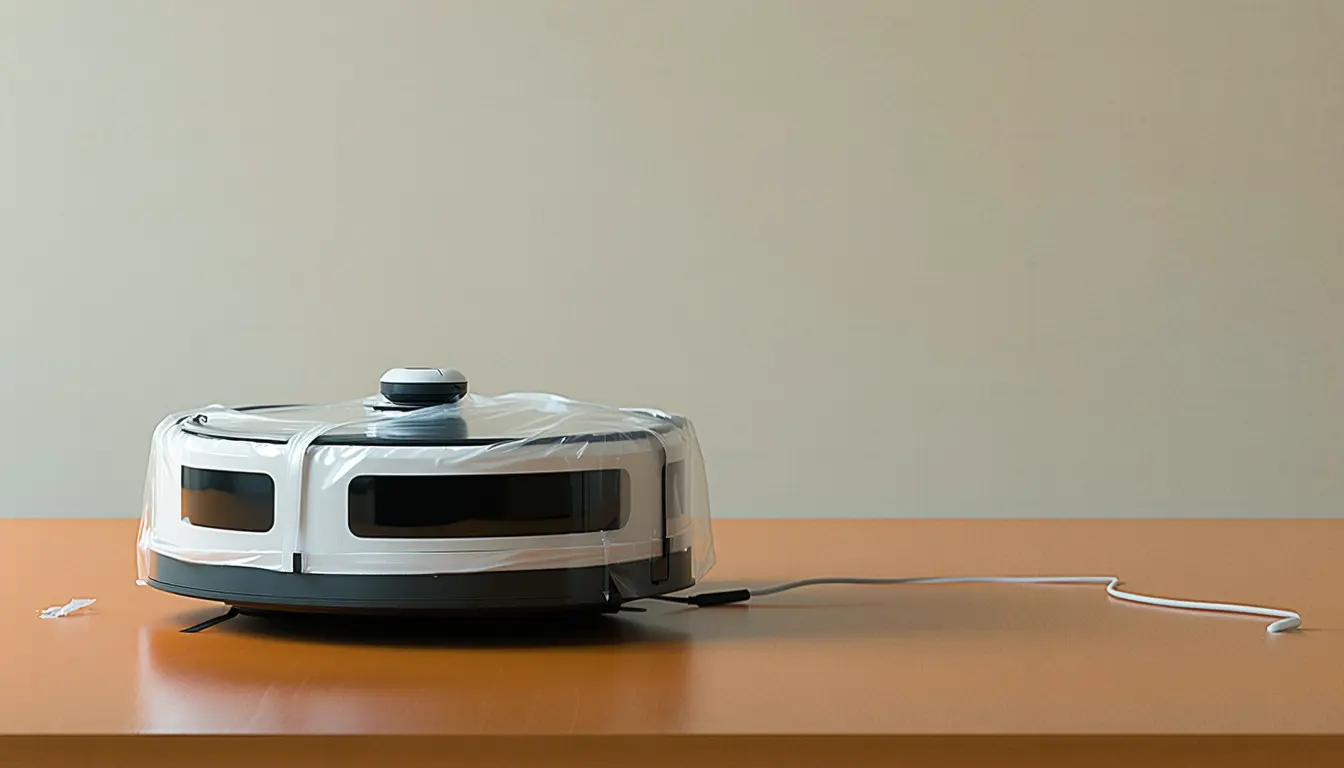
- Three months later the husband opened the robot vacuum's app to speak with his wife and instead watched an intimate encounter through the machine's live camera.
- He recorded the feed and used it to win about US$16,000 from his wife and her lover for infringing on his marital rights.
- The Taoyuan District Court then sentenced him to five months in jail and fined him roughly $4,700 for recording private activity without consent.
- MIT Technology Review reported in 2022 that images from development Roomba J7 units, one of a woman on a toilet, reached a data-labeling contractor whose workers posted them in private social media groups.
Compiled by The ScientistSomething wrong?How this is made
Why it matters
- exposure Consent in an app-connected home sits with whoever holds the account, so guests, children and domestic workers can be watched live by someone who is not in the room and never told them the camera exists.
- constraint In US law the exclusionary rule binds governments and not private parties, so a household recording can put its maker in the dock and still stand as proof against the person it captured.
- decision A judge handed this kind of exhibit has to rule on storage and alteration, not only on whether the video looks authentic, and the authors describe the governing law as a patchwork.
- contradiction US federal law makes illegally intercepted sound both criminal and excludable, the vacuum's output is camera video, and appeals courts split for decades over spouses recording each other at home.
A live app feed is an awkward forensic object. The husband did not pull a file off the machine; he watched a stream and made his own copy of what he saw [2][3]. The article's authors describe themselves as faculty members in a school of interdisciplinary forensics. They ask what exactly was recorded, where it was stored and whether it was altered, since the chain of custody for such an exhibit may begin with a participant in the dispute [7][18]. Of the civil award and the criminal sentence, they wrote: "Both rulings are defensible." [6]
What the appliance is matters here. Some robot vacuums combine cameras, microphones, laser navigation and remote video access, app-connected models build detailed floor maps and cleaning histories, and that data may reach manufacturers' servers [9]. The 2022 disclosure of Roomba J7 development images involved no hacking; it came out of the ordinary pipeline used to train object-recognition software, by way of a data-labeling contractor [10].
The money went his way. About US$16,000 recovered from his wife and her lover, against a fine of roughly $4,700, leaves about $11,300 before legal costs [3][4][5]. The five months in jail sit outside that arithmetic [4].
The three US cases in the article ended three different ways: a conviction upheld on appeal, a charge dropped, a defendant dead before trial [20]. Arkansas prosecutors sought Amazon Echo recordings and cited smart-meter data suggesting overnight water use after a friend died in James Bates's hot tub. They dropped the murder charge when they could not eliminate other reasonable explanations [11]. In Connecticut, Connie Dabate's Fitbit data contradicted her husband Richard's intruder story and helped establish when she stopped moving. A jury convicted him, and in 2025 the state Supreme Court upheld the conviction and found the Fitbit evidence scientifically reliable [12]. Ross Compton's pacemaker data was used in Ohio to challenge his account of a house fire. The court upheld the warrant and concluded that obtaining the data remotely was not an unreasonable search, and Compton died before his arson trial date [13].
Burdeau v. McDowell, decided in 1921, established that the constitutional exclusionary rule restrains government and not private parties. The Fourth Amendment therefore generally does not bar evidence a private actor obtained wrongfully [15]. The federal Wiretap Act of 1968 works differently for sound: illegally intercepted wire or oral communications may be excluded, and the interceptor can face criminal and civil liability [16]. Federal appeals courts disagreed for decades about one spouse recording another at home. The 5th Circuit created an interspousal exception in Simpson v. Simpson in 1974, and the 10th Circuit rejected it in Heggy v. Heggy in 1988 [17]. All of that is American law, and the five-month sentence came from a Taiwanese district court, so this case is no guide to how a US judge would treat the same recording [4][21].
The evidence here is a set of case reports, not a sample. Nothing in the record says how often household-device data is offered in court or accepted, and the authors' own summary is that such data can convict, exonerate or mislead [19]. The wife argued that the vacuum's small indicator lights gave no meaningful warning. The authors extend that problem to guests, children, domestic workers and estranged spouses: a roaming appliance may record people who were never shown its privacy policy [14].
What to watch
- Whether an appellate court revisits either the Taiwanese civil award or the five-month sentence, and on which ground.
- Whether a US court is asked to admit a household member's screen recording of a home robot's live feed, and how it handles storage and alteration.
- Whether robot vacuum makers publish retention periods and access logs for camera feeds, floor maps and cleaning histories.