Build1 distinct publisher2 min readPublished
One builder's arcminute arithmetic caps a four-foot tapestry at 48 PPI. The 300 DPI habit would demand a 1.16 GB buffer that no function is going to hold.
The Engineer · Build desk

Compiled by The EngineerSomething wrong?How this is made
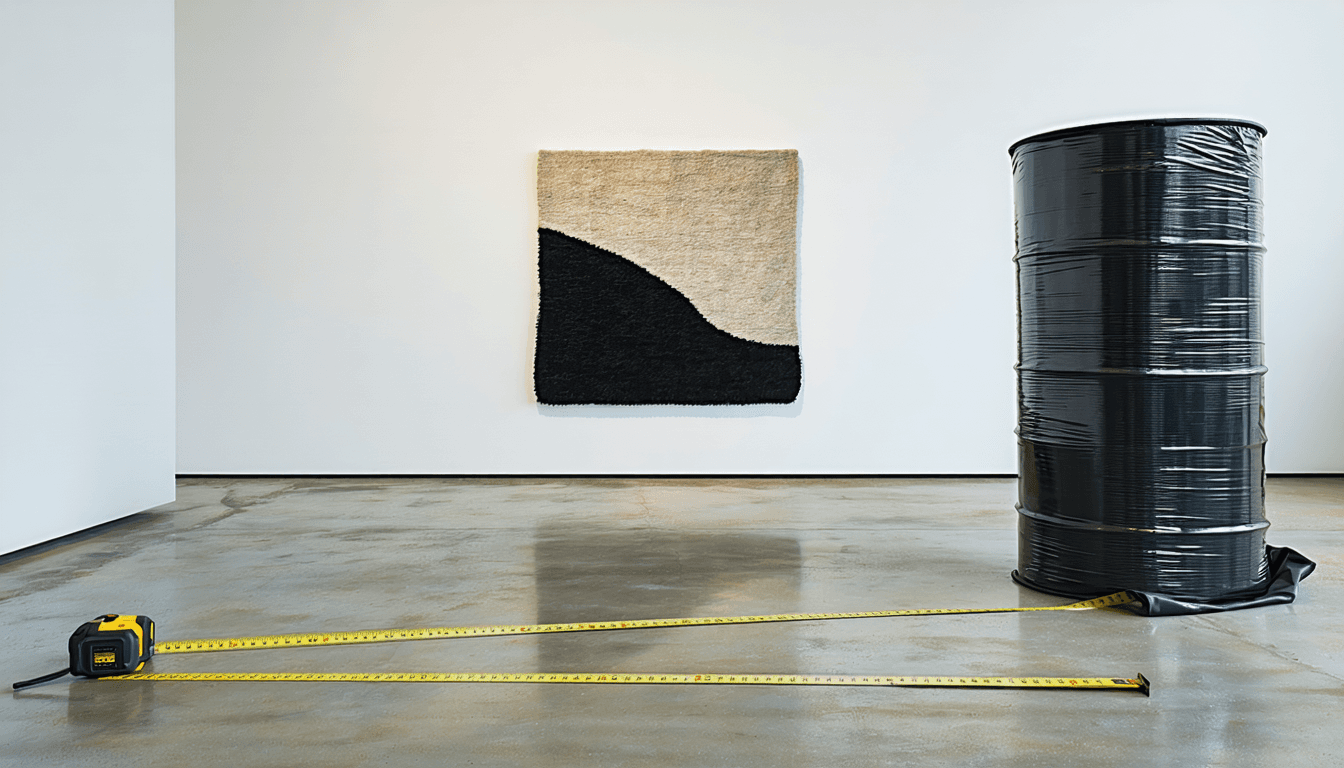
The arcminute figure is doing all the work here, and it is worth saying why it collapses the tiering rather than just resizing it. Required PPI is 3438 divided by viewing distance in inches [7]. Print dimensions go up with the product. People stand back from big things roughly in proportion to how big those things are, so the two terms cancel inside the pixel budget: the tapestry has about twenty times the surface area of the small canvas and is viewed from three times the distance [14].
Run the discarded rule to its conclusion. Applying 300 PPI to a 4x6 ft tapestry means 21,600 by 14,400 pixels, which is an uncompressed RGBA buffer of roughly 1.16 GB [1]. Nothing in a serverless function holds that, and no viewer six feet away could tell it apart from 3438 pixels on the long edge [11]. Even the cautious 8192px upscale that was OOM-killing the pipeline carries about 5.7 times more pixels than the largest product in the catalogue actually requires [5].
The author says the giant tapestry and the small canvas need almost the same pixel count [15]. His own table says 3438 and 2292, which is 1.5x on the linear edge and 2.25x in pixels [3]. That is not identical, and the gap matters if you are choosing a single render target: 4096px sits about 19 percent above the largest requirement in the table [2], so the tapestry is rendered with modest headroom and the desk canvas is rendered with a lot of waste. The virtue of one target is not that it is tight. It is that the waste is bounded and computed, instead of being a 4x reflex applied to whatever the model handed you.
Bleed is the part that survives the correction. A 12x16 canvas on 1.5 inch stretcher bars means feeding a 15x19 inch image [21], and 19 inches at the 143 PPI that two-foot viewing demands is about 2,720 pixels on the long edge [4] - still comfortably inside 4096. So the frame wrap adds roughly a fifth to the requirement, while the habit of upscaling everything added a multiple.
The sequencing fix is the cheaper half and gets the least attention. Serve the preview from the raw 1024px generation and render the print file after checkout, when you know which size was bought [22]. Upscaling in the request path means paying GPU seconds for images nobody purchases [23], and it also means the memory spike lands in an HTTP handler, where an intermittent OOM reads as a flaky endpoint rather than a capacity decision you made a month earlier [18].
Ranked by verification strength, evidence, and original report placement.
Required resolution is a function of viewing distance, not print size; the human eye resolves roughly one arcminute of detail.
Required PPI equals 3438 divided by viewing distance in inches, where 3438 is the number of arcminutes in a radian.
At 12 inches viewing distance the formula gives 286 PPI, which is where the 300 DPI convention comes from.
At 24 inches viewing distance the formula gives 143 PPI.
An 8192px 'just to be safe' upscale would spike past 700 MB and get OOM-killed intermittently, only on large orders.
The two fixes were to stop upscaling past the table's target, since 4096px covers everything, and to never do the upscale in the request path.
Follow any of these and your For You feed starts watching them — no settings page required.
Evidence-backed comparisons of source perspectives and observed adoption signals. Read the methodology
Which Builder, Operator, and Investor concerns the observed source mix emphasized—not a truth score.
Evidence, demonstrated adoption, hype gap, incentives, and confidence are assessed independently, each on its own current evidence. How these are measured.
Self-checking arithmetic, single unaudited source
The technical core is unusually verifiable for a single-source post: the requiredPPI formula, the three pixel targets, the RGBA buffer sizes, the bleed inputs and the derived 1.16 GB and ~192 MB figures all recompute correctly from the snippets published in the article. What is missing is external grounding -- the one-arcminute acuity constant and the offset-printing provenance of 300 DPI are asserted without citation, no print vendor minimum-file spec is cited, no perceptual test or customer acceptance data is offered, and the article's own headline parity claim conflicts with its own targets. That combination caps evidence in the low-60s rather than higher.
One builder's production pipeline
Adoption evidence is limited to the author's own deployment: the capped, post-checkout render pipeline is said to be running behind a live generator, with a self-reported ~70 percent per-order compute reduction and the disappearance of OOM kills. There is no second operator, no vendor confirmation, no benchmark, and no usage volume disclosed, so this registers as a credible single-instance deployment rather than diffusion of the practice.
Mildly overstated framing over sound arithmetic
The underlying arithmetic is sound and, if anything, undersold; the overstatement is in the framing. The cluster title says the reflexive 4x upscale 'buys nothing', yet the author's own pipeline still performs exactly one 4x upscale to 4096px -- what is discarded is the 8192px 'just to be safe' step and the render-on-generate placement. The most-repeated hook, that a four-foot tapestry and a small canvas need 'almost the same number of pixels', is 1.5x apart on the long edge and roughly 2.25x apart in pixel count by the article's own numbers. Quality claims about downsampled 4x upscales and outpainted bleed are asserted without any perceptual or customer-side validation, and the ~70 percent compute saving is unaudited. The gap is modest and directional, not fabrication.
Practitioner post that markets the author's own generator
The author is the operator of the commercial product whose pipeline is being praised and closes by inviting readers to try 'the generator... free to try here', so there is a direct promotional incentive attached to the conclusion that this pipeline is the right one. Mitigating factors keep this mid-range rather than high: the piece is framed as a self-critical postmortem ('I got this wrong in the most expensive possible direction'), publishes the formulas and failure modes in reusable form, and discloses the commercial link rather than hiding it. No sponsorship, vendor relationship or affiliate arrangement is disclosed either way.
Reproducible math, one voice, no external checks
Confidence is moderate. The parts that can be checked from the page check out, and the operational failure mode (OOM from concurrent 256 MB buffers) is mechanically plausible, which supports the central conclusion that resolution targets should be set from viewing distance and then used as a memory ceiling. But there is exactly one publisher and one author, the perceptual premise is uncited, the efficiency and misprint outcomes are unauditable, and the flagship parity framing is internally inconsistent -- so the takeaway is directionally reliable while the specific PPI thresholds should be re-verified against a chosen print vendor's requirements before use.
build
Three manual interventions in a month, and every guard was working as designed1 distinct publisher
build
Six MariaDB versions, one real difference: the only reason to leave 10.6 is the July 2026 clock1 distinct publisher
build
Force the tool call, then hand Lightsail a long-lived key1 distinct publisher
build
AI-written code fails the same four ways, and every gate you own reports green1 distinct publisher
Distinct publishers with included, body-backed reporting in this cluster.
dev.to
1 article · August 25, 2026