Leadership1 publisher2 min readPublished
Saudi Arabia trims NeoCity and LIV golf while pledging $15 billion to domestic AI
Newcomer reports Middle East oil exports are down by half or more, with only Qatar pulling back from AI so far. Rising rates and talk of armouring data centres raise the cost of what is still being built.
The Board Room · Leadership desk
What happened
- Newcomer reports that only Qatar has pulled back among the Middle East's sovereign wealth funds, with the UAE and Saudi Arabia still charging ahead on AI commitments.
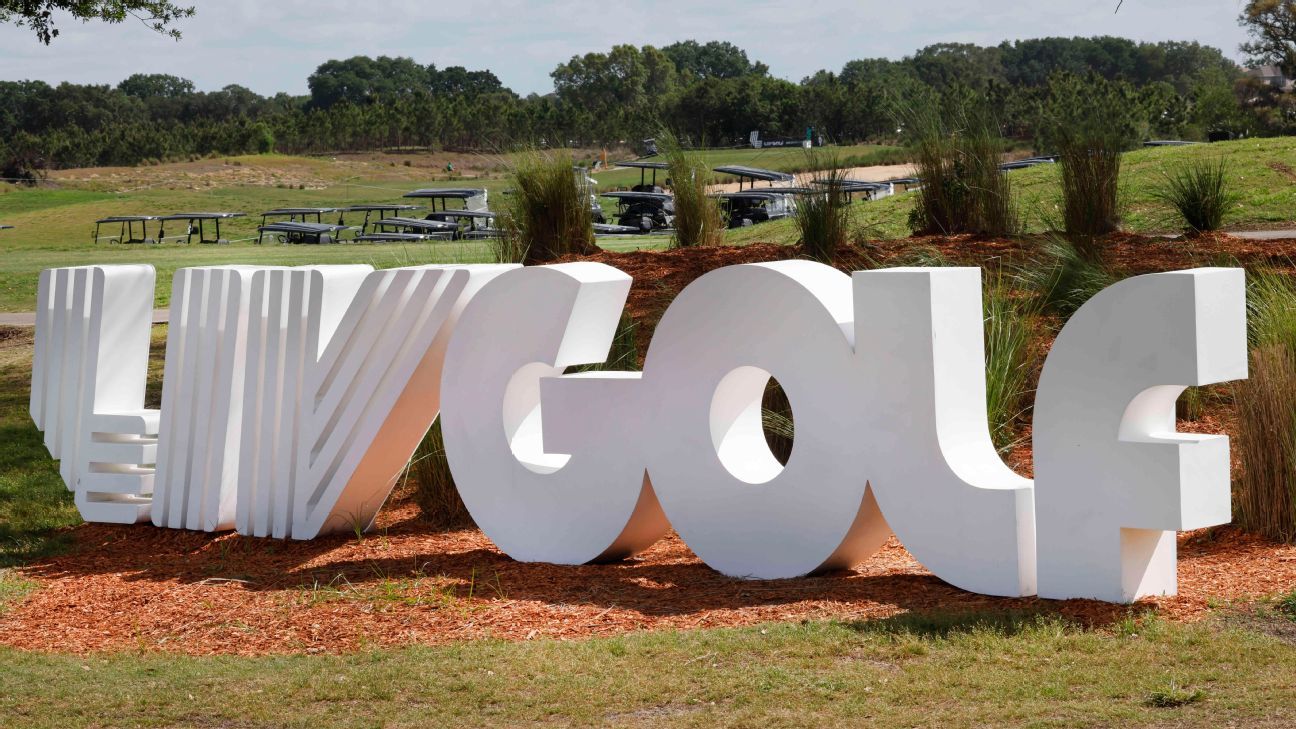
- Saudi Arabia keeps funding its national AI champion Humain while cutting back non-tech investments including the futuristic NeoCity development and the LIV golf tour.
- AWS acknowledged this week that some customer data was permanently lost in drone attacks on its Bahrain and UAE facilities at the outset of the war; those sites remain mostly offline.
- Regional data center development officially continues apace, but Newcomer says talk of hardening sites with armaments means they will cost more at a minimum.
- Apollo's chief economist is warning that hyperscaler debt is getting riskier, which Newcomer says will also make that debt more expensive.
Compiled by The Board RoomSomething wrong?How this is made
Why it matters
- constraint Gulf capacity to keep funding AI at this pace depends on the oil price holding up against halved volumes, so the oil market sets the size of that capital line.
- exposure Major VC firms have long relied on Middle Eastern limited partners, so a softening in those finances reaches Silicon Valley through fund closes and rounds before it reaches any construction site.
- cost Higher rates raise the price of the debt behind the build-out, and that bill lands on the borrowers financing data centres even if sovereign funds keep committing.
- precedent Riyadh's ordering of cuts sets the expectation that AI is the last item a squeezed Gulf budget trims, and other sovereign funders will be read against that standard.
Gulf commitments have held because higher prices covered part of what lost volume took away. Newcomer reports export volumes down by half or more, with rising oil prices partially offsetting the decline [2][7]. Export revenue is therefore down by less than the volume drop [1]. The UAE's MGX, which holds a large position in Anthropic and is also in OpenAI and xAI, is still playing aggressively [6]. Saudi officials say their tech-forward efforts are helping them repair facilities quickly and weather the storm [18].
How much of AI's capital sits on that base is one number from one interested party. Jack Selby, head of Peter Thiel's family office, warned in the spring that the technology industry was over-reliant on Middle Eastern money, and said it accounted for 25% of all the capital being invested in AI globally [10]. Newcomer describes that as the high end of such estimates [11]. He did not cite a lower estimate.
Rising interest rates raise the price of the debt financing the data centre build-out, as Martin Peers wrote in The Information [13]. That cost moves whether or not sovereign liquidity holds, because it lands on the borrower rather than the limited partner.
For the moment, prices are holding. Public and private market valuations remain near all-time highs [15]. Crusoe raised nearly $4 billion in a single round at a $30.9 billion post-money valuation [16], and Bain Capital Ventures unveiled a new $1.6 billion fund [17]. Each of those numbers was set with prices still offsetting volumes. The more informative signal is what a squeezed sovereign protects first: Riyadh pledged $15 billion in domestic AI investment this month [4], while the projects it is dropping sit outside technology [5].
For a buyer signing multi-year compute commitments this quarter, the live issue is whether the quoted price assumes the Gulf limited-partner base stays its current size. For the decade, the issue is whether AI keeps its place at the front of the queue as those budgets tighten further. Nobody knows yet. Of the three Gulf backers Newcomer names, two are still committing and one, Qatar, has pulled back [2].
What to watch
- Whether UAE or Saudi liquidity follows Qatar in pulling back at the next fund close or late-stage round.
- The oil price path: if prices stop offsetting halved volumes, export revenue falls toward the volume decline.
- Whether hardening costs and rate-driven debt pricing appear in hyperscaler capex disclosures or debt spreads.