Loading today’s stories
Product1 distinct publisher3 min readUpdated
The Royal Navy ran a radar network on a British atomic clock instead of GPS
Two Aquark cold-atom clocks held a distributed air picture together with no satellite timing. The lesson for finance and telecoms is that the substitute is now hardware you can take delivery of.
The Product Desk · Product desk
What happened
- The Royal Navy carried out the first-ever demonstration of a distributed military radar network without any help from global navigation satellite systems (GNSS).
- The demonstration used an atomic clock built by Aquark Technologies, a Southampton-based company, described as a milestone in UK sovereign quantum technology.
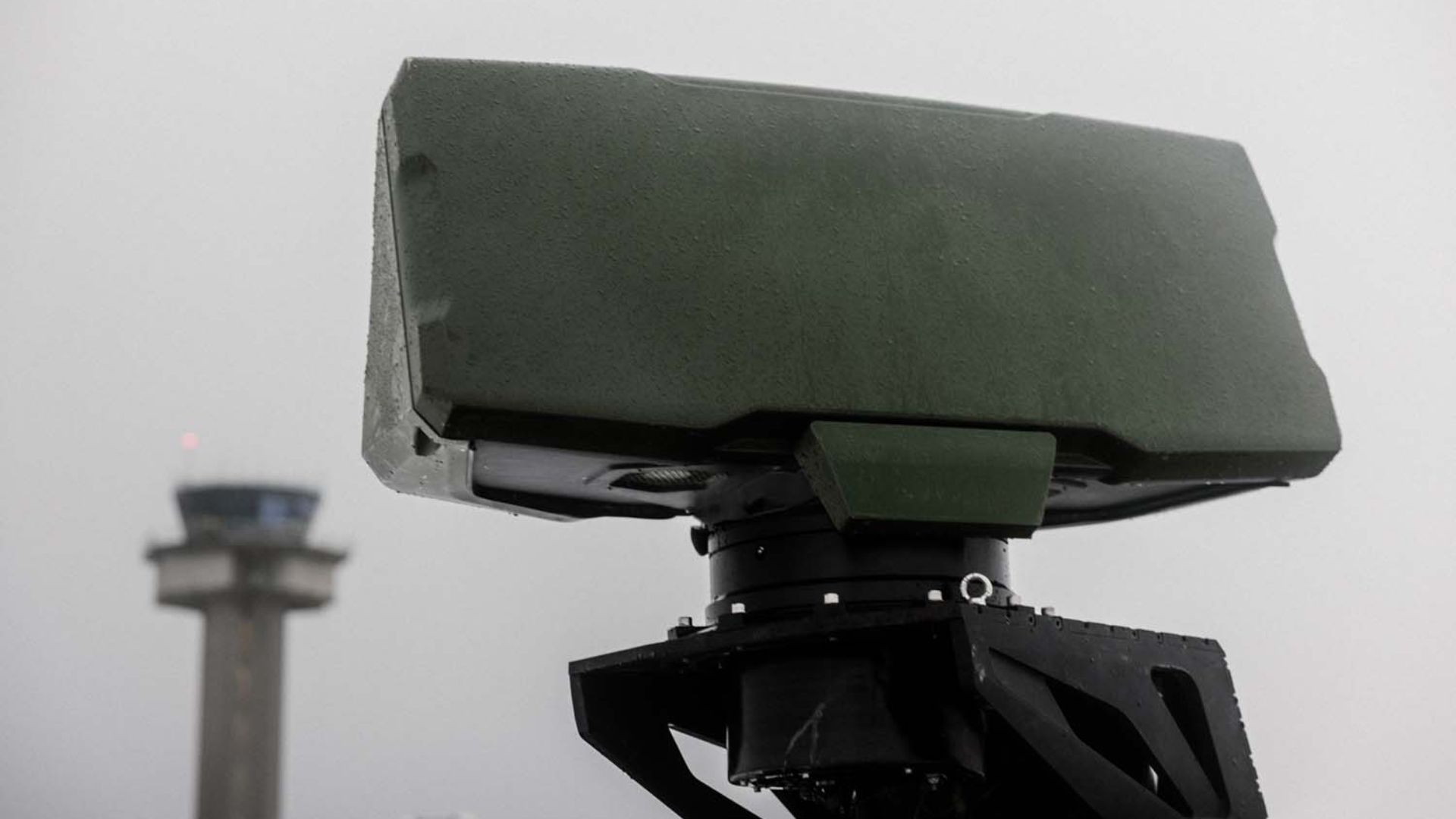
- The tests involved Saab UK, maker of the Giraffe 1X radars, and were carried out onboard XV Patrick Blackett, the Royal Navy's experimentation ship.
- Aquark delivered two quantum atomic clocks at two geographically different locations and was able to reach an acceptable timing signal in less than 30 minutes.
- A Giraffe 1X radar at Portsdown Hill was supplied with timing information that is generally provided by GNSS.
Compiled by The Product DeskSomething wrong?How this is made
Why it matters
The Royal Navy has demonstrated a distributed military radar network running without any input from global navigation satellite systems, using an atomic clock built by Aquark Technologies of Southampton [1][2]. The point of interest for operators outside defence is not the physics but the logistics: the clocks were delivered to two geographically separate locations and reached what the participants call an acceptable timing signal in under 30 minutes [4].
The trial involved Saab UK, which makes the Giraffe 1X radar, and was run in connection with XV Patrick Blackett, the Royal Navy's experimentation ship [3]. A Giraffe 1X at Portsdown Hill was fed the timing information that would normally arrive from GNSS [5]. Two operational systems then produced a single air picture on AQlock timing alone [6]. The team also simulated timing disruption, and radar operators were able to observe the manipulations, including deliberate misalignment of timestamps [7]. That second half is the more useful result. Cooperative radar combines returns from several sources into one picture, and the combination is only as good as the shared clock [8].
The generalisation is straightforward. GNSS is not only a navigation service; it is the default time distribution layer for military infrastructure, aviation, shipping and financial markets [10]. Its ubiquity is also what makes it a target, and it can be spoofed or jammed [9]. A government estimate cited by Interesting Engineering puts the cost of a 24-hour disruption at US$1.92 billion, or 1.42 billion pounds, a day [11], which works out at roughly $80 million an hour [12]. In network terms the dependency is narrow and specific: a time server distributes time-of-day across systems to keep them in sync [13]. Swapping the upstream reference for that server is exactly the substitution the Navy just performed, and it is the same substitution a clearing venue or a mobile core would need to perform.
Aquark's approach uses a super-molasses trap, cooling atoms close to absolute zero with lasers and comparing the clock's frequency against them, with miniaturisation and portability as the design goal [14]. The company has previously tested the technique on land platforms, naval surface vessels and uncrewed aircraft, including at sea aboard HMS Pursuer [15]. Matthew Aldous, Aquark's timing lead, called the trial "a milestone in the development of UK sovereign quantum technology and a first-of-its-kind application of a UK atomic clock" [16], and said it was "the first known time that a pair of British built cold atom systems has been deployed in answer to a genuine defence challenge" [17].
What the published account does not provide is the procurement detail that would let anyone else price this: no accuracy or holdover specification, no unit cost, no size or power figures, no trial duration, and no definition of what "acceptable timing signal" meant in practice [18]. A 30-minute setup time is a claim about one deployment, not a service level.
Watch for whether this moves off an experimentation ship into a funded programme with published specifications, and whether Saab starts offering GNSS-independent timing as a configurable option to Giraffe customers rather than a trial arrangement [3][5]. For anyone running a timing-sensitive network commercially, the question to put to a vendor has changed: not whether a GNSS-free reference exists, but what it costs, how long it holds, and how quickly two of them can be stood up at separate sites [4].
Loading topic controls
Loading related stories