Loading today’s stories
Product1 distinct publisher3 min readUpdated
The Air Force bought the charger, not the vehicle: Xos's first defense award prices the bottleneck
Xos's first Air Force contract is a prototype agreement for a deployable battery unit that charges electrified equipment without fixed infrastructure. The deliverable says where electrification is stuck.
The Product Desk · Product desk
What happened
- The U.S. Air Force awarded Xos a prototype Other Transaction Agreement (OTA) to develop and deliver a deployable mobile charging solution for electrified support equipment and vehicles.
- The award was granted by the Air Force Global Strike Command Rapid Capabilities Division 2026 Showcase, and marks Xos's first U.S. Air Force contract and its entry into the defense market.
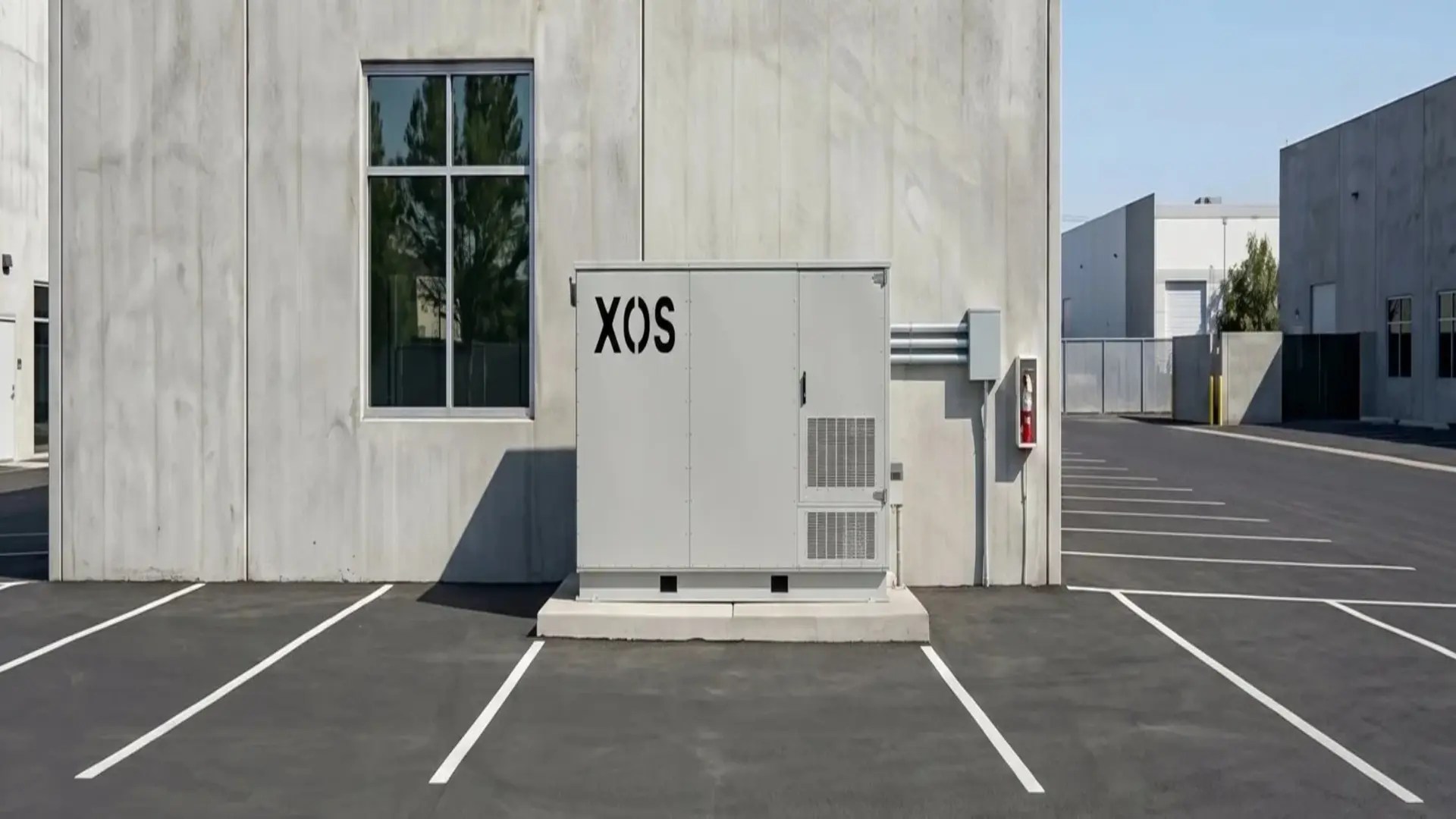
- Under the agreement Xos will adapt its Xos Hub mobile battery energy storage system to provide high-capacity, standards-based, grid-independent charging for electrified support equipment and vehicles without requiring permanent infrastructure.
- The agreement has a period of performance extending into late 2027, during which Xos will demonstrate the Xos Hub across new environments and further develop its domestic manufacturing capabilities.
- The prototype will undergo primary assembly and integration at Xos's Byrdstown, Tennessee facility.
Compiled by The Product DeskSomething wrong?How this is made
Why it matters
A prototype Other Transaction Agreement is not a program of record, and the source material gives no dollar value, no unit count, and no capacity figure for the hardware. What it does give is the shape of the purchase: the Air Force contracted for the means of delivering electricity to electrified support equipment and vehicles, not for the equipment or the vehicles themselves [1][3].
That ordering is the story. The Xos Hub is sold on the absence of permanent infrastructure, which is only a selling point where the permanent infrastructure is the thing that has not arrived [3]. Set that against the other commitment the company cites in the same announcement: the U.S. Army has pledged microgrids at every installation and an all-electric non-tactical vehicle fleet by 2035 [10]. One of those is a construction programme and the other is a fleet deadline. Deployable storage is what a buyer procures when the second is moving faster than the first.
Dakota Semler, Xos's CEO, called the award "a strategic inflection point" for the company [6]. Underneath the phrase is a single prototype agreement whose period of performance runs into late 2027, during which Xos is to demonstrate the Hub across new environments [4]. That leaves roughly eight years between the end of the demonstration window and the 2035 fleet target [14] - comfortable, unless the demonstration turns up problems that fixed chargers were never asked to solve.
The market framing deserves the same handling. The $19.87 billion figure for global military power solutions by 2033, growing at 7.7% a year, comes from the company's own announcement rather than from independent verification in the reporting [8]. Run the compounding backwards and the same two numbers imply a base of about $11 billion today [13], and total growth of about 81% over the eight years [15]. That is a real market, and it is also a market that would exist without any of this: the Department of Defense is, on Xos's own citation, the largest institutional energy consumer in the United States [9].
What is genuinely new here is the route. Giordano Sordoni, the co-founder and COO, described Xos as a non-traditional contractor adapting a commercially proven product for a new mission [11], with primary assembly and integration in Byrdstown, Tennessee [5]. The award came out of the Air Force Global Strike Command Rapid Capabilities Division 2026 Showcase [2], which is a procurement channel built for exactly that: take something already running for commercial fleets, ports, and municipalities [7], modify it, and skip the years a purpose-built defence programme would consume.
If the mechanism holds, the buyers who follow are not only military. Xos says its pipeline already covers port authorities, utilities, and federal grant programmes [12], and the argument that sells a Hub to an air base is the same one that sells it to a port: the vehicles can be bought this year, and the substation cannot.
Loading topic controls
Loading related stories