Leadership1 publisher3 min readPublished
The only price in the record so far is one cafe's repainting bill, while the saving that justified trading a designer for ChatGPT has never been written down anywhere an operator could check it.
The Board Room · Leadership desk

Compiled by The Board RoomSomething wrong?How this is made
One side of this trade carries a number and the other does not. The Denver manager described swapping a paid designer for ChatGPT without putting a figure on either half of the swap, so the saving he was chasing does not appear in the record at any size [10]. The cost of being noticed does appear, and it was paid in paint by a cafe whose signage was only ever meant to be temporary [9]. That asymmetry is the useful part for anyone facing the same call this quarter: the loss side is documented and the gain side is asserted.
The saving is fragile because the failure mode is visible to the person holding the menu. Jamie Soja, a Bay Area photographer who has shot restaurant marketing and food-delivery images, said the colour, texture and arrangement of ingredients come out off, and the lighting can look unnatural [13]. That is a defect detectable at street level, which is why the Reddit thread about the San Francisco cafe compared its bread to reptile skin and a loofah [8]. Restaurants are cutting cost in the one channel where the customer is also the inspector [16].
The platform rules written so far police deception rather than synthesis. DoorDash said its AI photo tools exist to improve the presentation of an existing image of a dish by adjusting lighting, colour or background, that its policies prohibit eateries from creating or altering misleading images of menu items, and that it reviews menu images for compliance [14]. A generated picture of a dish the kitchen genuinely serves does not obviously breach a rule built around the word misleading, so on current policy the line between enhancing a photograph and inventing one is drawn by diners rather than by the app.
Sizing the practice is where the evidence thins. The National Restaurant Association's 26% leaves 74% of operators reporting no such use and reads as roughly one operator in four [6], but the same figure counts marketing alongside inventory management, scheduling, menu optimisation and order-taking [5]. Nothing in it isolates image generation, so it cannot tell an operator how many competitors are doing the specific thing diners are objecting to.
A skeptic would say engagement is not demand: several hundred reshares of one complaint against more than 200,000 likes for one refusal is a ratio of about 400 to one [15], measured on two platforms counting two different actions, and neither number is a covers count. That is right, and it is why the defensible read is the narrow one. Hunter Lewis, editor in chief of Food and Wine, said he sees restaurants growing as they automate back-end operations, that AI images can be a real turnoff, and that use of the technology should be invisible to diners [11]. The choice available now is placement rather than adoption, and the operator who puts the synthetic version in the window is the one whose neighbours get to grade it.
Ranked by verification strength, evidence, and original report placement.
Jill Sennett, a 37-year-old nurse in Denver with 26,000 X followers, shared AI-generated menu images from a Jamaican barbecue pop-up restaurant in which the meats looked like leather belts crawling with tiny beetles.
Sennett's post was reshared by more than 500 people who similarly expressed disgust.
Sennett said eating is "such an essential human experience" and that it is "a bad cultural thing that restaurants are converting to these horrific, uncanny food images that are unappetizing".
Sennett still ordered chicken and macaroni and cheese; it was one of her only lunch options and she had eaten there before.
A 2026 report from the National Restaurant Association found 26% of restaurant operators use AI to help with marketing, inventory management, employee scheduling, optimizing menus and taking orders.
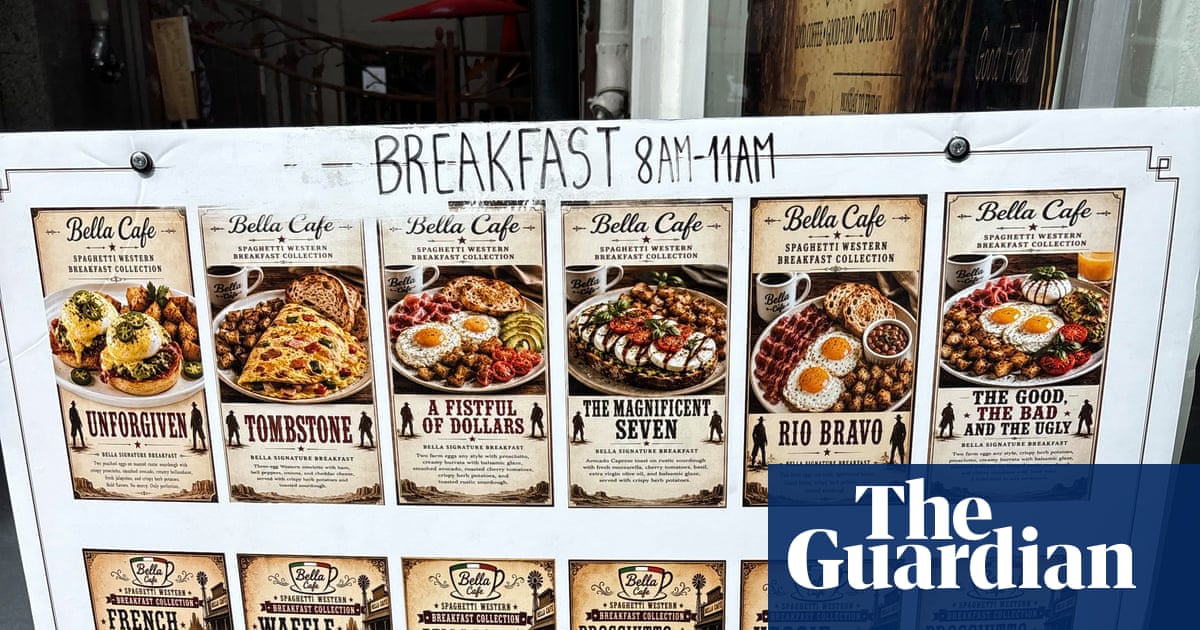
When San Francisco cafe Grind & Unwind put up a sign depicting menu options that locals identified as AI-generated, vandals graffitied the storefront with a word owner Lyndsey Lozano deciphered as "seriously".
Follow any of these and your For You feed starts watching them — no settings page required.
Evidence-backed comparisons of source perspectives and observed adoption signals. Read the methodology
Which Builder, Operator, and Investor concerns the observed source mix emphasized—not a truth score.
Evidence, demonstrated adoption, hype gap, incentives, and confidence are assessed independently, each on its own current evidence. How these are measured.
On-record voices, borrowed numbers
The human material is solid and named: the diner, the Bay Area photographer, Food & Wine's editor, a direct emailed statement from DoorDash. The two numbers that carry weight are weaker than the quotes around them. The $700 repaint and the cafe owner's only comment come via SFGate, and she would not speak to the Guardian; the 26% arrives as a trade association's summary of its own report with no methodology in view. The operator who explains the whole cost rationale would not give his name.
Tools shipping, uptake unmeasured
What is actually documented is tool supply. DoorDash sells the photo editing and labels its output automatically; ChatGPT is doing menu art for at least one Denver pop-up. Uptake of generated menu imagery, though, is nowhere counted. The 26% would still be true if none of those operators had ever generated a food picture. The visible cases amount to three storefronts and a Reddit thread. Two of those cases run backwards: the cafe took its signage down, and the loudest engagement in the story belongs to a kitchen swearing off the technology.
Reach oversold, costs unpriced
The framing has AI images taking over menus; the record shows a handful of identified storefronts, one survey number that cannot be read as imagery adoption, and a Wyoming soda fountain whose refusal outdrew the complaint that opened the reporting. On money the imbalance reverses. The saving that justified dropping a designer is never written down, while the only priced consequence is $700 of paint, which means the cost-cutting case is asserted at exactly the point a reader would want a number.
Most speakers have something to sell
Almost every voice here has a position in the outcome. DoorDash describes tools it sells while vouching for its own policing of them. Food & Wine's editor speaks for an industry his magazine covers, and his advice that the technology stay invisible to diners argues for concealment rather than labelling. Chugwater's cardboard sign is marketing, and 200,000 likes says it worked. Soja's stake is the most transparent of the set, since the tooling competes with his own commissions.
Single newsroom, checkable detail
The specifics are concrete enough to be re-reported — a deciphered word of graffiti, a Reddit thread by title, a named magazine editor, a quoted platform statement — but this is one newsroom's work, and neither the survey figure nor the cafe's bill has a second account behind it. What is on record is reliable; what is missing is the arithmetic that would make the cost claim testable.
build
Thirty runs of one prompt put a 34-point error bar around a brand's mention rate1 publisher
leadership
Walmart expands its restaurant-delivery push with 150 Dunkin' counters inside its own stores1 publisher
science
Text watermarks land on 2 December. The detection they imply does not.1 publisher
invest
A Connecticut judge just priced prompt injection: no fine, no e-filing2 publishers
Publishers with included, body-backed reporting in this cluster.
1 article · September 6, 2026