Product1 publisher3 min readPublished
UiPath aims Cartographer at the weeks companies spend mapping their own processes
Discovery has been the manual step in automation projects. UiPath now sells a tool that does it and writes the workflow. Whether the map it produced was right shows up only after the thing is in production.
The Product Desk · Product desk
What happened
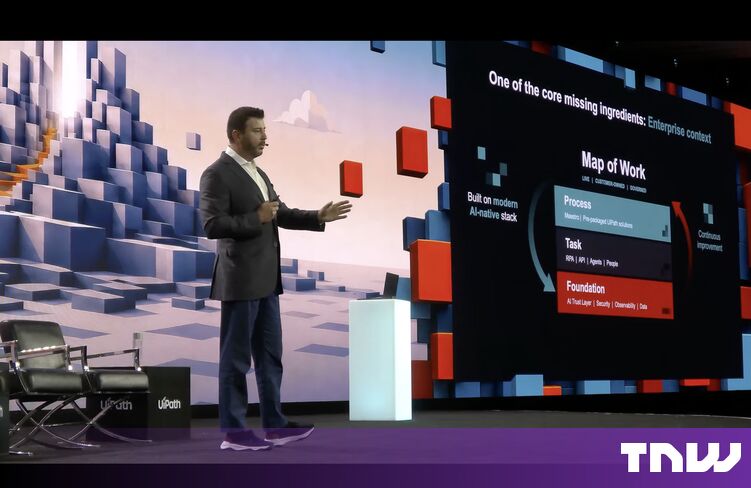
- UiPath announced more than a dozen platform features at its FUSION conference in Las Vegas, led by Cartographer, a tool for working out how employees actually perform the manual task a company wants to automate.
- Cartographer collects the process data automatically and then returns a ready-to-use automation workflow that includes features for measuring how well it performs.
- After the workflow goes into production, a feature called the Decision Ledger logs the actions it takes, and UiPath says enterprises can use that log to improve accuracy.
- The Integration Service adds connectors for databases and MCP-based AI agent tools, plus Relay, which reaches on-premises workloads.
Compiled by The Product DeskSomething wrong?How this is made
Why it matters
- constraint Everything downstream inherits the capture. A workflow generated from a map that missed an exception path will break on precisely the cases a person was quietly handling by hand, and it will break in production.
- decision Teams that budgeted analyst weeks for discovery now choose between paying for those interviews and trusting a generated map. No accuracy figure has been published to weigh one against the other.
- exposure Whatever the tool gathers to build the map is a new record of how identified employees do their jobs, so the people who approve workplace monitoring get a say before the automation team starts.
- cost The administrator who rotates credentials has one fewer copy to chase, because workflows can read logins from the customer's existing secrets vault instead of a duplicate held in UiPath.
Discovery is where automation projects stall. An expert can describe the normal path in a few sentences, then spends the rest of the interview on what happens when an invoice arrives without a purchase order and somebody has to email a colleague to decide. UiPath says that mapping work can run to weeks, because a team has to establish the typical way employees perform a task and also how they respond to unusual developments and errors [5].
Daniel Dines, UiPath's founder and chief executive, put the gap this way: "A process map tells you how work is designed to run" [8]. He said Cartographer "is the key to uncovering the operational knowledge of how that work actually runs, with every exception and every judgment call included. It's the first product built to capture both and keep them in sync" [9].
What teams tell themselves is that the process is the diagram in the wiki and the exceptions are noise. What people actually do is hand the odd case to the one colleague who knows the rule. The diagram does not show that hand-off.
What Cartographer collects, from whom, and at what price are all missing from SiliconAngle's account of the launch [18]. Anyone who has to clear a capture tool with a works council or a security reviewer needs that answer before the pilot. UiPath counts more than 3 million developers building workflows on the platform [3]. The question will come up in a lot of companies.
The dates matter to whoever is planning the rollout. Cartographer is available now. The Test Cloud additions arrive next month [10], or October 2026 by the date on the announcement [19]. Among them, Autonomous Exploration lets engineers test an application by setting high-level bug detection goals instead of writing the simulation scripts [11], and the platform will also run the tests engineers wrote by hand [12]. UiPath Coding Agents, which first appeared in March, is now generally available for building workflows with tools such as Claude Code [17].
Which processes to point this at turns on the exception. Does the exception have a written rule anywhere? Does one named person own the decision? Where the rule is written and the owner is known, a generated workflow is worth a pilot, and the production log gives you something to check it against. Where the exception is a person's discretion, the capture will faithfully encode one employee's habits and hand you a workflow that calls them a process. A quarter after a pilot, the honest check is how many generated workflows are still running without a hand rebuild, and whether the Decision Ledger surfaced a missed exception before a customer did [7].
What to watch
- Whether UiPath documents an employee consent path for whatever Cartographer records, and where that record is stored.
- Any independent comparison of a Cartographer map against the exception paths human analysts find in the same process.
- Whether the Decision Ledger becomes an artifact internal audit or regulators start asking automation teams to produce.