Invest1 distinct publisher3 min readPublished
The institutions with correspondent ties to the Emirati branches have not been named and had filed nothing as of Tuesday, which tells you what a $1.8bn allegation costs to defend against what it costs to exit.
The Investor · Invest desk

Compiled by The InvestorSomething wrong?How this is made
Thirty months is the window FinCEN picked, January 2024 through June 2026 [3], and the shape of the flow inside it is more interesting than the headline total. About $520m of the suspected activity fell in the most recent twelve months the bureau reviewed [12], which leaves roughly $1.28bn spread across the preceding eighteen: about $71m a month early, about $43m a month lately, a decline on the order of 39% [2]. Two readings, and this desk cannot tell which is right from the proposal. Either the network was already routing around these five branches [2], or FinCEN simply has denser data on the earlier period. Both matter for remediation, because no amount of forensic lookback cleans up a flow that has already moved somewhere else.
The commercial question is narrower than the legal one. Three U.S. financial institutions hold the branches' correspondent accounts, FinCEN did not name them, and American Banker could not identify them either [8]; the comment period closes Oct. 1 and the file was empty as of Tuesday [13]. Nothing in the source tells us what those accounts earn, but the arithmetic on the other side is legible enough: the bureau says the branches are a significant conduit and describes the counterparties as potential front companies, without a court ruling on any of it [4], and the branches carried about $6.4bn in assets at the end of last year, against which the $1.8bn of flagged flow is roughly 28% [4]. An account that produces a fee schedule you cannot print next to that paragraph is a relationship banks would rather keep quiet than defend in public.
The part that spends other people's money is the second-order duty. Every U.S. bank, including the ones that never touched Banque Misr, would have to apply special due diligence across its entire foreign correspondent book and warn any foreign correspondent it knows or has reason to believe serves the Emirati branches that access is off [10], on top of taking reasonable steps to block transactions involving them [9]. When the trigger is "reason to believe" and the counterparties are Dubai free-zone shells built to obscure ownership [18], the cheap answer is a broad exit from that traffic rather than a careful one.
And this covers less of the problem than the language implies: $520m in a year is about 5.8% of the roughly $9bn FinCEN says Iranian shadow banking pushed through U.S. correspondent accounts in 2024 alone [3][11], different periods notwithstanding. So read it as a template with more entries to come. The view, held loosely: all three accounts close before the comment file does, and the final rule lands on a relationship that no longer exists. What would break that is a large U.S. bank filing a scope comment before Oct. 1, or the UAE central bank's urgent forensic examination [16] producing something FinCEN accepts and narrows against. Banque Misr has promised a response [14] but disputed no specific transaction [15] -- an opening posture more consistent with settling than with fighting.
Ranked by verification strength, evidence, and original report placement.
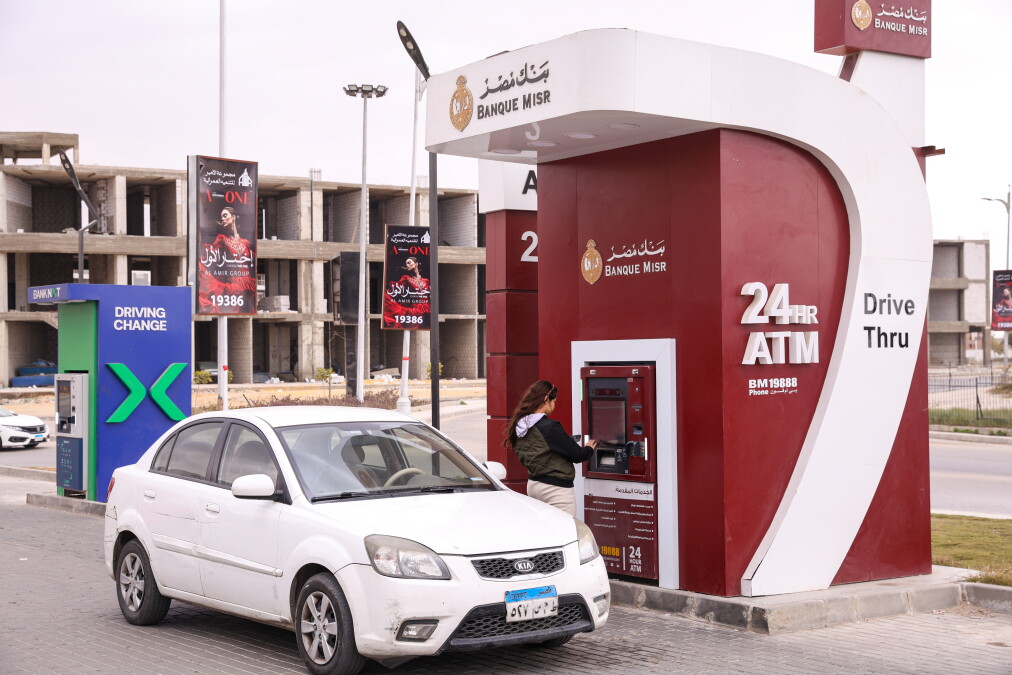
The Treasury Department proposed Tuesday to bar U.S. banks from doing business with the Emirati branches of state-owned Egyptian bank Banque Misr, which it says served as a pipeline for Iranian money.
The proposal would impose the harshest measures available under the USA PATRIOT Act on five branches of Banque Misr in the United Arab Emirates.
FinCEN identified 103 potential Iranian front companies that moved about $1.8 billion through accounts at those branches between January 2024 and June 2026, according to the proposal.
FinCEN calls the companies "potential" front companies and "assesses" that the branches serve as a significant conduit, according to the proposed rule; no court has ruled on any of it.
The branches held about $6.4 billion in assets at the end of last year, according to their audited financial statements.
Banque Misr's operations in Egypt and every other country besides the UAE are expressly excluded from the proposal.
Distinct publishers with included, body-backed reporting in this cluster.
1 article · September 2, 2026
Follow any of these and your For You feed starts watching them — no settings page required.
invest
Banks file 3% of the human smuggling reports and 61% of the dollars1 distinct publisher
invest
FinCEN's CTA rollback hands beneficial-ownership diligence back to lenders1 distinct publisher
leadership
FinCEN shrinks beneficial-ownership reporting from 32 million filers to about 20,0001 distinct publisher
invest
Model the correspondent line as a decaying annuity, not fixed plumbing1 distinct publisher
Evidence-backed comparisons of source perspectives and observed adoption signals. Read the methodology
Which Builder, Operator, and Investor concerns the observed source mix emphasized—not a truth score.
Evidence, demonstrated adoption, hype gap, incentives, and confidence are assessed independently, each on its own current evidence. How these are measured.
One rulemaking docket, one reporter
The documentary spine is strong and narrow. American Banker is working from the proposed rule itself, quotes its hedged verbs rather than laundering them into findings, and reaches outside the government for exactly one number — the $6.4 billion of audited branch assets. Everything else about scale rests on FinCEN's own count, and the three institutions whose accounts would close are unnamed by the agency and unidentified by the reporter, so the most checkable part of the story is the part nobody can check.
Foreign regulators moved; the docket stayed empty
Nothing has bound anyone yet. The measure is a proposal, no U.S. bank has been named or has acknowledged an affected relationship, and the comment file was blank with a month left to run. What has actually happened happened abroad: Abu Dhabi opened a forensic lookback within a day and is weighing the branches' status, and Banque Misr promised a filing. Real-world traction here is currently a foreign supervisor's calendar, not an American compliance change.
An assessment travelling as a total
The reporting is unusually disciplined about the hedges, but the numbers still drift toward more certainty than they hold. "$1.8 billion through 103 potential front companies" is a compilation by the party proposing the sanction, and the tempting comparison against $6.4 billion of assets sets 30 months of flow beside a single day's balance sheet. Note the direction the sums point once you split them: the recent twelve-month pace looks materially lower than the earlier stretch of the same window, which is not the trajectory a pipeline story implies.
The accuser supplies the arithmetic, and the burden estimate
Follow who benefits from each number and the picture tightens. FinCEN authored the flow totals that justify its own rule and also certified that the compliance burden is slight because existing systems "can easily be modified" — a judgment about costs borne by others. Banque Misr's careful statement affirms compliance in general while conceding no transaction in particular, which is what a bank facing a dollar-access cutoff says. And the three correspondent banks stay silent for a reason the story names implicitly: defending a $1.8 billion allegation is dearer than quietly exiting the relationship.
Solid on what was filed, thin on what follows
We can be fairly sure of the mechanics: the proposal exists, its scope stops at the UAE border, the duties reach past the three account-holders, and two foreign institutions have responded on the record. Confidence drops where it matters commercially — whether the flow estimates survive scrutiny, which U.S. banks are exposed, and whether the rule is finalised as drafted. One outlet and an empty docket will not settle those.