Invest1 distinct publisher3 min readPublished
The Office of Strategic Capital was chartered in 2022 to lend against critical technology. Its loan authority has since reached $200bn, and the price of its new 35% oil stake is described only as no cost to the taxpayer.
The Investor · Invest desk

Compiled by The InvestorSomething wrong?How this is made
Start with the size of the mandate, because that is where the mismatch lives. The Republican party-line tax bill took the office's loan authority from $1bn to $200bn [18], which is 200 times the original and $199bn of fresh headroom [20], and all of it is lending headroom, since the statute defines capital assistance as covering loans [4]. The power being exercised in Caracas is the one Congress has declined to write down: recent efforts to add equity authority have not passed [16], which the Cato Institute's Tad DeHaven reads as dispositive, the mere fact of the attempts speaking for itself [17].
"At no cost to the American taxpayer" [1] is the phrase I would want documents behind, because equity is normally purchased, and if no appropriated dollar left the building then 35% of an oil venture was paid for in something else, most plausibly the sanctions and licensing environment that makes the venture worth owning at all. The stated aim is to pull US investors back into Venezuela's oilfields, lifting revenue in Caracas while crowding out Chinese and Russian companies [2]. Neither the Pentagon nor the White House answered requests for further clarification [7].
The count matters more than the transaction. The Council on Foreign Relations tracker already records OSC involvement in equity stakes in at least five other companies this term [8], which makes this the sixth [21], and Jon Hillman, who runs that tracker, calls the oil deal uncharted territory against a mission built to scale private investment into specific critical supply chain technologies [9]. A former OSC official was blunter, saying stakes were never the intention when the office was set up and that the open questions are legal and ethical [10]. That is also a resource statement: senior bandwidth at a small office now goes to Venezuelan oilfields and a legal defence rather than to the supply chains that justified the $200bn.
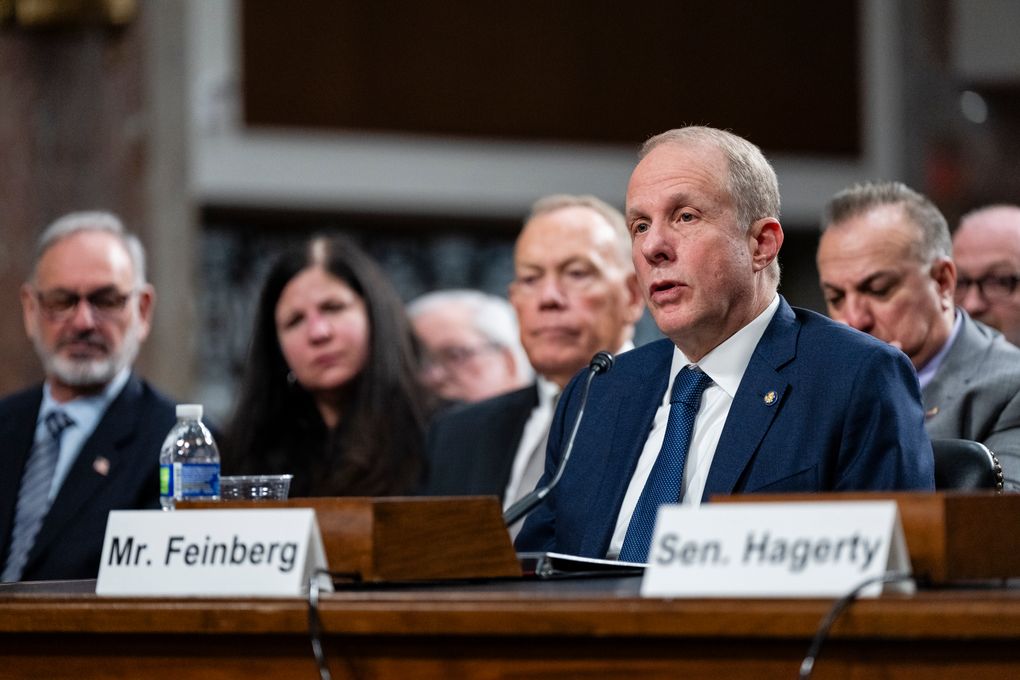
This is probably wrong, but the shape I see is a lending office being converted into a sovereign investment desk with no capital account and no disclosure regime, staffed to match: Deputy Defense Secretary Steve Feinberg is driving it and has recruited bankers [18], and OSC director David Lorch came from the private equity firm Feinberg founded [19]. The counter-thesis deserves its hearing, or rather the more interesting version of it does. If the 35% turns out to be a contingent instrument, a warrant or a residual claim rather than common stock, then the White House line that all OSC financial positions are consistent with the statute [6] is defensible, and the precedent shrinks to a structuring footnote. Georgetown Law's Peter Harrell says no definitive legal view is possible because officials have not offered a definitive legal theory [11], which is exactly the document that would settle it in either direction. A memo would resolve most of this, and none has been produced [7].
Ranked by verification strength, evidence, and original report placement.
Georgetown Law School visiting scholar Peter Harrell said it is "not possible to offer a definitive legal view" because officials "have not provided a definitive legal theory," and that the administration may be banking on no one having the legal standing or the desire to sue over the deal, including oil companies hoping to profit from the newly open Venezuelan market.
Steptoe attorney Cari Stinebower, who advises oil companies that want to do business in Venezuela, said "I think quietly everyone may be confused," but "no one's going to be vocal about it because most everyone wants to participate in the investment opportunities in Venezuela."
The White House announced this week that the Defense Department's Office of Strategic Capital would take a 35% equity stake in North American Blue Energy Partners, headed by politically wired Venezuelan investor Alejandro Betancourt Lopez, at "no cost to the American taxpayer."
The stated goal of the deal is to make Venezuela's oilfields more attractive to US investors, boosting revenue in Caracas while boxing out Chinese and Russian companies.
The Biden administration created the Office of Strategic Capital in 2022 to issue and guarantee loans to companies developing technology "vital" to national security.
The statute that established the OSC defines its power to provide "capital assistance" narrowly as covering only loans.
Distinct publishers with included, body-backed reporting in this cluster.
1 article · September 2, 2026
Follow any of these and your For You feed starts watching them — no settings page required.
invest
Washington's Venezuela oil access is being routed through one man, toward small wildcatters1 distinct publisher
invest
Chevron plans Venezuela expansion, separate from unratified 100-year NABEP oil concession1 distinct publisher
invest
Behind-the-meter gas is the data center buildout's real cost: 318 Mt a year1 distinct publisher
invest
Three windfall bills and a $495bn pot: tax risk overtakes price in energy positions1 distinct publisher
Evidence-backed comparisons of source perspectives and observed adoption signals. Read the methodology
Which Builder, Operator, and Investor concerns the observed source mix emphasized—not a truth score.
Evidence, demonstrated adoption, hype gap, incentives, and confidence are assessed independently, each on its own current evidence. How these are measured.
Named voices, missing paper
Semafor gets the people: Harrell at Georgetown, Hillman at the Council on Foreign Relations, DeHaven at Cato, a Venezuela sanctions lawyer at Steptoe, a former official from inside the office, and two lawmakers in their own words. What it cannot get is a document. The price of a 35% stake exists only as the phrase "no cost to the American taxpayer," and the legal basis exists only as an assertion that the statute allows it. The single hardest fact — the Pentagon saying the office does not take equity — is quoted from a statement given to Reuters.
Already a habit
This is not a first. On the Council on Foreign Relations' count the office has helped procure equity in at least five other companies this term, making Blue Energy at least the sixth, and the lending authority behind that behaviour is 200 times what it was. Bankers are being hired; Chevron is signing in Caracas. The practice is running at scale regardless of how the statutory argument resolves. What remains unmeasured is the thing the deal was justified by — whether US oil capital actually follows, which Semafor says will take years.
"Standard" is doing heavy lifting
Two phrases carry the promotion: "no cost to the American taxpayer" and "a very standard deal for OSC." Neither survives the rest of the story. An office doing standard business does not first tell Reuters it does not take equity stakes, and nothing described as costless here has been priced. The underlying events — a 200-fold authority increase, a sixth government equity position, bipartisan questions — need no inflation at all; the official framing is the part sprinting ahead of what has been shown.
Nobody here is neutral
Follow the reasons for silence. Stinebower says her clients are confused but will not say so publicly because they want into Venezuela; Harrell thinks the administration may be counting on the absence of anyone with both standing and appetite to sue. Then follow the reasons for enthusiasm: the office's director came from the private equity firm his own boss founded, and the White House needs Betancourt López to look like a "proven operator." Even the critics come pre-labelled — a libertarian think tank and a minority party promising investigations if it wins in November.
Firm on what, blank on how much
What was announced, who is asking questions and how big the lending pool became are all solid. What the stake cost, what legal reasoning supports it, and whether it holds up under review are not knowable from what we have — and both the Pentagon and the White House stopped answering when pressed. One newsroom, one week, an unpriced transaction: enough to report, not enough to settle.