Product1 publisher3 min readPublished
Planted raises $31.8M for the solar layout that survived a county zoning board
The startup redesigned a rejected project outside St. Louis with a digital twin and post-placing robots, producing the same power on 40% less land. Its investor says permitting and land now cost more than panels.
The Product Desk · Product desk
What happened
- Planted said it raised $31.8 million to scale up its robot-installed solar design, with Piva Capital and RA Capital Management Planetary Health leading and Google and Khosla Ventures among the investors.
- A county zoning board near St. Louis had rejected a solar project as too big and too close to a subdivision; Planted's redesign produced the same power on 40% less land and the project moved forward.
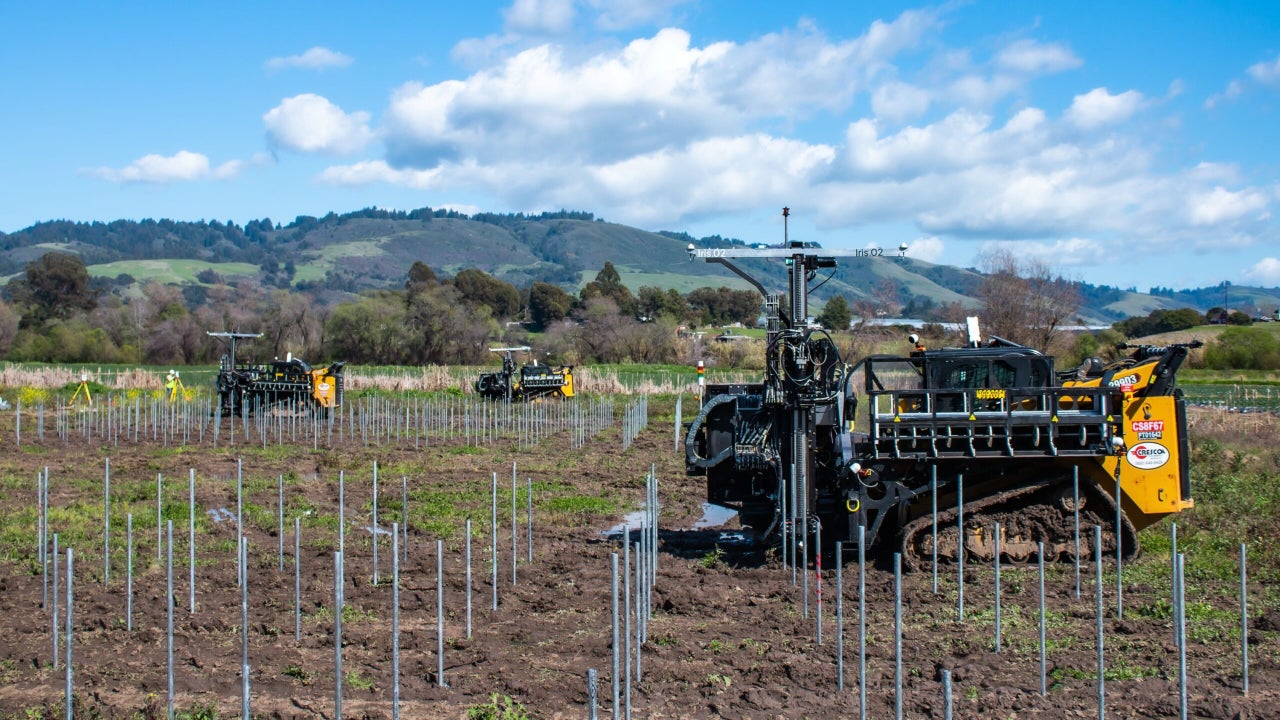
- The method plans a separate post for every panel in a digital twin, then has robots place the posts, so the array follows the terrain instead of requiring the site to be graded flat.
- A Washington state developer whose layout missed a new county rule that data centers supply their own power on site got 2.5 times more production from a Planted redesign.
Compiled by The Product DeskSomething wrong?How this is made
Why it matters
- decision When a wetlands designation takes half a parcel after the offtake deal is signed, the developer chooses between redesigning for density and walking away from the contract.
- contradiction The one named project saved 40%, while the CEO's acreage example implies 50% to 60%; a buyer optioning land on the higher number is underwriting the sales range.
- constraint The density gain comes from ground a conventional layout writes off, up to a 27% slope, so a flat and already-approved parcel gets little from a design sold on acres saved.
- precedent Once a county makes data centers bring their own power on site, watts per acre becomes a compliance test the layout has to pass before anything gets built.
A rule stopped each of these projects and a redesign restarted it. Zoning setbacks, a county power mandate, a wetlands line: in all three the binding figure was buildable acres, and a cheaper solar module moves none of them [3][10][11].
That makes the size of the saving worth pinning down, and Planted's own example runs ahead of its one documented case. "You can have an easier time going and getting 2,000 acres instead of 4,000 or 5,000 acres," Brown said [9]. Two thousand instead of four thousand is a 50% cut, and instead of five thousand it is 60% [18]. The St. Louis redesign delivered 40% [4], between 10 and 20 points below that range [19]. Fast Company describes the method as cutting the land needed in half or more [17].
Conventional layouts run long racks of panels that move to track the sun, which means flattening the site, and the hilliest ground often goes unused [5]. Planted puts a separate post under each panel, plans the positions in a digital twin, and sends robots to place the posts from a compartment the company compares to a giant toothpick dispenser, with a bracket on top so a panel snaps on [6]. "Placing thousands of foundations precisely is exactly the kind of work that's slow and error prone for crews," said Eric Brown, Planted's CEO [7]. "We build on slopes up to 27% without grading, so we can use more of each parcel, including the acres a conventional design writes off, which means smaller total footprints," Brown said [8]. Skipping the grading also leaves vegetation and stormwater paths as they were, and the panels sit lower [13].
The argument that land, not hardware, is the expensive part comes from people with money in the company. "I started out months ago trying to answer a very simple question, which is, if solar panels are so cheap, why is utility-grade solar so expensive to install?" said Mike Schroepfer, founding partner of Gigascale Capital and former chief technology officer at Meta, whose firm joined the round [15][2]. Schroepfer said the industry still builds solar farms the way it did when panels were expensive, and that permitting, land prices and public support are now the bigger problems [16]. Fast Company does not compare cost per watt with conventional racking, and does not say whether Planted's panels track the sun [20].
For a developer with a pipeline, the question is what actually stopped the last three projects that slipped. If the answer sits in a county ordinance, acres, setbacks, buildable area, on-site generation, then watts per acre is what is being bought, and the layout is the variable that can change. Brown said "How you design a system is pretty related to how you can get it permitted and interconnected" [12], though the examples on the record are permitting ones. For build speed there is one number: a project that went from start of construction to mechanical completion in about three months [14].
What to watch
- Whether the St. Louis, Washington and Southeast projects reach financial close and get built on the redesigned footprints.
- Whether other counties copy the Washington requirement that data centers bring their own power on site.
- Whether Google, an investor in the round, puts Planted's design on sites it owns or buys power from.