Product1 publisher2 min readPublished
United Therapeutics launches world's first pig-kidney clinical trial
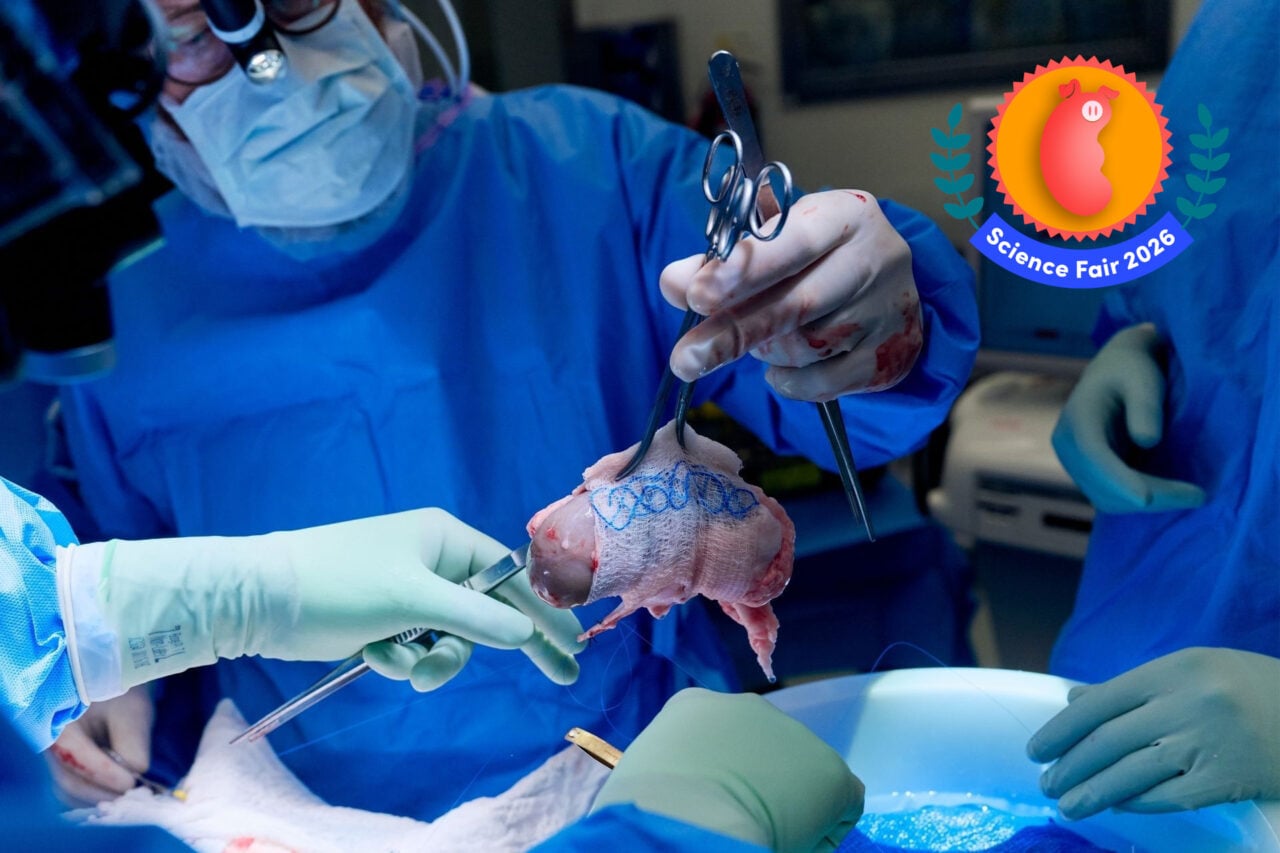
United Therapeutics is sponsoring the first xenotransplant clinical trial. Its first patient got a 10-edit pig kidney at NYU Langone in November. The longest a gene-edited pig kidney has worked in a person is 271 days, against years or decades for a human donor organ.
The Product Desk · Product desk
What happened
- A gene-edited pig kidney transplanted into a neurologically dead patient kept on a ventilator in September 2021 behaved much like a typical human kidney for 52 hours, with no immediate signs of rejection.
- The NYU Langone team has since run six of these studies in donated bodies, two of them using pig hearts rather than kidneys.
- The EXPAND study is the world's first clinical trial of xenotransplantation for end-stage kidney disease, and its organs come from one of only two US companies making gene-edited pig organs.
- More than 100,000 Americans are on the organ waiting list, and an estimated 12 people die each day waiting for one.
- The pigs are engineered to stop producing alpha-gal, a sugar found in the muscle of nearly all mammals but not in most primates, including humans.
Compiled by The Product DeskSomething wrong?How this is made
Why it matters
- constraint A 271-day ceiling narrows the candidate pool to patients whose expected wait for a human kidney is longer than nine months; for anyone likely to be matched sooner, the pig organ is the worse deal.
- exposure Recipients carry the risk of a virus travelling inside the donor organ, and the duty to find it before surgery sits with a supplier pool of two American companies.
- precedent A sponsored trial gives hospitals and regulators a survival figure to hold producers to, so the next pig-organ programme gets measured against EXPAND instead of against individual compassionate-use cases.
A new name joins the American transplant list every seven minutes [9]. That works out to roughly 75,000 additions a year, against about 49,000 transplants performed [21][10]. Additions outpace transplants by some 26,000 people annually [22], and deaths on the list absorb roughly 4,380 of those [23].
The evidence behind the trial is thinner than that gap. Living patients have received pig organs on a compassionate-use basis, meaning no other medical option was open to them [5]. A human donor kidney, by comparison, keeps working for years and sometimes decades [18].
271 days is under nine months. A patient maintained on pig kidneys at that rate needs about 1.35 of them a year, four over three years [24]. Each one is a pig carrying 10 edits, four knockouts and six additions [12].
The population this fits first is the one the compassionate-use cases already described: someone with no alternative, for whom nine months of kidney function is worth an operation [5]. Robert Montgomery, who received a donated heart himself in 2018 [14], told Gizmodo that transplant surgeons see a filtered sample of their own patients. "Even though I'm a transplant surgeon, I only see the success stories," he said [15], and practitioners "don't see all the people who are dying every day, waiting for an organ" [16].
The failures have been specific. A pig heart transplanted at the University of Maryland likely failed in part because of a hidden virus in the organ, and the recipient died two months after the transplant [17]. Screening for latent pig viruses and removing them is now more extensive [19].
Gizmodo, which named the NYU Langone group a winner of its 2026 Science Fair for the work [1], did not report EXPAND's enrollment target or how many organs United Therapeutics can produce [25]. For any single candidate the comparison is narrow anyway: the expected wait for a human kidney set against 271 days of function and whatever follows it. Montgomery said early human transplantation had short organ survival times too, and that xenotransplantation is advancing faster than that era did [20].
What to watch
- Whether any EXPAND patient passes 271 days of graft function, the figure the field is currently measured by.
- Whether United Therapeutics or the second US producer discloses herd capacity, per-organ pricing, or the trial's enrollment target.
- Whether the expanded virus screening catches a latent pig pathogen before a transplant.