Loading today’s stories
Invest1 distinct publisher3 min readUpdated
KB Home is selling choice because it cannot sell price
Built-to-order homes hit 73% of net orders, up from 57%, in a quarter when revenue fell 27% and earnings fell 75%. The mix shift is a margin defence, not a demand story.
The Investor · Invest desk
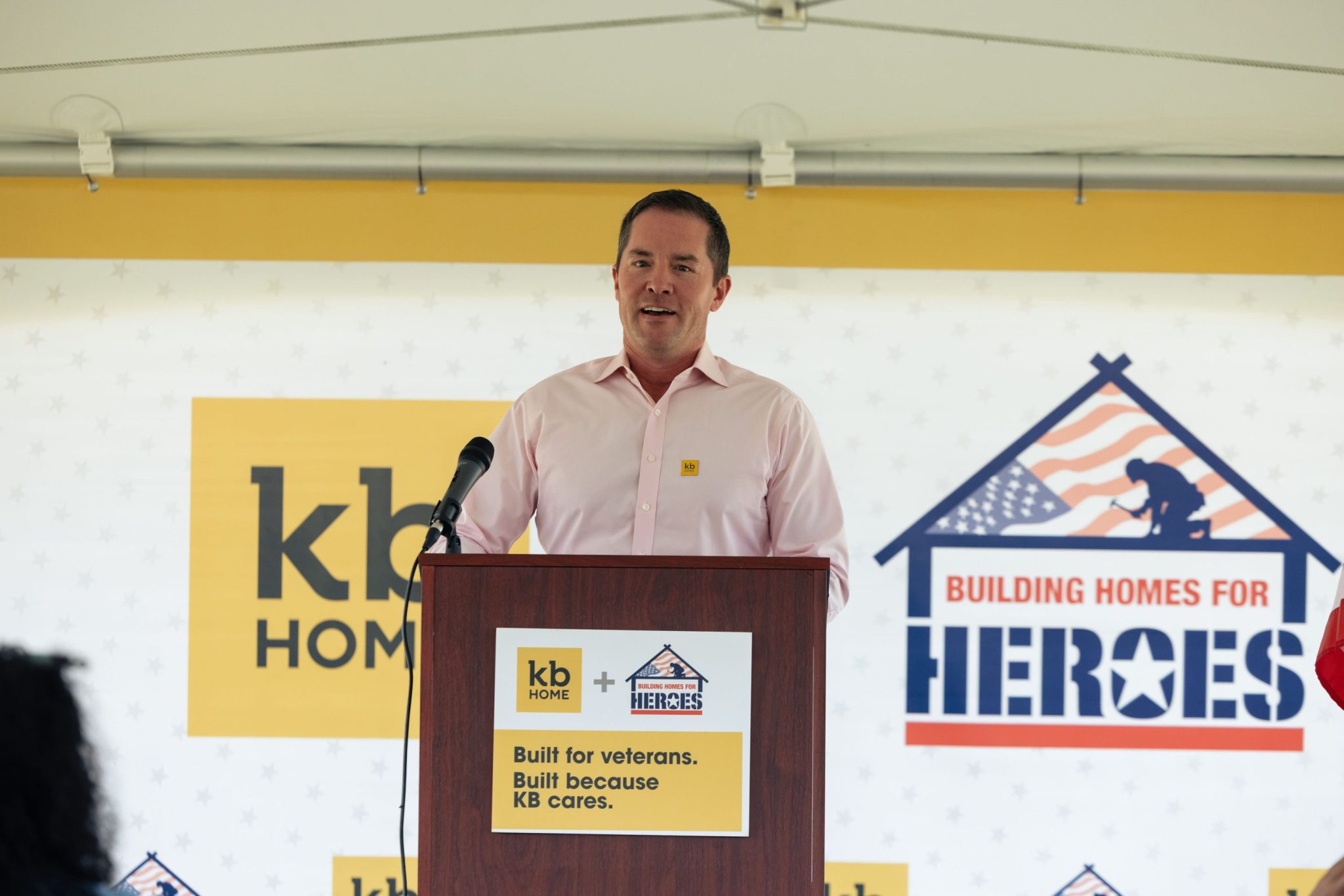
What happened
- Rob McGibney became CEO of KB Home on March 1.
- In McGibney's first earnings call as CEO, KB Home reported a 23% year-over-year decrease in revenue to $1.08 billion and net income down 70% to $33.4 million.
- In McGibney's second earnings call as CEO, KB Home reported revenue down 27% to $1.1 billion and earnings down 75% to $27.3 million.
- Built-to-order homes accounted for 73% of KB Home's net orders in the second quarter, up from 57% last year.
- Consumers typically pay more for built-to-order homes and are less likely to cancel or demand discounts, but customised homes also mean longer waits at potentially higher mortgage rates.
Compiled by The InvestorSomething wrong?How this is made
Why it matters
Built-to-order homes accounted for 73% of KB Home's net orders in the second quarter, up from 57% a year earlier, CEO Rob McGibney told Fortune [4]. That shift landed in the same quarter revenue fell 27% to $1.1 billion and earnings fell 75% to $27.3 million [3], which says plainly what the company is defending: the price of each closing, not the count.
The logic of the pivot is defensible. According to McGibney, built-to-order buyers typically pay more, are less likely to cancel, and are less likely to demand discounts, though customised homes mean longer waits and the risk of locking a mortgage at a higher rate later [5]. In a market where borrowing costs are relatively high and consumer confidence is relatively weak [8], a buyer who has already chosen the countertops is a buyer who is harder to lose. The mix moved 16 percentage points year over year, a relative gain of about 28% [11].
The arithmetic underneath is less comfortable. Earnings fell roughly 2.8 times faster than revenue [12], leaving a net margin of about 2.5% in the quarter versus about 3.1% in the prior one, when McGibney reported revenue down 23% to $1.08 billion and net income down 70% to $33.4 million [2][13]. Backing out the declines implies a year-ago quarter of roughly $1.5 billion in revenue and about $109 million in net income, a net margin near 7% [14]. Personalisation is holding the line on discounting; it is not yet holding the line on profitability. The stock is down since McGibney took over on March 1 [1][7].
The second half of the strategy is the harder sell. McGibney wants more first-time buyers, whose average age is now 40 [9], and he describes the ones actually transacting as earning $140,000 a year, carrying a 740 FICO score, and putting down $70,000 [6]. That is not a preferences problem. The median age of U.S. homebuyers has gone from 39 to 59 over the past 15 years [10], and the profile McGibney describes is a screen, not a segment. He says a decade ago FICO scores and incomes were lower [6], which is another way of saying credit and income requirements have tightened around the same product.
To his credit, he does not oversell it. McGibney's argument for personalisation rests on Gen Z having grown up with custom Nike IDs and made-to-order Chipotle burritos [15], an analogy that does not survive contact with a $70,000 down payment. He concedes the point himself: "We as a company, or me as a CEO, can't change the math," he told Fortune, adding that the company is "working aggressively to get as far down that K" as it can through better affordability [16].
What to watch: whether the 73% share holds or has simply absorbed the buyers who were always going to customise; the cancellation rate, which is the claim on which the whole thesis rests; and gross margin, since a mix shift that raises average selling price while net margin compresses means the cost side is eating the gain. Longer build cycles also push closings further out, so the next backlog conversion figures will show whether trading speed for specification is holding revenue or deferring it [5].
Topics and entities
Follow any of these and your For You feed starts watching them — no settings page required.
Topics
Loading related stories