Product1 distinct publisher3 min readPublished
Workforce Intelligence attaches agent spend and human effort to the same funded work item. The mechanism is plausible; the cycle-time chart it produces is where the trouble starts.
The Product Desk · Product desk

Compiled by The Product DeskSomething wrong?How this is made
Inference telemetry is generated per API call, while budgets are approved per initiative, and the object both ends already recognise is the funded Jira issue, which is where Tempo now parks cost and performance figures together [3]. That is a smaller idea than most agent-governance marketing and a more useful one, because the finance question is not whether an agent ran but which approved line of work it ran against. Chief Technology Officer Shams Chauthani draws exactly that line, saying observability can confirm a clean run but cannot say whose work it was or what it cost against a funded issue, and that the product correlates the session to the commit directly "so the answer is verifiable" [8]. On the material supplied, that correlation is asserted rather than shown. Session-to-commit matching is the load-bearing part; if it mislabels which change an agent session produced, every rollup above it inherits the error and the error looks like accounting.
The metric to watch is the cycle-time comparison between AI-assisted work and everything else [6]. Nothing in the description suggests the comparison controls for which issues get AI help. If teams reach for an agent on the gnarly tickets, assisted work will read as slower; if they reach for it on boilerplate, it will read as faster. Either way a manager receives a chart that looks like causation and is composition, and charts like that get quoted in planning meetings long after the caveat is lost.
The complement of Forrester's finding is the whole sales motion: more than two-thirds of decision-makers cannot connect AI to financial growth [1]. Chief Executive Vic Chynoweth's framing is the same gap from the buyer's side, that organizations can state their AI spend but cannot tie it to what was delivered, and that leaders want a record of what AI produced rather than another dashboard confirming it was used [4].
Distribution is the reason to treat this as a real attempt rather than a feature. Tempo claims more than 30,000 customers, with Cisco Systems, Airbus and Oracle named among them, plus roughly 350 solution partners [12], and the app is on sale now in the Atlassian Marketplace, where those buyers already transact [14]. It also has the unglamorous asset: Chynoweth says Tempo has recorded human-delivered work in Jira since 2007 and that agentic capacity now needs the same treatment [13], which puts about 19 years of ledger habit behind the new column [2]. Chris Marsh of 451 Research by S&P Global is right that this settles nothing by itself [11]. But an argument about value needs a shared record to argue over, and the vendors selling agents have so far preferred to supply run logs.
Ranked by verification strength, evidence, and original report placement.
Chief Technology Officer Shams Chauthani said "Observability can tell you an agent ran cleanly. It can't tell you whose work it was, or what it cost against a funded issue," and that "Workforce Intelligence correlates the session to the commit directly, so the answer is verifiable."
Forrester Research Inc. said in October that fewer than one-third of decision-makers can tie the value of AI to their organization's financial growth.
Tempo counts more than 30,000 customers, among them Cisco Systems Inc., Airbus SE and Oracle Corp., and roughly 350 solution partners work with the company.
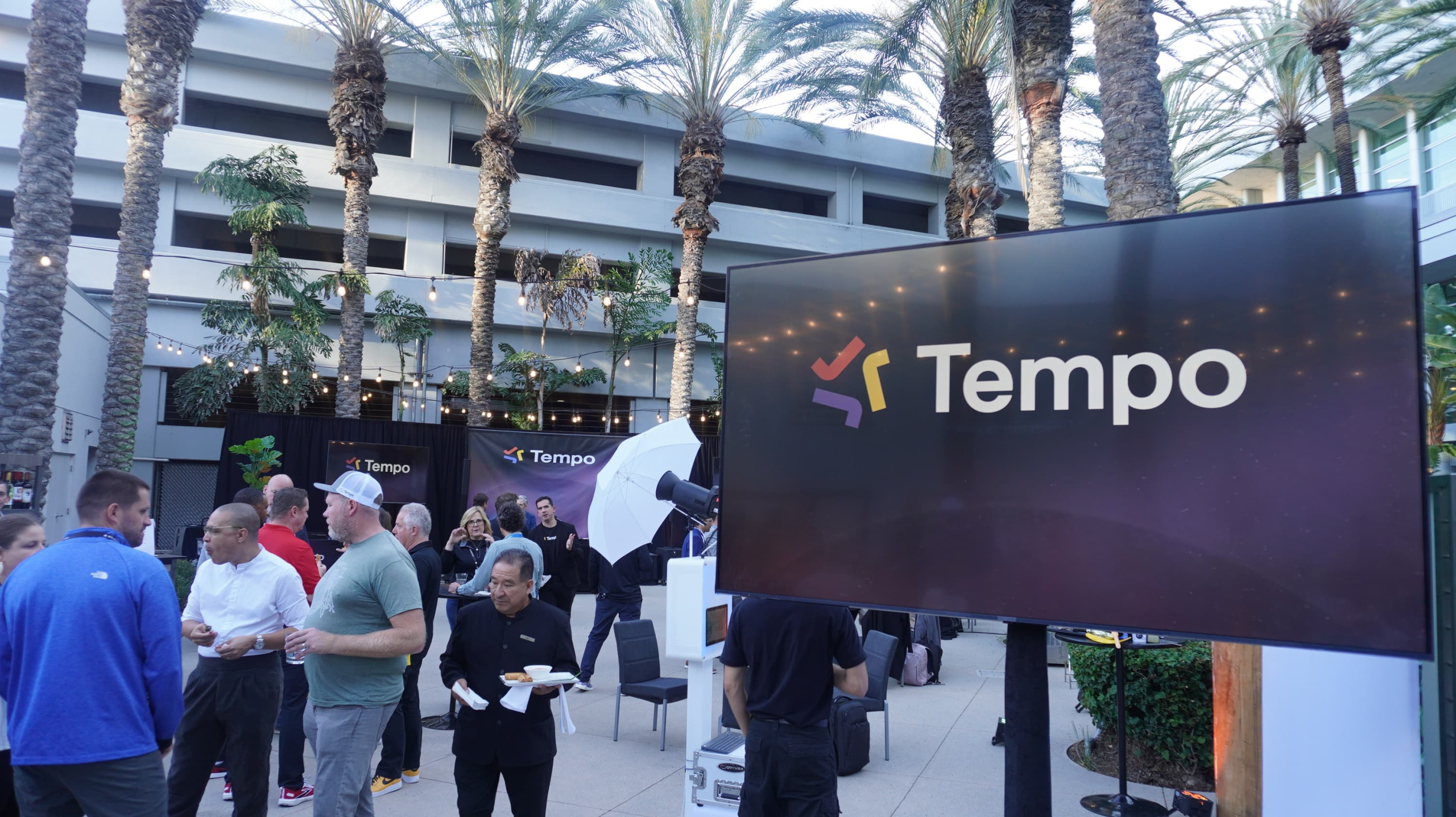
Tempo Software Inc. introduced Workforce Intelligence, an Atlassian Marketplace app that connects AI usage and its cost to the individual Jira issues the work was done on.
Tempo sells planning and portfolio software into the Atlassian ecosystem, and Workforce Intelligence is the newest piece of what Tempo calls Intelligent Portfolio Orchestration.
Chief Executive Vic Chynoweth said most organizations can say what they spend on AI but "can't tie those investments to what was delivered," and that leaders do not want another dashboard confirming AI is being used but a record of what it produced.
Follow any of these and your For You feed starts watching them — no settings page required.
Evidence-backed comparisons of source perspectives and observed adoption signals. Read the methodology
Which Builder, Operator, and Investor concerns the observed source mix emphasized—not a truth score.
Evidence, demonstrated adoption, hype gap, incentives, and confidence are assessed independently, each on its own current evidence. How these are measured.
Single vendor-sourced launch report with one independent caveat
Everything about the product comes from one trade article built on Tempo's announcement and two of its executives. The mechanism and the manager-facing outputs are asserted, never demonstrated or tested, and no methodology is given for the cycle-time comparison. The only independent substantive voice, 451 Research's Chris Marsh, qualifies rather than corroborates the product claim, and the Forrester market figures are reported secondhand without report name or sample.
No product-level adoption evidence
The only product datapoint is same-day availability in the Atlassian Marketplace. No customer, design partner, seat count, deployment, or usage figure for Workforce Intelligence appears in the supplied material. Tempo's 30,000-plus customers and 350 partners are company-wide figures that predate the app and cannot stand in for its adoption, so no adoption level can be scored.
Verifiability and value claims outrun what is shown
The vendor frames the product as producing a verifiable record of what AI produced, with session-to-commit correlation and cycle-time comparisons standing in for productivity effect. What the supplied source actually contains is a feature list, two executive quotes, and market statistics about other companies' inability to attribute AI value. No methodology, no independent test, and no user of the app. The one independent analyst says attribution data settles nothing by itself. That is a meaningful overstatement, though the underlying budget-scrutiny problem the pitch names is genuinely documented by the Forrester figures, so this is not pure vapor.
Vendor launch narrative, PE-owned vendor, analyst-firm citations
The story originates in a vendor product launch and every product claim is voiced by Tempo's CEO or CTO, who benefit directly from the attribution framing. Tempo is majority-owned by private equity firm Diversis Capital, which sharpens the incentive to show a new AI revenue line into an installed base of 30,000-plus customers. The supporting market statistics come from commercial research firms whose reports serve the same buying conversation, and the publisher appends its own sponsorship and Marketplace-referral solicitations to the article.
Low - one publisher, launch-day, unverified mechanism
The launch, positioning, quotes, and cited research figures are reliably recorded, so the basic facts hold. Beyond that, confidence is thin: a single publisher, an announcement-day timestamp, no product documentation or independent evaluation, no adoption data, and no methodology behind the headline cycle-time comparison. A second source or any named user would move this materially.
build
White-on-white PDF makes Atlassian's Rovo leak Jira and Confluence data; the org switch does not help1 distinct publisher
build
Atlassian's full AI opt-out costs an Enterprise upgrade: three of four tiers can't switch metadata off1 distinct publisher
build
The agent said the Jira move failed. It had already committed the write.1 distinct publisher
product
Atlassian's automated RCA pitch is really an argument that manual root cause is a seniority tax1 distinct publisher
Distinct publishers with included, body-backed reporting in this cluster.
1 article · August 25, 2026