Invest2 publishers3 min readPublished
Strategy asks only common shareholders to approve daily dividends on its STRC preferred
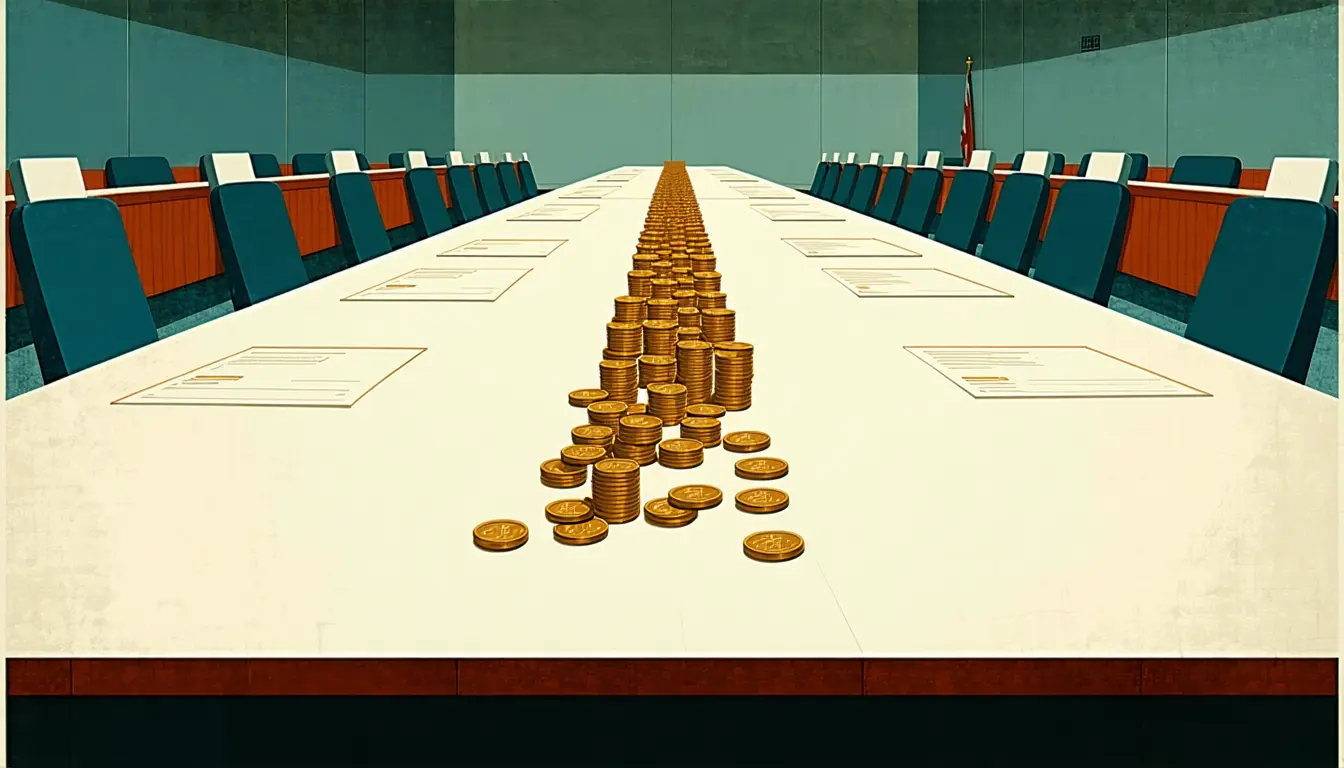
Strategy will let only common shareholders vote on October 28 on moving STRC preferred to daily dividends from November 1. The rate and total payout stay the same, though STRC holders voted when Strategy last changed their payment schedule in May.
The Investor · Invest desk
What happened
- STRC's variable rate is meant to keep it near its $100 par, but it fell below $75 in June and traded at $98.40 on Friday afternoon.
- Strategy has defended par since June with a preferred buyback plan that began at $1 billion and doubled to $2 billion this month.
- STRF, STRK and STRD would switch later, with a first daily payment on January 4, 2027, to holders of record on January 1, 2 and 3.
- A yes vote at the virtual meeting has no effect until Strategy files amended certificates of designations with Delaware's Secretary of State.
Compiled by The InvestorSomething wrong?How this is made
Why it matters
- cost Holding par is costing buyback cash. Early-September STRC purchases averaged about $97.36 a share, spent retiring a preferred that Strategy wants to make easier to sell.
- precedent STRC's second schedule change is going through a vote of common holders only, so preferred buyers now have to price the chance that later changes to how they are paid go the same way.
- capability By Strategy's own account, an STRC that holds near par is easier to sell, which gives the company more preferred issuance to put toward Bitcoin purchases.
The proposal needs a majority of the voting power of all outstanding common stock [6]. The preliminary proxy puts STRC, STRF, STRK and STRD under "Not Entitled to Vote" [5]. When STRC moved to twice-monthly payments in May, Strategy let holders of STRC as of April 17 vote on the change [8]. Neither Cryptopolitan nor Bankless reports why the second change to the same security is being handled differently.
Strategy's board signed off on September 24 [7]. Every calendar day, weekends and holidays included, would become a record date, with declared dividends paid the next business day [1]. According to Bankless, STRC goes from twice-monthly to daily and the other three from quarterly to daily [14]. That takes STRC from 24 record dates a year to 365, and STRF, STRK and STRD from 4 to 365 [1]. On a twice-monthly calendar, the holder on each record date collects roughly half a month of dividends in one payment [14]. On a daily one, no date pays more than any other [1].
"The proposed changes aim to support price stability, liquidity, and demand," Michael Saylor, Strategy's co-founder and executive chairman, said on X [10]. Bankless reports the aim as keeping STRC around a targeted $99 to $100 [15]. In a separate statement Strategy argued that steadier preferreds are easier to sell, and that those sales help fund more Bitcoin buying [11].
Holding par has cost cash. In early September the buybacks included 1,810,885 STRC shares for $176.3 million, Cryptopolitan reported [16]. That is about $97.36 a share, or $2.64 under par [2]. The one batch used close to 9% of the enlarged plan [3].
Strategy is leaving the rate alone. The plan keeps rates and total regular dividends unchanged [3], so the dividend bill does not grow and holders get no extra yield for accepting a new calendar. That leaves two tools for defending par: a buyback that spends cash, and a payment schedule that costs nothing extra in dividends. In the same months that it wants to sell more preferreds [11], Strategy has been buying STRC back below par [2].
If the vote passes and STRC holds its band after the first daily payment on November 2 [2] while buyback spending on it slows, the calendar is holding the price the buyback used to hold. If Strategy keeps buying STRC under par through the first months of daily payments, the schedule change is cosmetic. I expect the second. Each daily payment is a smaller piece of an unchanged annual yield [3], and I think demand for a preferred at an unchanged rate depends more on the rate than on how often it is paid. Strategy's case runs the other way: it says buyers will treat a preferred that pays daily as more stable and more like cash [15]. If STRC trades at $99 to $100 by year-end with no new STRC buybacks reported, Strategy is right and I am wrong.
What to watch
- The October 28 vote result and the date the daily schedule legally takes effect.
- Strategy's STRC buyback purchases after November 2, set against where STRC trades relative to its $99-$100 target.
- Any public objection from STRC holders, who voted on the May schedule change, to being classed as not entitled to vote this time.