Product1 distinct publisher3 min readPublished
Google's $10 million bid for the bankrupt airline's data estate covers 500 million Teams records and 175,000 employee files. The flight attendants' union says the employee half was never anyone's to sell.
The Product Desk · Product desk

Compiled by The Product DeskSomething wrong?How this is made
A bankruptcy estate sells what it has left, and what Spirit had left is mostly a Microsoft tenancy. The court filing counts 500 million Teams records, 20.6 million shared SharePoint files and 17 million individually owned OneDrive items [7]. Those three lines add to 537.6 million discrete items [1], which against a $10 million winning bid [2] works out at roughly 1.9 cents each [2]. That is the number the hearing is really about: not whether an airline's operational history has value, but what a court will certify as its clearing price.
Two bidders establish a market where one bidder only establishes a buyer. Google's offer beat a $7.5 million proposal from Mercor [3], a spread of $2.5 million, or about 33 percent [3]. An estate advised on how to maximise recovery now has a comparable to point at, and so does the next one.
The mechanism that is supposed to make this safe is described in the filing as a process where the buyer selects or approves a third party to strip elements that could link the data to a particular consumer [8]. The load-bearing word is consumer. Google's spokesperson said the sale excludes customer data and that the company "will not receive any personal information from this dataset" [4]. Those are statements about two different populations, and the second one has to survive contact with 80,000 email accounts, more than 1 million time-card records, nearly 150,000 employee tax forms and over 175,000 employee records [7].
Seema Patel, who teaches at UC College of the Law, San Francisco, puts the problem plainly: there is no boundary between the data an employee produces and their own personal information, and the law has not caught up [11]. California is one of very few states with explicit worker data protection statutes [12]. Everywhere else, the consumer-facing rules are the only rules that a scrubbing vendor has been asked to satisfy.
One former Spirit flight attendant, speaking anonymously to WIRED, described employee email and Microsoft files containing medical detail including miscarriages, incidents of domestic violence, and union contract negotiations [13]. That is what makes crew pairings and time cards interesting to a model trainer in the first place. Operational records are valuable precisely because they are the residue of people doing work, and the residue does not separate cleanly from the people.
The Association of Flight Attendants, which represents 5,500 former Spirit crew, filed its objection within days of the award [5], and its president Sara Nelson said the employee data "has no business being sold" [6]. Legal experts told WIRED this is the first public fight between a union and a corporation over selling employee data for AI training [10]. It arrives after several months in which startups reselling defunct companies' Slack messages, GitHub content and Google Drives have reportedly made millions [14], mostly without anyone objecting, because dissolved companies rarely leave organised labour behind.
If the whole $10 million were attributed only to the 175,000 employee records, it comes to about $57 a head [4]. It will not be, because flight operations and invoices are in the same package. The employees get the residual either way.
Ranked by verification strength, evidence, and original report placement.
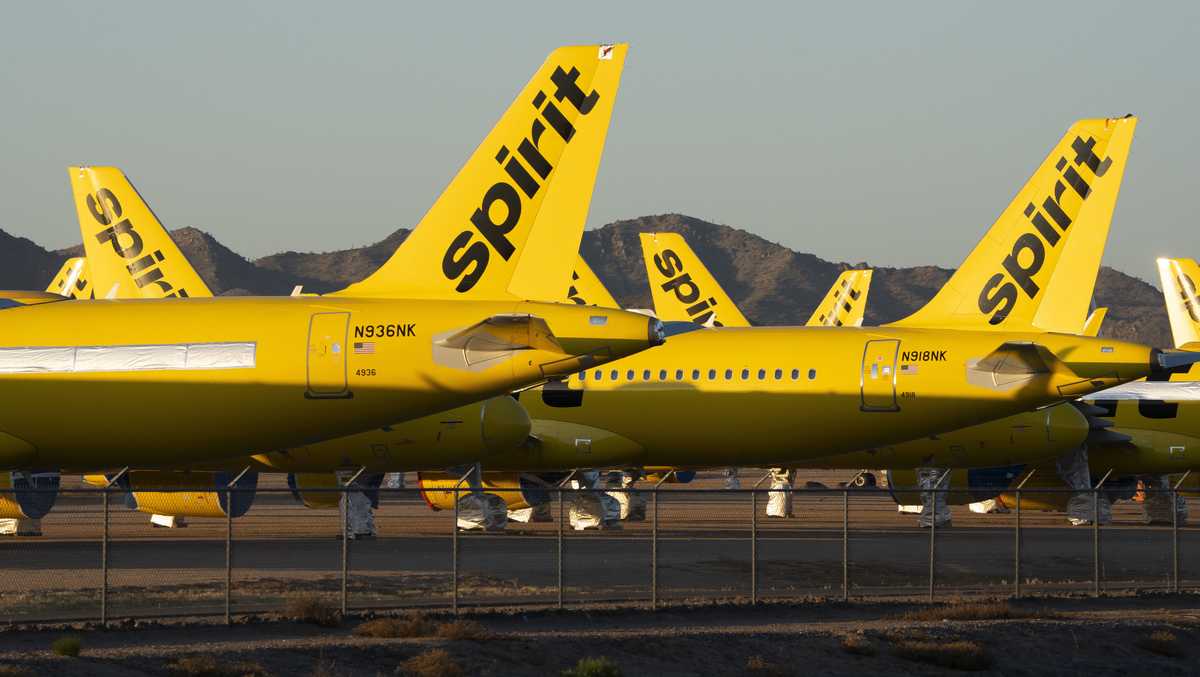
In mid-August, Google won a $10 million bid to purchase some 34 years of Spirit Airlines data, including invoices, flight operations information, Wi-Fi sales, employee records and crew pairings.
Google's winning offer was chosen over a competing $7.5 million proposal from AI data and training company Mercor, and the sale must be approved by a judge.
Days after the court announced Google's winning bid, the Association of Flight Attendants, which represents 5,500 former Spirit Airlines flight attendants and has 55,000 members, filed an objection arguing the sale would include an enormous amount of sensitive employee information and that Google's promised safeguards would not prevent privacy violations.
AFA president Sara Nelson said in a written statement to WIRED that the employee data "has no business being sold" and that "This is outrageous!"
According to a court filing, the Spirit data sale would include more than 1 million time-card records, over 175,000 employee records, nearly 150,000 employee tax forms, employment contracts and litigation files, 80,000 email accounts, 17 million individually owned Microsoft OneDrive items, 20.6 million shared Microsoft SharePoint files, and 500 million Microsoft Teams records.
Follow any of these and your For You feed starts watching them — no settings page required.
Evidence-backed comparisons of source perspectives and observed adoption signals. Read the methodology
Which Builder, Operator, and Investor concerns the observed source mix emphasized—not a truth score.
Evidence, demonstrated adoption, hype gap, incentives, and confidence are assessed independently, each on its own current evidence. How these are measured.
Court filings and named sources, one publisher
The core facts are anchored in a bankruptcy court filing (itemized inventory, deidentification mechanism), an on-record Google statement, a named union president, and two named law professors. Weaknesses: everything comes from a single publication, the most vivid harm testimony is anonymous, the market-context and 'first ever' framings are unverified, and the per-record pricing is our own arithmetic rather than a reported figure.
Bid won, transfer unapproved and unused
There is real transactional activity — a winning $10M bid, a competing $7.5M bid, and an active docket — but no evidence in the supplied source that any Spirit data has been transferred to Google or used in training. The sale awaits a judge, the hearing slipped to September 9, and a union objection may carve out the employee half, so adoption is at the intent stage only.
Slightly ahead of the record
The documented facts are strong and specifically sourced, but the framing runs modestly ahead of them in two places: the 'first public tangle' precedent rests on unnamed experts, and the sale being priced or consummated is still contingent on a judge who has not ruled. The headline per-record pricing is arithmetic derived from real filing figures rather than a reported valuation, and it mixes categories (Microsoft items vs employee records), which invites more precision than the record supports.
Every named party has a stake in the outcome
Incentives are strong and legible on all sides: Google and Mercor are competing buyers of scarce training data; the bankruptcy estate maximizes recovery by selling the widest possible package; AFA is contractually and institutionally obligated to defend 5,500 former members and has a public campaign interest; the key eyewitness is anonymous because of a job search; and the academic commentators study exactly the gap the story asserts. These pressures shape the framing without invalidating the filed documents.
Documented but single-sourced and unresolved
Confidence is moderate: the transactional and inventory facts are filing-based and specific, so the shape of the story is reliable. But there is one publisher, no comment from the estate or Mercor, anonymous harm testimony, and an unresolved judicial outcome that could change the scope of what is sold.
build
A bankrupt airline just set the public price for "how we actually worked": $10M, now $12.5M3 distinct publishers
build
Spirit's estate priced its employee records at 1.6 cents an item. A court wants a closer look.1 distinct publisher
build
Grok 4.6 lands in Copilot two days after launch, and the model picker becomes a procurement problem1 distinct publisher
product
Washington's secret AI test is coming for open weights, and release dates go with it2 distinct publishers
Distinct publishers with included, body-backed reporting in this cluster.
1 article · August 25, 2026