Science1 publisher2 min readPublished
Steamed spekboom leaves tested higher in vitamin C than raw ones at the University of the Free State
South Africa plants this succulent to hold its hillsides together, and it cooks like a leafy green. A University of the Free State team measured what four cooking methods do to its texture, acidity and vitamin C.
The Scientist · Science desk
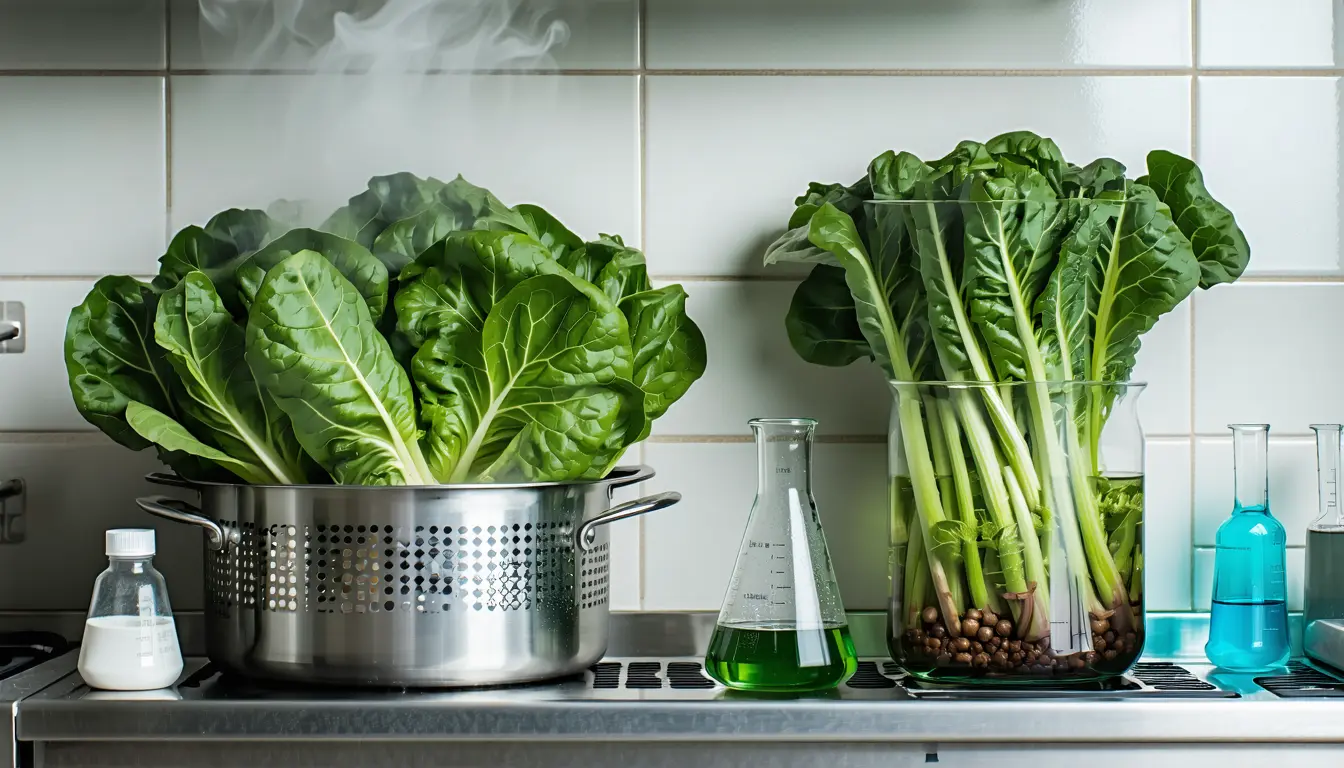
What happened
- Researchers compared raw spekboom leaves with baked, stir-fried, steamed and blanched leaves on colour, appearance, texture, moisture, acidity and vitamin C content.
- Of 120 people surveyed, about 84% had seen spekboom before, but only 22% had eaten it more than once in the previous year.
- In the same survey, 79.2% said they were willing to use spekboom in their diets and 75% said they would buy it if supermarkets stocked it.
Compiled by The ScientistSomething wrong?How this is made
Why it matters
- capability Steaming is something any household stove can do, and the measured vitamin C after it beat the raw leaves, so the nutrition argument for spekboom no longer depends on eating it uncooked as a trail snack.
- constraint A sample of 120 people answering questions about a food most of them had never eaten cannot size a market; it can only tell a food company that a market is not ruled out.
- decision More than 77.5% would consider buying spekboom only if it cost less than other vegetables. Anyone commercialising it therefore has to undercut crops that already have harvesting, packing and cold chains.
Vitamin C rising after cooking usually means the denominator moved. Spekboom leaves start at more than 93% water [3], and steam drives some of that water off, so the same milligrams of ascorbic acid end up in fewer grams of leaf. The team reports vitamin C higher after steaming than in raw leaves [7]. It does not publish the vitamin C results for the baked, stir-fried or blanched batches [21], so this work cannot rank cooking methods by retention. What it does support is narrower: steaming did not destroy the vitamin, and the cooked leaves stayed acidic and moisture-rich, much like other fresh leafy vegetables [6].
The consumer half of the study rests on 120 respondents [8], and at that base one person is worth about 0.83 of a percentage point [1]. The finding that 3% of the group knew spekboom was nutritious [11] is three or four people [2]. The 22% who had eaten it more than once in the previous year [10] is 26 or 27 [3].
Willingness outran habit by 57.2 percentage points [4]. Intentions collected in a single sitting and eating recalled over a year are different measurements.
The recipe work was done in the Sensory Laboratory of the Department of Sustainable Food Systems and Development at the University of the Free State, on dishes developed by science honours student Rozanne MacDonald [17]. Raw leaves taste sharp, close to lemon juice [16]. Each dish handles that acidity a different way: blended into a lemon curd, stirred into a tomato chutney for its final 30 minutes [19], pickled with red onion and left seven days [19], or crushed dry into a dukkah with toasted seeds and nuts [20]. The curd keeps refrigerated in a sterilised jar for up to 10 days [18].
South Africa already plants this succulent on steep slopes and rocky hillsides in the Karoo and Eastern Cape to stabilise soil, where it also takes carbon dioxide out of the air [1][2]. A food market would therefore draw on plants that are in the ground for other reasons. Among the people surveyed, 82.5% said they would be more likely to eat spekboom if they knew more about its health benefits [12].
What to watch
- Vitamin C figures for the baked, stir-fried and blanched batches, reported per fresh weight and per dry weight.
- A larger survey that records what respondents actually bought or cooked instead of what they said they would eat.
- Whether a South African retailer stocks spekboom leaves, and at what price against other leafy vegetables.