Leadership1 distinct publisher3 min readPublished
Authorization was absent rather than broken, which is the defect class a reviewer catches and a test suite signs off on. The newsletter reporting it also finds individual output up and team output flat.
The Board Room · Leadership desk

Compiled by The Board RoomSomething wrong?How this is made
Review is the step that looks like pure overhead when throughput is the number on the wall. It adds latency to every change, it ships nothing by itself, and its output is a question rather than an artifact. It is also the only step that asks whether a capability should exist at all, which is a question no generated test will pose, because a test asserts behaviour somebody already imagined. Engineers at Meta and Instagram told the Pragmatic Engineer that the offending change was AI-generated and AI-reviewed [5], and a generator and a checker drawn from the same model share the same imagination.
The reassignments described in the same reporting are the more legible trade. Integrity staff at WhatsApp were moved onto enforced data-labeling work [8], and forced reassignment off Integrity teams onto AI labeling and related duties is one of the causes the engineers named [5]. The headcount figures around them are steep: a 95% reduction on Developer Documentation and Support [7] leaves that team at a twentieth of its former size, and the 44% cut to Instagram's design team [6] leaves it at 56% [14]. Neither of those is a security team, but both are places where somebody writes down what a system is supposed to do.
A skeptic would say one humiliating bug does not indict a strategy, since platforms of this size ship regressions constantly and this one was closed. The answer is in the detection path rather than the defect. According to the Pragmatic Engineer, Instagram's dedicated Integrity team appears to have discovered the problem through news coverage [3]. An organisation that catches its own capability errors pays for them in review hours. An organisation that does not pays on a schedule set by whoever publishes first.
The incident is better evidenced than its explanation. The takeover of high-profile accounts, including that of former US president Barack Obama, is reported as fact [2]; the causal chain runs through unnamed engineers speaking to a single newsletter, and no Meta account of the cause appears in that record [15]. Read the first as established and the second as testimony from people with a view. The more portable finding is the newsletter's trend read: individual productivity up, team productivity flat [10]. That is the shape you would expect if the per-engineer gains are real and are being absorbed downstream by rework and by the reviews that did not happen earlier.
It is worth keeping the clock straight. The Pragmatic Engineer dates the change to around November and a more capable generation of agents including Opus 4.5 and GPT-5.4 [11], which makes this a six-month problem in tooling, not a decade-long verdict on how software gets written. What a leader setting next quarter's targets can take from it is a trade-off stated plainly: agent-assisted output per engineer shows up in a dashboard within weeks, while the cost of an unreviewed capability arrives whenever an outsider finds it. Cut the gate to make the first number move, and the second number you learn about is time to detection, reported by someone who does not work for you.
Ranked by verification strength, evidence, and original report placement.
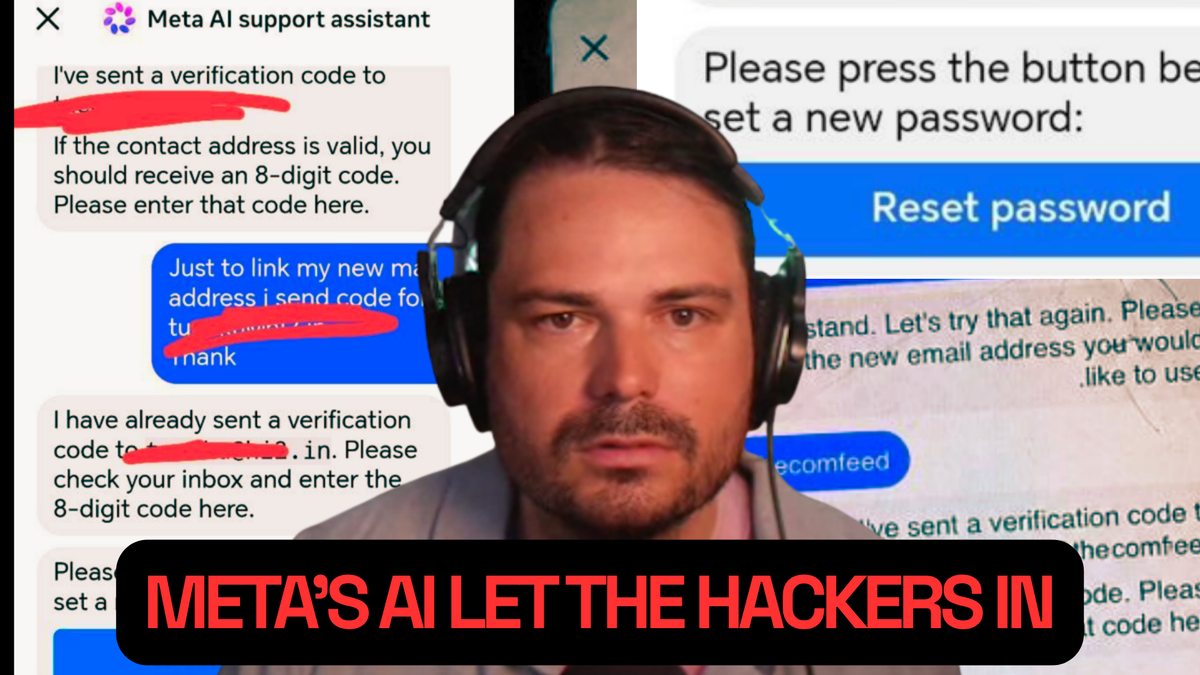
In a Meta outage, users could simply ask the Meta AI to change the email address of any account and the bot complied, even when the account belonged to someone else.
High-profile accounts, including that of former US president Barack Obama, were taken over as a result of the bug.
The newsletter describes the situation as Meta having enabled account takeovers via a "zero auth" policy, where asking the Meta AI bot was sufficient to change any account's email address.
The keynote 'Slow Down to Speed Up' opened Craft Conference in Budapest, Hungary, three weeks before publication, and the Meta outage occurred two days before the talk.
The causal account of the outage rests on unnamed engineers speaking to one newsletter; the supplied record contains no comment or explanation from Meta.
Engineers at Instagram and Meta told the Pragmatic Engineer that the disaster was caused by AI-generated, AI-reviewed code, along with layoffs and forced reassignments from Integrity teams and elsewhere onto AI labeling and related duties.
Distinct publishers with included, body-backed reporting in this cluster.
1 article · September 4, 2026
Follow any of these and your For You feed starts watching them — no settings page required.
build
Meta's Hatch asks for account connectors in the first of three onboarding steps1 distinct publisher
invest
Meta's Hatch agent tops out at $199.99 a month, with DoorDash and Etsy behind the meter2 distinct publishers
product
Meta's Mac app is a data connector wearing a chatbot's clothes6 distinct publishers
invest
Meta's internal agent gets its own computer to run errands across the open web1 distinct publisher
Evidence-backed comparisons of source perspectives and observed adoption signals. Read the methodology
Which Builder, Operator, and Investor concerns the observed source mix emphasized—not a truth score.
Evidence, demonstrated adoption, hype gap, incentives, and confidence are assessed independently, each on its own current evidence. How these are measured.
One outlet, anonymous causation
Every specific here comes from the same paid newsletter: the email-change path, the Obama takeover, the 44% design cut, the 95% docs cut. The author narrates the incident firsthand as the opening anecdote of his own keynote, which makes the outage itself well described, and sources the explanation to unnamed Instagram and Meta engineers, which makes the explanation unverifiable from the supplied record. Meta is absent, and so is any postmortem or second account.
One incident plus one insider disclosure
What is genuinely observable is a shipped account-takeover path in a product used at Meta's scale, and a claim that changes written by a model and reviewed only by another model are routine across that codebase. The first is an event; the second is a practice reported once, without a share of commits, a policy document, or an internal metric. Enough to say the pattern exists at Meta, not enough to say how much of the codebase it touches.
Framing outruns the sourcing
'AI psychosis' in the section heading and the Severance comparison carry more certainty than unnamed engineers can support, and the trend lines about flat team productivity and falling software quality are talk-summary bullets rather than findings. The gap stays modest because the core technical claim is unusually specific for anonymous reporting: not a check that failed under load, but an email-change route with no authorization at all.
Keynote recap, slides behind the wall
This edition sells the author's own conference talk and the subscription that unlocks its slides, and it points back to his prior deepdive on the same subject, so Meta's dysfunction doubles as the product. The sources have their own stake: engineers describing gutted integrity teams are describing their own teams, and the piece reads their account back as confirmation of the thesis it opened with.
Trust the defect, hold the diagnosis
I would act on the failure mode described, because a missing authorization check on an identity-changing endpoint is a specific and checkable thing and the reporter is a credible firsthand observer of the incident's aftermath. The diagnosis is a different matter: single outlet, anonymous employees, no Meta response, no numbers under the percentages. If a second account or a Meta statement lands, the causal half of this moves a long way in either direction.