Build1 publisher2 min readPublished
Where each MCP server runs set the auth and update rules for Hiberden and Easy2257
One team's two MCP servers, in Hiberden and Easy2257, share a protocol but take their auth, distribution and update rules from where each one runs. Settle that choice before designing tools, because it decides whether a shipped tool signature can ever change.
The Engineer · Build desk
What happened
- One team runs two MCP servers on the same protocol: one inside Hiberden, a desktop LTO tape archiver, and one inside Easy2257, a hosted service for 18 U.S.C. 2257 records.
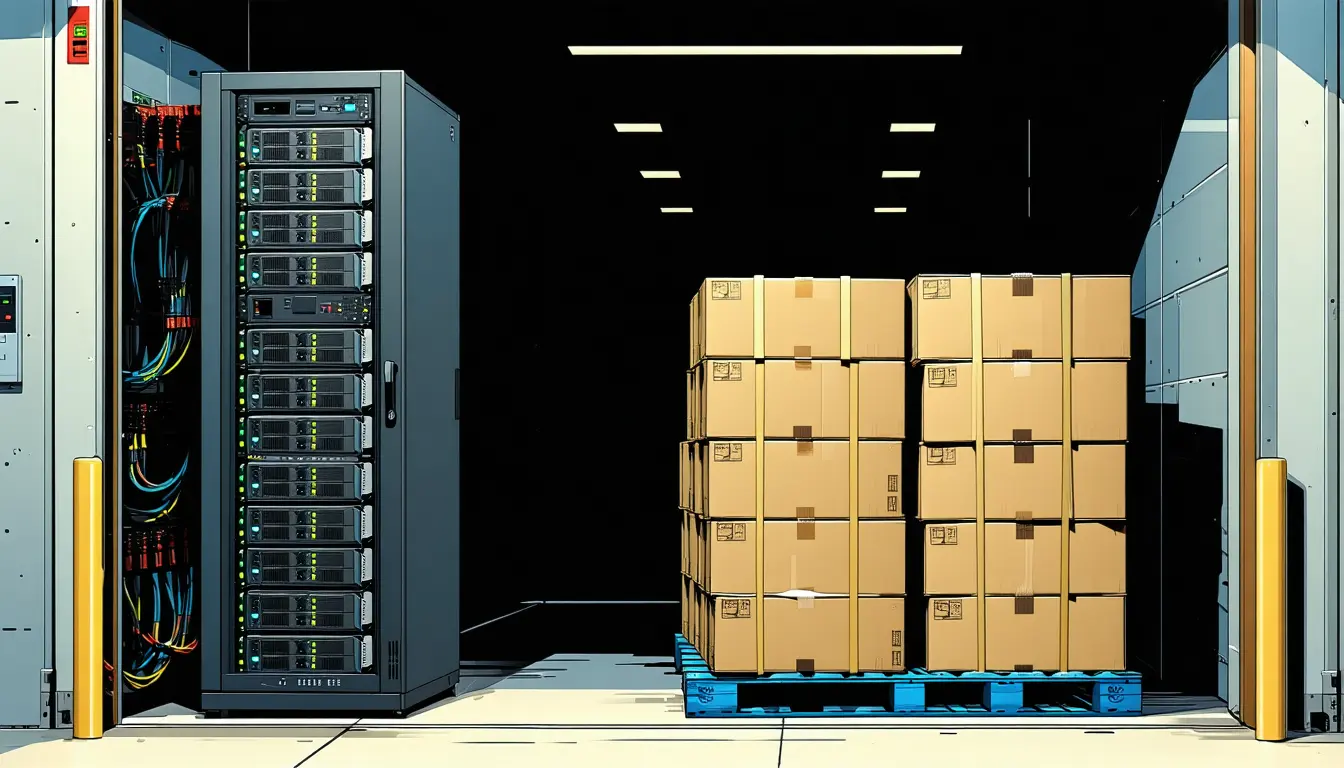
- The assistant launches Hiberden's server over stdio as a subprocess on the machine that holds the catalog, with no network hop and no listening port.
- The desktop server ships in the installer and in the official MCP registry as a versioned, checksummed stdio bundle, and is also listed in directories such as Glama.
- Hiberden's server version is pinned to the application version, so customers on an old build keep calling that build's tools, possibly for years.
- Easy2257 runs one version for everyone, so a fix or a breaking change reaches every customer the moment it deploys.
Compiled by The EngineerSomething wrong?How this is made
Why it matters
- decision Tool signatures fall under the deployment's change rule from the first release, so where the server runs has to be settled before the tools are designed.
- cost A desktop vendor carries every tool it has shipped as a support commitment until the oldest installed build is retired.
- exposure Hosted customers absorb every breaking change together, with no older version to stay on while their own assistant configurations catch up.
Easy2257's server connects to a database that holds many companies' records at once. Every request has to settle "who is asking, and what are they entitled to see" before the server can answer anything else [4]. The authors wrote that "authentication is the product surface. It is the first thing you build and the thing you keep rebuilding" [5]. Hiberden's server gets most of that answer for free. The person is sitting at the machine, and the operating system has already decided they can open the catalog file [3].
The post says versioning is where the two models diverge hardest, and that it is the one people underestimate [14]. The rules follow from that split. On the desktop, make changes additive and never alter a tool signature that has shipped. On the hosted service, treat the tool list as a published API contract [11]. The hosted rule exists because the software calling the tools is someone else's assistant, wired up months ago, that the vendor cannot test against [10]. The authors wrote that answers like these "fall out of the deployment model almost mechanically" [12].
I think the desktop rule is the harsher of the two. It is also the one that most needs deciding before the first tool gets a name. A hosted mistake can be corrected in a single deploy [9]. A desktop signature, once released, has to keep working on every build still installed, and some of those builds stay in use for years [8].
Each model also inherits an environment. The desktop server gets the user's machine. That means assistant clients that each store their config somewhere different, and antivirus software "with opinions about unsigned subprocesses" [7]. The hosted server gets the network: timeouts, retries, and clients that "will absolutely call the same tool four times in a row" [7]. For a records service, that last item is a tool-design problem. If a tool that writes a record cannot recognise a repeat, four calls leave four records.
The post opens by listing the decisions it covers. Two of them are what the server is allowed to touch and what happens when the assistant calling it is confidently wrong [13]. The post's text breaks off mid-sentence as the next section begins, before either question is answered [15]. It does not show how Hiberden or Easy2257 limits what a tool may touch, or how either handles a confidently wrong call.
What to watch
- Whether the rest of the post explains how each server limits what its tools may touch and handles a confidently wrong assistant call.
- Whether Easy2257 publishes a versioning or deprecation policy for its MCP tool list, given that every customer shares one version.
- Whether Hiberden ever changes a shipped tool signature, and how customers still on old builds are handled if it does.