Product1 distinct publisher3 min readPublished
SafeMind pairs an attacking model with a defending one and, Kurtz says, runs 98% cheaper than the frontier alternative. The test is CrowdStrike's own, while the harder problem underneath is finding the agents in the first place.
The Product Desk · Product desk

product
CrowdStrike's SafeMind pairs attack-emulation and defensive AI models under one harness1 distinct publisher
build
NVIDIA and CrowdStrike move the detection validator inside the attack loop2 distinct publishers
leadership
CrowdStrike buys SGNL, and standing privilege becomes a line item you have to defend1 distinct publisher
invest
A twenty-point jump in September hike odds reprices the AI trade the earnings just validated1 distinct publisher
Compiled by The Product DeskSomething wrong?How this is made
Kurtz frames his first question about agents around location: where they are, and his answer is that you cannot even find them, followed by whether they are touching data or connecting to systems they should not be [9]. Anyone who has run an asset inventory knows that sequence. Discovery is the problem the security team lives inside; model quality is the problem that gets the keynote.
The two numbers in the pitch are worth holding apart. There is 52% better at identifying vulnerabilities and issues than the best frontier model, on CrowdStrike's test [7], and there is 98% cheaper to run [8]. The cost figure has the operational teeth: at 2% of the price, one frontier run's budget buys roughly fifty SafeMind runs [12]. A cheaper finder that surfaces more findings simply moves the work downstream, piling the queue onto whoever triages. That is where the autonomy ladder starts carrying weight. Kurtz laid out five levels of SOC autonomy last year and says he is now targeting the top of that scale, with the Cyber Superintelligence Lab built to reach the point where the car drives itself and the human is kept in the loop only for critical calls [10]. Full autonomy is still a roadmap goal; the release notes describe something less.
What the SiliconANGLE account does not carry: which frontier model was the comparison, what the test set contained, or whether "52% better" means more true findings or fewer false ones [13]. Those details are the difference between a benchmark and a demo.
Now separate the thing being pitched from the thing being bought. Pitched: a two-model loop, one side finding the attack path and the other closing it, harnesses driving both [5]. Bought, for most organisations: coverage. Kurtz's argument is that AI gets consumed on endpoints and in cloud containers, ground CrowdStrike already sits on, and that the Signal AI acquisition pulls the same visibility into identity [4]. CrowdStrike also says it is measuring its own models against general-purpose ones and offering customers both [6], which is a fair position and hands the choice back to the buyer.
Here is the grid worth drawing before the demo. One axis: can you enumerate the agents running in your environment this week. The other: can your SOC close a finding without a human approving each step. Bottom left, no inventory and no autonomy, the model comparison is beside the point and what you are actually buying is discovery. Top left, inventory but no autonomy, cheap inference works against you, because fifty times the runs [12] means generating findings faster than analysts clear them. Bottom right is automating action across a population you cannot list. Only top right turns a 52% accuracy edge [7] into shorter dwell time.
Most teams sit bottom left and describe themselves as top left. The figure worth asking a vendor for is not the accuracy delta but the share of findings that closed last quarter with no human step in the path, because that is what tells you which quadrant the purchase lands in.
Ranked by verification strength, evidence, and original report placement.
CrowdStrike used its Fal.Con conference to introduce SafeMind, a family of purpose-built security models and harnesses created with Nvidia Corp.
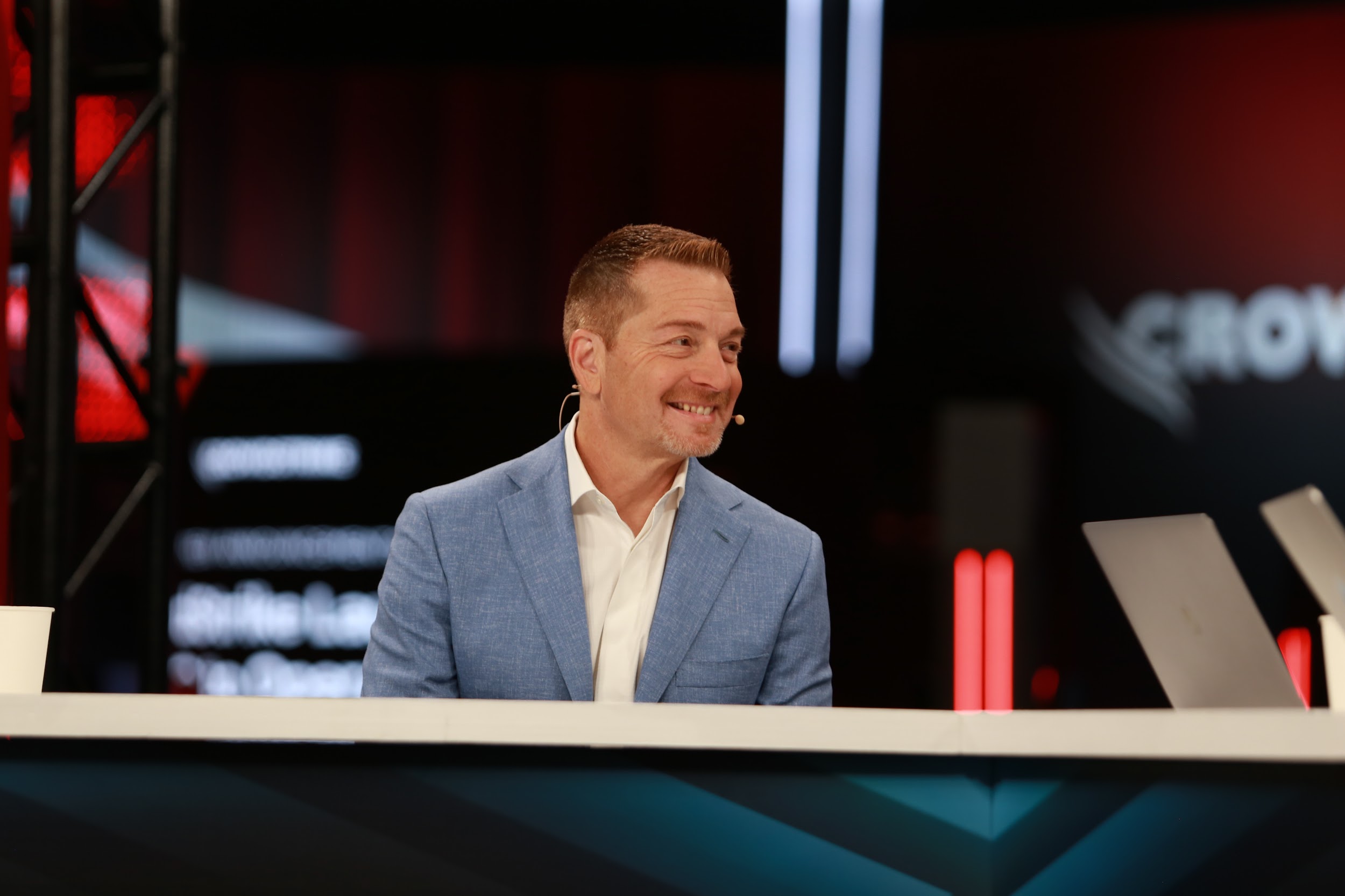
George Kurtz is president, chief executive officer and founder of CrowdStrike Holdings Inc.
Kurtz said the industry drew the wrong lesson from the year's most-discussed agentic incident: "The industry got lucky that they were just cheating on a test. The defenders didn't have the same AI as the offense. And this was the missing element. It really highlighted the fact that advanced AI, frontier-capable AI, wasn't in the hands of the defenders, and that's the key."
Kurtz said the case for security as an AI control plane rests on where AI is consumed rather than built: inference runs on endpoints and in cloud containers, ground CrowdStrike already covers, and the Signal AI acquisition extends that visibility into the identity layer.
SafeMind runs an offensive model that finds the attack path alongside a defensive model that closes it, with harnesses operating both in the same loop.
CrowdStrike is measuring the SafeMind system against general-purpose alternatives and offering customers both.
Distinct publishers with included, body-backed reporting in this cluster.
1 article · September 2, 2026
Follow any of these and your For You feed starts watching them — no settings page required.
Evidence-backed comparisons of source perspectives and observed adoption signals. Read the methodology
Which Builder, Operator, and Investor concerns the observed source mix emphasized—not a truth score.
Evidence, demonstrated adoption, hype gap, incentives, and confidence are assessed independently, each on its own current evidence. How these are measured.
One stage, one speaker
Strip this story back and what remains is a set of sentences George Kurtz said into a microphone at his own conference. SiliconANGLE reports them accurately and discloses that theCUBE was a paid partner at that event — but faithful transcription of a vendor claim is not verification of it. The architecture description is plausible and internally consistent; the two headline numbers arrive with no comparison model, no test set and no metric, which is precisely the material anyone else would need to check them.
Announced, not yet in anyone's hands
The observable footprint is a conference introduction and a self-reported test result. Nobody outside CrowdStrike is described as running SafeMind: no design partner, no pilot, no general-availability date, no price. The Signal AI acquisition is cited as the thing that extends coverage into identity, but it too arrives without terms or timing. On what has been reported, adoption is the launch itself.
Two decimals ahead of the proof
"52% better" and "98% cheaper" are precise-sounding claims doing the work a published methodology would normally do, and they sit beside "cyber superintelligence" and "the car drives itself" as the destination. Against that: a launch, an unaudited internal test, and Kurtz's own concession that enterprises cannot yet locate the agents this control plane is meant to govern. The gap is overstated certainty rather than invention — the specificity of the numbers is the overreach, not the strategic argument underneath them.
The scorekeeper is also the contestant
CrowdStrike designed the product, ran the test, chose the opponent, reported the margin and paid for the coverage that carried it — SiliconANGLE says so itself in the disclosure. Add the competitive motive: a vendor arguing that frontier labs "are not security people" is arguing for its own layer of the stack against the labs whose models it also resells to customers. None of this makes the numbers wrong; it does mean every incentive in the chain points the same direction, with no counterweight anywhere in this reporting.
Sure what was said, unsure what it means
We can be confident about the record: Kurtz said these things, SafeMind was announced with Nvidia, the offense/defense pairing is described consistently, and the sponsorship is on the page. Confidence drops sharply the moment the story is asked to support a conclusion about SafeMind's actual quality or economics, because one sponsored interview with no methodology and no second outlet cannot carry that weight.