Loading today’s stories
Build1 distinct publisher3 min readUpdated
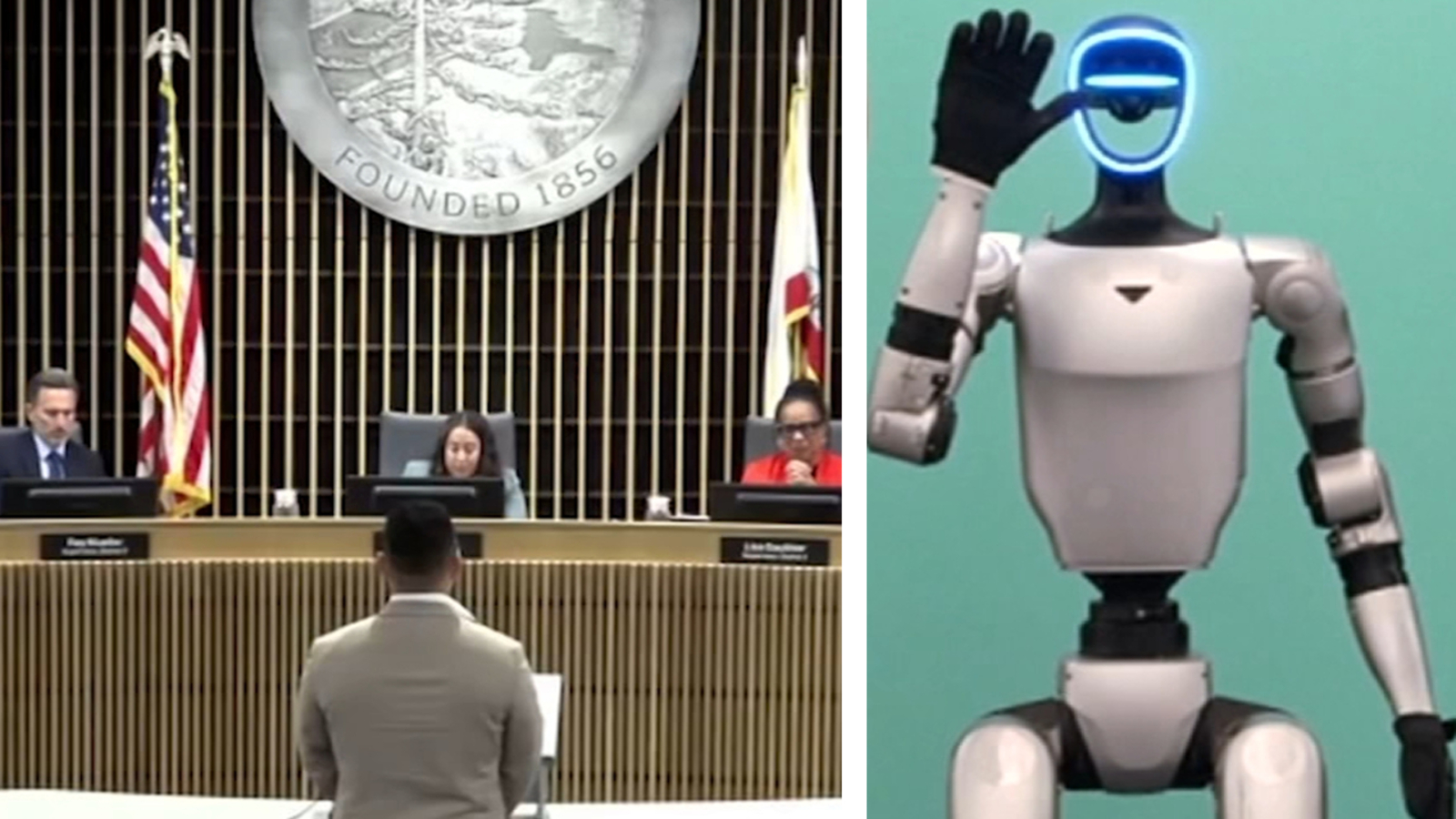
San Mateo County's robot permit draft puts a human in the room, and that breaks teleoperation math
The Board of Supervisors voted on August 11 to draft a humanoid permitting ordinance. The condition that matters commercially is a trained on-site supervisor, present at all times.
The Engineer · Build desk
What happened
- San Mateo County's Board of Supervisors approved a resolution on August 11th directing county staff to write a permitting ordinance for commercial humanoid robots; the official county record lists the resolution as passed.
- The measure was sponsored by District 3 Supervisor Ray Mueller and directs the County Executive's Office, County Attorney and relevant departments to return with a comprehensive permit system.
- The provisions are not law yet; staff must draft an ordinance and bring it back to the board, and the board's action does not establish permits, fees or penalties.
- Mueller's official county biography credits him with introducing an AI workforce protection policy covering county employees.
- The humanoid resolution extends that approach to private businesses deploying machines in restaurants, hotels, stores, logistics operations, security, maintenance and customer service.
Compiled by The EngineerSomething wrong?How this is made
Why it matters
San Mateo County's Board of Supervisors approved a resolution on August 11 directing county staff to write a permitting ordinance for commercial humanoid robots [1]. Nothing is law yet, and staff still have to draft the ordinance and bring it back to the board [3], but one condition on the list of things to consider would change the unit economics of every teleoperated deployment in the county: a trained human supervisor physically present, at all times, wherever a robot is working [6].
The resolution was sponsored by District 3 Supervisor Ray Mueller and instructs the County Executive's Office, the County Attorney and relevant departments to return with a comprehensive permit system [2]. Its scope is private businesses deploying machines in restaurants, hotels, stores, logistics operations, security, maintenance and customer service [5]. Mueller's county biography credits him with introducing an AI workforce protection policy for county employees [4], and this extends that framing to private deployments [5].
Here is why the supervision clause is the expensive one. Many humanoid systems still depend on people who monitor remotely, take control when autonomy fails, or guide the machine through unfamiliar tasks, and a single centralized operator may cover machines across multiple customer sites [7]. The county's proposed model adds a local worker at each site even when the remote operator stays in the loop [7]. That converts a fan-out staffing model into one person per site plus the remote desk, which is the arithmetic the centralized approach exists to avoid [1]. The resolution also leaves open who employs and trains that person: the robotics vendor, the customer, or a contractor [8]. The softener is real but thin. Staff are asked to consider the rule "to the extent feasible," which leaves room to narrow it, define tiers of supervision, or write exemptions [9].
The rest of the package reads less like equipment certification and more like a full cost stack. Other provisions under consideration include accessible emergency kill switches, compliance with disability-access and sanitation standards, and review of a manufacturer's safety record, with applicants possibly having to show a robot is free of active recalls or recurring catastrophic failures, or that the underlying problems were fixed [10]. Staff are also told to consider an Economic Impact Assessment projecting how many jobs a deployment could eliminate [11], with businesses certifying they will redeploy affected workers, pay mandated severance, or pay into a County Automation Impact Fee fund for retraining [12]. Separately, businesses could face annual cost-recovery fees for first-responder training, hazardous-material equipment and extended containment for lithium-ion thermal runaway [13], which county officials argue involves rapid ignition, repeated re-ignition and toxic gas beyond an ordinary structural fire [14]. Battery certification could join the application, with emergency-response planning and mandatory incident reporting after a permit issues [15]. Counting only the recurring items, that is three separate ongoing cost lines beyond the hardware: on-site labor, displacement payments, and battery response fees [2].
The county's own board memo concedes that mobile humanoids are not yet widely deployed in commercial settings [16]. So this is a regime being drafted ahead of the deployments it governs, which means the definitions are still movable.
Watch the drafting stage, because staff must still decide which robots qualify [17]. Watch whether the supervision requirement survives as written or becomes tiered.
Topics and entities
Follow any of these and your For You feed starts watching them — no settings page required.
Topics
Loading related stories