Product1 distinct publisher3 min readPublished
A third year on one chassis leaves the upgrade case resting on Gemini features that 9to5Google's reviewer believes could be backported to older Pixels, while the one genuinely new part on the back gets called a waste.
The Product Desk · Product desk

Compiled by The Product DeskSomething wrong?How this is made
The backport question comes down to licensing, not physics. HiLight needs a diode on the back of the phone, and Google put one there as part of the new flash [7]. Magic Capture is a way of keeping your eyes off the viewfinder while you shoot [11], and Gemini Intelligence is pitched as the phone acting before you reach for it [12]. Of the three experiences the review puts at the front of its argument, only one is described as needing a component you can point at [17], and it is the one the reviewer calls a terrible product and a waste of LEDs [8].
It functions as a gate, something Google can open or close at will. A model check inside a feature flag costs nothing to ship and never appears on a spec sheet, so the useful question about a launch like this is which parts of the slate an older Pixel cannot execute, rather than which parts it has not been sent. The review does not claim to know; it says nearly everything new feels like a software trick that could go back to at least some previous Pixels [4]. That hedge is the most honest sentence in the piece.
The numbers make an unflattering case for the object. The camera bar arrived on the Pixel 6 in 2021 [2], the review is dated 28 August 2026 [15], which puts the design language at five years old [c15d], and the 2024 Pixel 9 chassis is now in its third model year [16]. This year's refinements read to the reviewer as change for the sake of change [3], on a frame that still collects fingerprints because Google has not taken the Pro line matte despite selling an all-matte Obsidian option [14], attached to a body that he still describes as a brick [18]. The temperature sensor is gone, and his verdict is that nobody used it [9].
What the review does not contain is any measure of what owners do with the thing over a year. It is one person's time with one unit, which is the right way to read the HiLight assessment and also the reason nobody should convert the word "great" in the headline into a fleet decision [1]. The buyer genuinely served here is someone whose current phone is dead, out of support, or about to be. Everyone else is being sold a software roadmap with a chassis attached, which the review itself concedes when it describes the modern phone business as iterative updates plus a heavy focus on software-as-a-service [13].
The test that survives contact with a purchase order has two columns. On the left, each headline feature you can trace to a physical part. On the right, everything else. The left column earns a hardware line item. The right column earns a written question to your account team: which installed models get this, and in which quarter. If the features you actually want all land on the right, the service is the purchase and the handset is the delivery fee, and the budget should say so.
Ranked by verification strength, evidence, and original report placement.
9to5Google published a review headlined "Review: The Pixel 11 Pro XL is great, but a little too early for Google's futuristic vision".
The 9to5Google review of the Pixel 11 Pro XL is dated 28 August 2026.
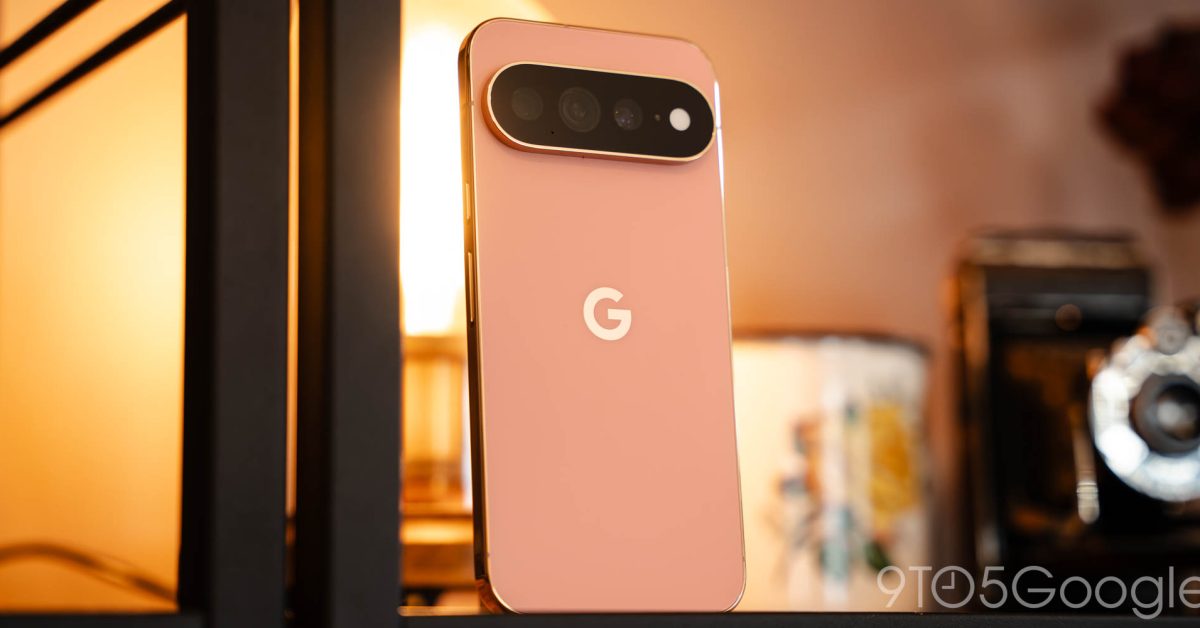
The review describes the Pixel 11 Pro XL as the third generation of its design, itself an evolved take on the camera bar style that launched with the Pixel 6 in 2021.
The review says Google is again recycling its Pixel 9 design from 2024, with a handful of refinements that feel more like change for the sake of change than real stylistic decisions.
The Pixel 11 Pro XL is a few grams lighter than its direct predecessor but still not as light as the magnet-less Pixel 9 Pro XL or the Galaxy S26 Ultra.
The chassis is nearly identical to Google's last two models, but a revised camera bar means owners will want a new case.
Distinct publishers with included, body-backed reporting in this cluster.
1 article · August 28, 2026
Follow any of these and your For You feed starts watching them — no settings page required.
product
Pixel 11 Pro XL: the upgrade you can feel is shutter lag and a dictation tool1 distinct publisher
product
Google moved the Pixel 11 Pro's upgrade case into software. Judge it on rollout risk.5 distinct publishers
product
A fair fight with last year's iPhone is where Pixel hardware has landed1 distinct publisher
product
Pixel 11 verdict: "could have been a software update," and fleet buyers should read it that way2 distinct publishers
Evidence-backed comparisons of source perspectives and observed adoption signals. Read the methodology
Which Builder, Operator, and Investor concerns the observed source mix emphasized—not a truth score.
Evidence, demonstrated adoption, hype gap, incentives, and confidence are assessed independently, each on its own current evidence. How these are measured.
One pair of hands, one loaner, no instruments
The verifiable spine of this story is strong and small: the design lineage back to the Pixel 6, the reused Pixel 9 shape, the removed temperature sensor, the uncovered camera bar, what HiLight does. Everything else is 9to5Google's reviewer reporting sensation — a few grams lighter, a dimmer beam, more fingerprints — with no scale, no lux figure and no second unit. The sentence the whole story leans on, that these features could be backported, is offered with the words 'it's easy to assume' attached, and Google is never asked.
No uptake to read yet
A review unit is not adoption. Nothing in this reporting touches price, preorders, activations, carrier deals or how many people have turned HiLight on — and inventing a number from one loaner would be worse than admitting the gap.
Two pitches outrunning their proof, one of them ours
The overstatement runs in both directions. Google's side of it: Gemini Intelligence promising to anticipate tasks before you reach for the phone, HiLight sold as the notification light reborn, which the reviewer scores zero out of ten after finding it cost him flashlight brightness. Our side of it: the sharpest line in this story — that older Pixels could probably run all this — is an assumption the reviewer himself hedges and nobody has tested. The reported hardware facts are sober; the framing around them is ahead of the evidence.
Loaner in hand, audience already shopping
9to5Google exists to cover Google, reviews a handset Google supplied, and writes for readers deciding whether to buy it — the piece even tells them to add a keychain flashlight to the cart. Those pressures usually bend coverage kind; here they visibly did not, since the flagship's marquee new part is called a waste of R&D and LEDs. Access dependence is real and worth stating, but this reporting is not reading as promotional.
Confident about the shape, not the conclusion
We are on firm ground saying Google shipped a third year of one chassis, dropped the temperature sensor, uncovered the camera bar and added an LED array that its first reviewer hated. We are on soft ground saying the upgrade could run on a Pixel 9, which is the part readers will remember. One publication, one handset, no vendor reply — a second hands-on would move this materially in either direction.